Korva is a scroll of the internet’s best ideas.
Five minutes on mute became 35
NASA pushes back
Engineers at Morton Thiokol, the company that built Challenger's rockets, had just recommended against launching with the O-rings below 53 degrees Fahrenheit. Their data showed the rings stopped behaving like rubber in the cold and turned very hard, which left them unable to seal when the pressure hit. NASA's lead program manager answered by asking when Thiokol expected him to launch, next April?
Thiokol's contract carried a $10 million penalty if one of its components caused a delay, and the company had never asked for one. Every earlier argument with NASA had required Thiokol to prove a launch was safe. Now Brian Russell, a young engineer on the O-ring team, realized the tables had turned: Thiokol had to prove it was unsafe.
The vote
Thiokol's general manager favored launching. Roger Boisjoly and Arnie Thompson, two of Russell's superiors, stood at the head of the table pointing at charts and photos. The general manager cut them off with "We've plowed this ground already," and the debate stopped.
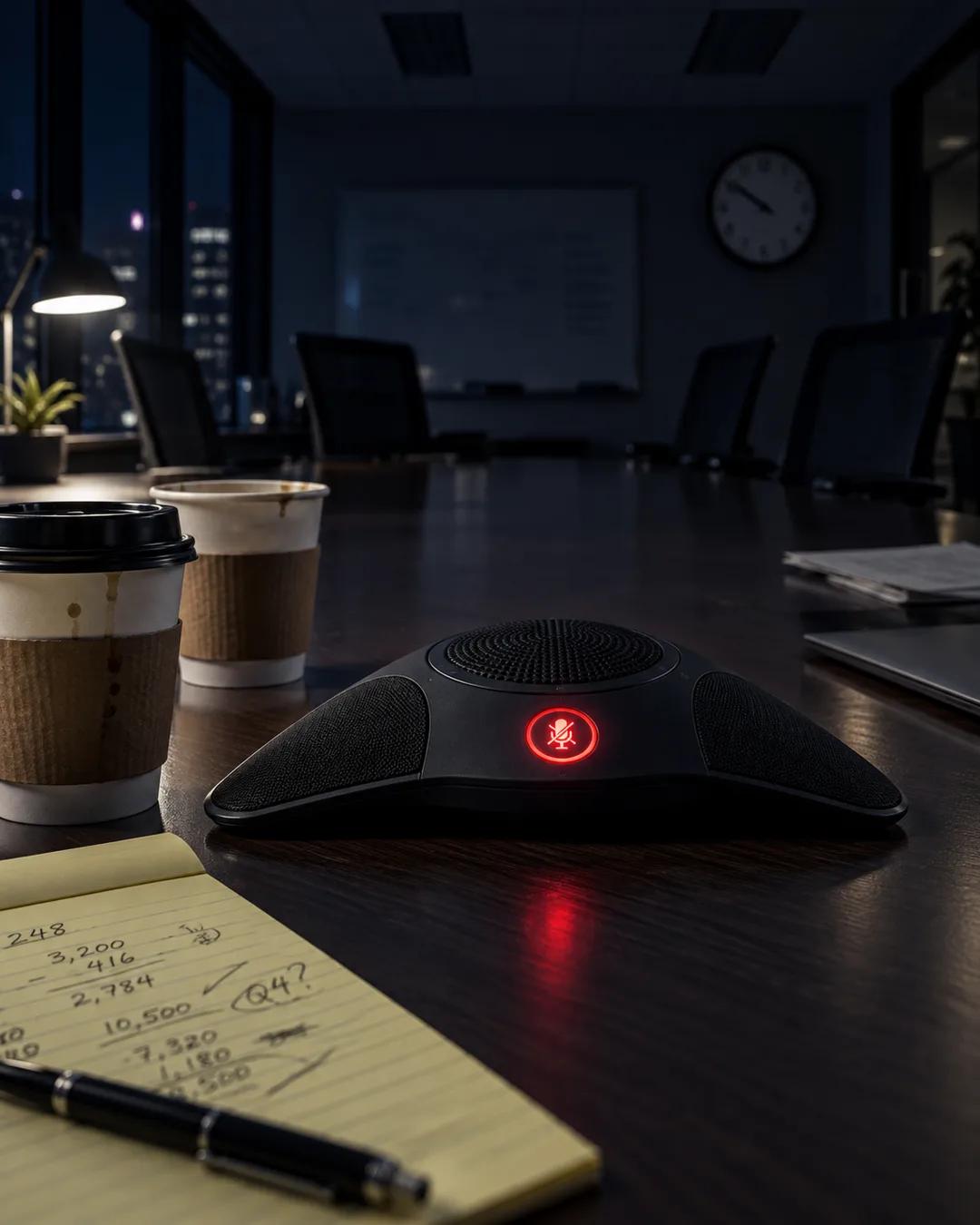
He polled only the vice presidents. The assistant general manager agreed to launch, and so did Russell's boss. The vice president of engineering, whose own engineers had argued for delay, hesitated until the general manager told him to take off his engineering hat and put on his management hat. He answered yes, and nobody else in the room was asked. Thiokol came off mute and told NASA it agreed to launch, and Russell, the junior man, typed up the final chart.
Why does cold ruin a rubber seal?
Rubber stays elastic because its long molecules can slide past each other and spring back, and cold slows that motion until the material turns stiff. A booster joint flexes at ignition, and the O-ring has to spring back into the widening gap within a fraction of a second. A stiff ring responds too slowly, so hot gas can slip past it. At a hearing in February 1986, physicist Richard Feynman, a member of the Rogers Commission, clamped a piece of the rubber, dropped it into ice water, and showed that it did not spring back. The temperature at the pad on launch morning was about 36 degrees Fahrenheit, according to the commission's report.
Why did flipping the burden of proof matter?
A proof requirement decides what happens when the evidence is incomplete. If a contractor must show a launch is safe, missing data means no launch. If it must show the launch is unsafe, missing data means a launch. The Rogers Commission wrote that it was concerned that NASA's Marshall Space Flight Center appeared to be requiring a contractor to prove it was not safe to launch, rather than proving it was safe. Before Challenger, the coldest shuttle launch had been at 53 degrees Fahrenheit, which left no flight data for the colder morning that was forecast.
How did the booster joints actually seal?
Each solid rocket booster was built from stacked segments that were shipped separately from Utah and joined at the launch site. At every joint, a tongue-shaped lip on one segment fit into a groove on the next, and two O-rings sat in the groove, a primary and a secondary. At ignition, pressure inside the casing made the metal walls flex and the gap widen slightly. Gas pressure was supposed to push the primary ring into the gap and seal it. Each ring ran around the full width of the booster, which was about 12 feet across.
How did investigators pin down the cause?
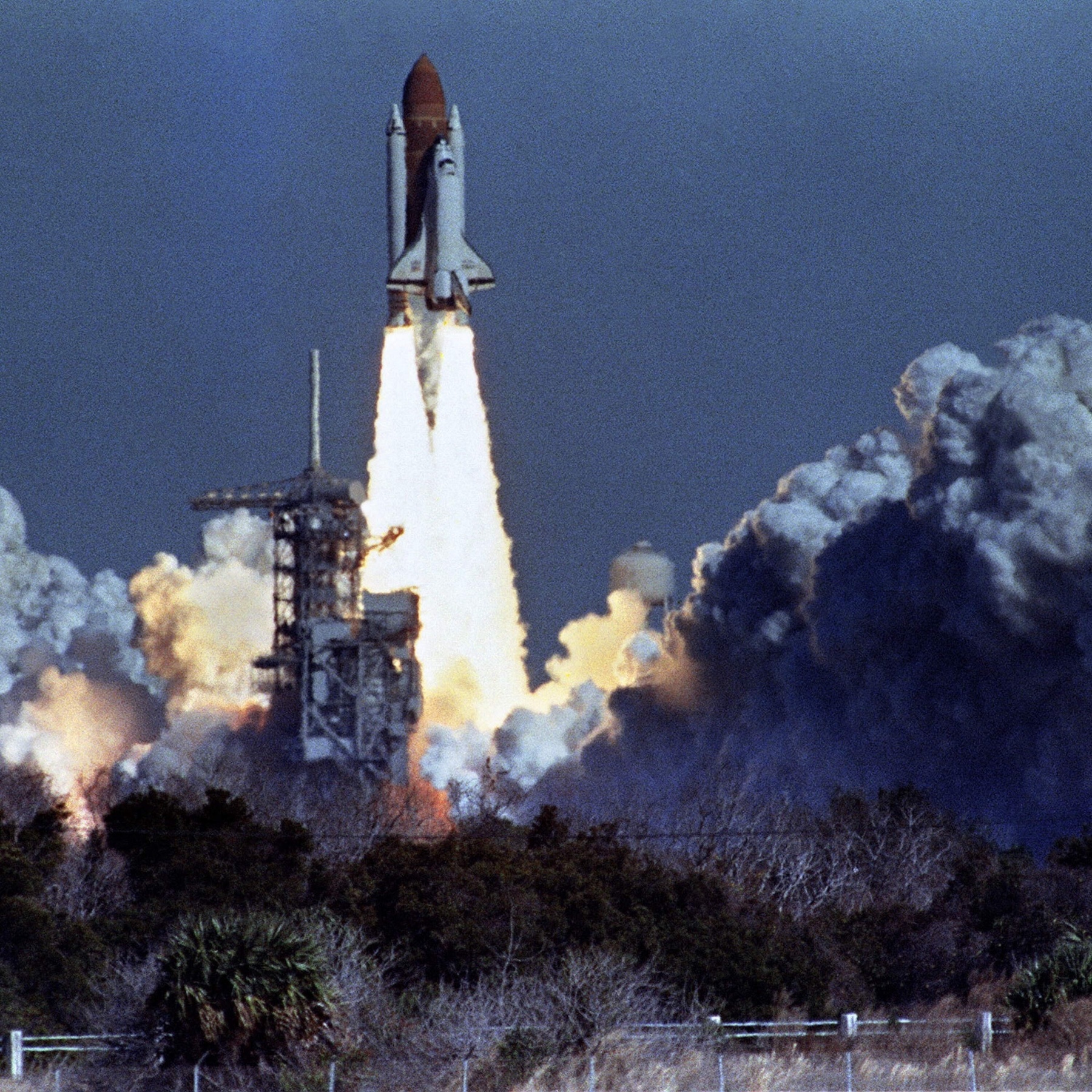
President Reagan appointed the Rogers Commission within days of the accident, and it held public hearings and examined the debris, telemetry, and launch film. Film from ignition showed gray puffs of smoke coming from a joint on the right booster, and later frames showed a flame jetting from the same spot. Recovered booster segments confirmed burn-through at that joint. The commission delivered its report on June 9, 1986, naming a joint design that was unacceptably sensitive to factors including temperature.
More from Throughline