Korva is a scroll of the internet’s best ideas.
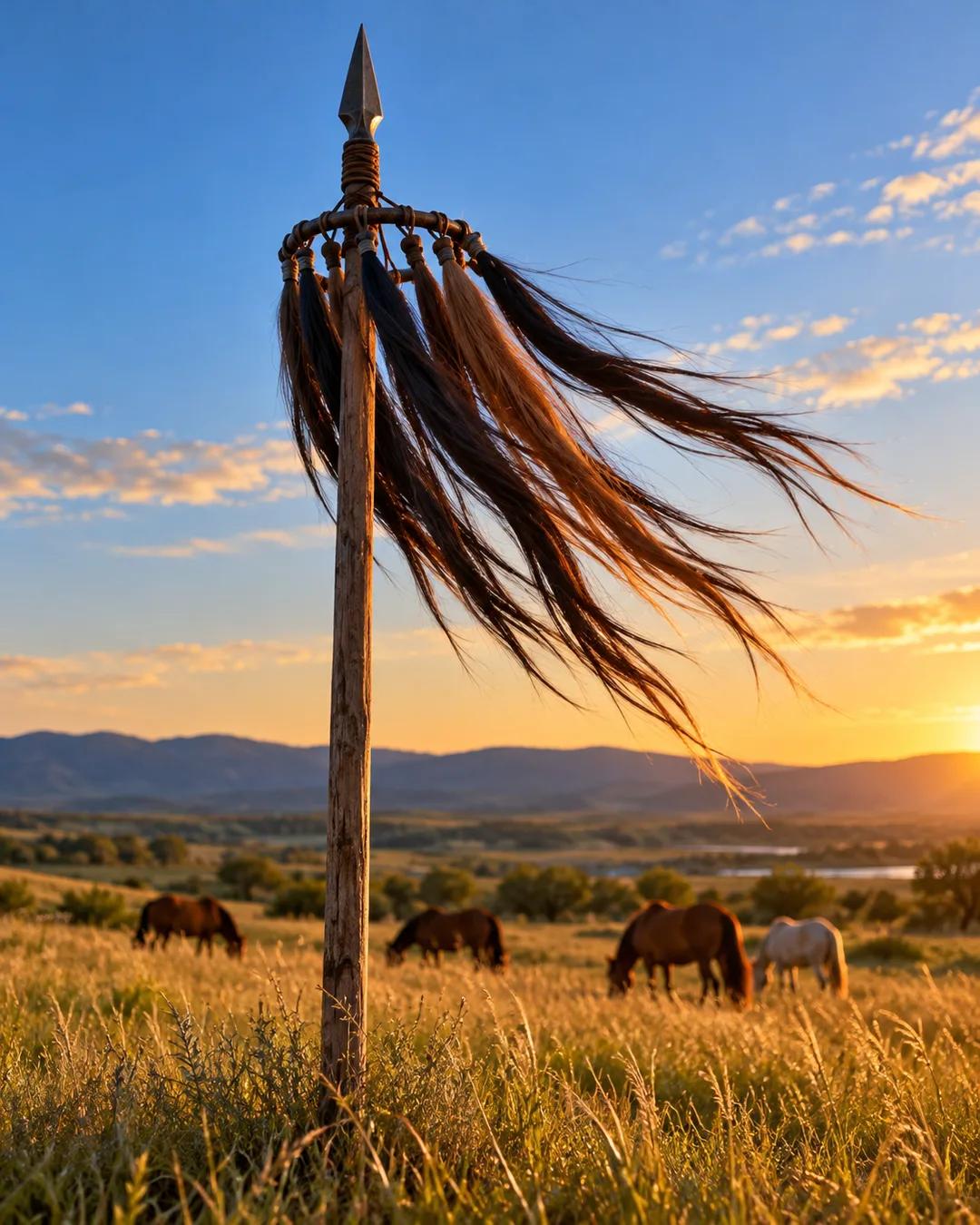
Flags made of horse hair
The Flag That Smells Like Home
Horses know their owners by smell. The flag, called a sult, was made of hair from the soldiers' own horses, so it smelled like their herd, and in battle the horses found their way back to it.
Words for Horses
The Mongolian language has more words for the colors of horses than a learner can master, sorted by how smooth the coloring is and how much the texture varies. There are separate words for sex, with three for males because geldings count, for age, and for whether a female has reproduced.
Sacred Customs
Mongols wipe the sweat and dust off a horse onto their own foreheads, the most sacred part of the body, where the soul resides. They strike the rump with a small crop and nowhere else, and they are horrified by metal spurs. Harming a horse's head is called a capital crime. Each morning a mother throws fermented horse's milk toward the four directions to start the day.
What were the Mongol banners called?
The Mongol standard is called a sulde or tug, a pole topped with horse or yak hair. Genghis Khan's standard is said to have been nine white horsetail banners, carried in peacetime, and a black set for war. The sulde was believed to hold the spirit and strength of the army. Mongolians still honor the sulde in ceremonies.
How is fermented mare's milk made?
Mare's milk is poured into a leather bag and churned for hours by hand. Yeasts and bacteria ferment the milk sugar into a lightly alcoholic drink, usually about two percent alcohol. The drink is called airag in Mongolia. It is most often made in summer when mares are milked.
More from Lex Fridman Podcast