Korva is a scroll of the internet’s best ideas.
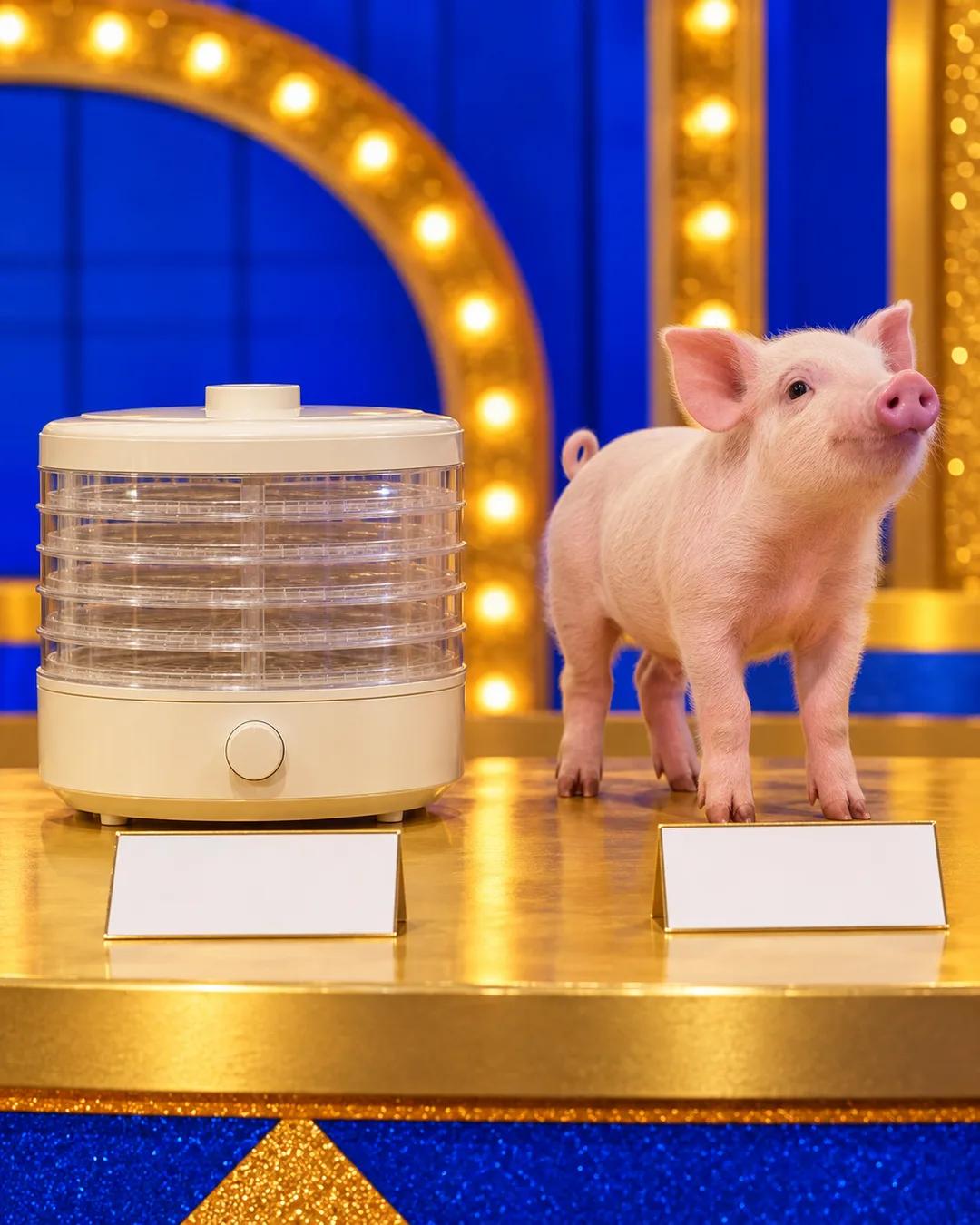
Food dehydrator or a pig

Spend it all
Contestants bought jet skis, vacation packages, boats, and cars if they had done well on the big money spaces. At home, viewers shouted advice at the TV about what to buy. Many people watched the show more for the shopping round than for the puzzles.
The tough choices
The round was its own puzzle. Contestants did mental math to spend everything on the big things they wanted, but they often ended up with just enough left for something they didn't. Picture a contestant with $350 after buying the boat and a Las Vegas weekend: the stage offered a hand-carved nightstand shaped like an elephant, or a Gucci calculator. One contestant with enough for either a food dehydrator or a pig chose the pig.
The end of shopping
In 1987, the show let contestants keep the cash instead, and everyone preferred the money. Host Pat Sajak and the show's makers had felt the shopping round only ate up time that could be spent on more puzzles in prime time. By 1989, six years after the show moved to its prime time slot, the shopping round was gone, along with the Gucci calculator, the jet skis, and the vacation packages.
Why did leftover prize money buy odd things?
Behavioral economists Richard Thaler and Eric Johnson studied how people treat winnings in a 1990 paper. They found that people often treat money they have just won as house money and take more risks with it than with money they earned. Thaler later won the 2017 Nobel Prize in economics for his work on how real people make money decisions. His idea of mental accounting says people sort money into separate mental budgets.
How did jet skis become a 1980s prize?
Kawasaki introduced the stand-up Jet Ski in 1973, and the name is a Kawasaki trademark. Other makers followed with their own personal watercraft. Yamaha's sit-down WaveRunner arrived in 1986.
More from 99% Invisible