Korva is a scroll of the internet’s best ideas.
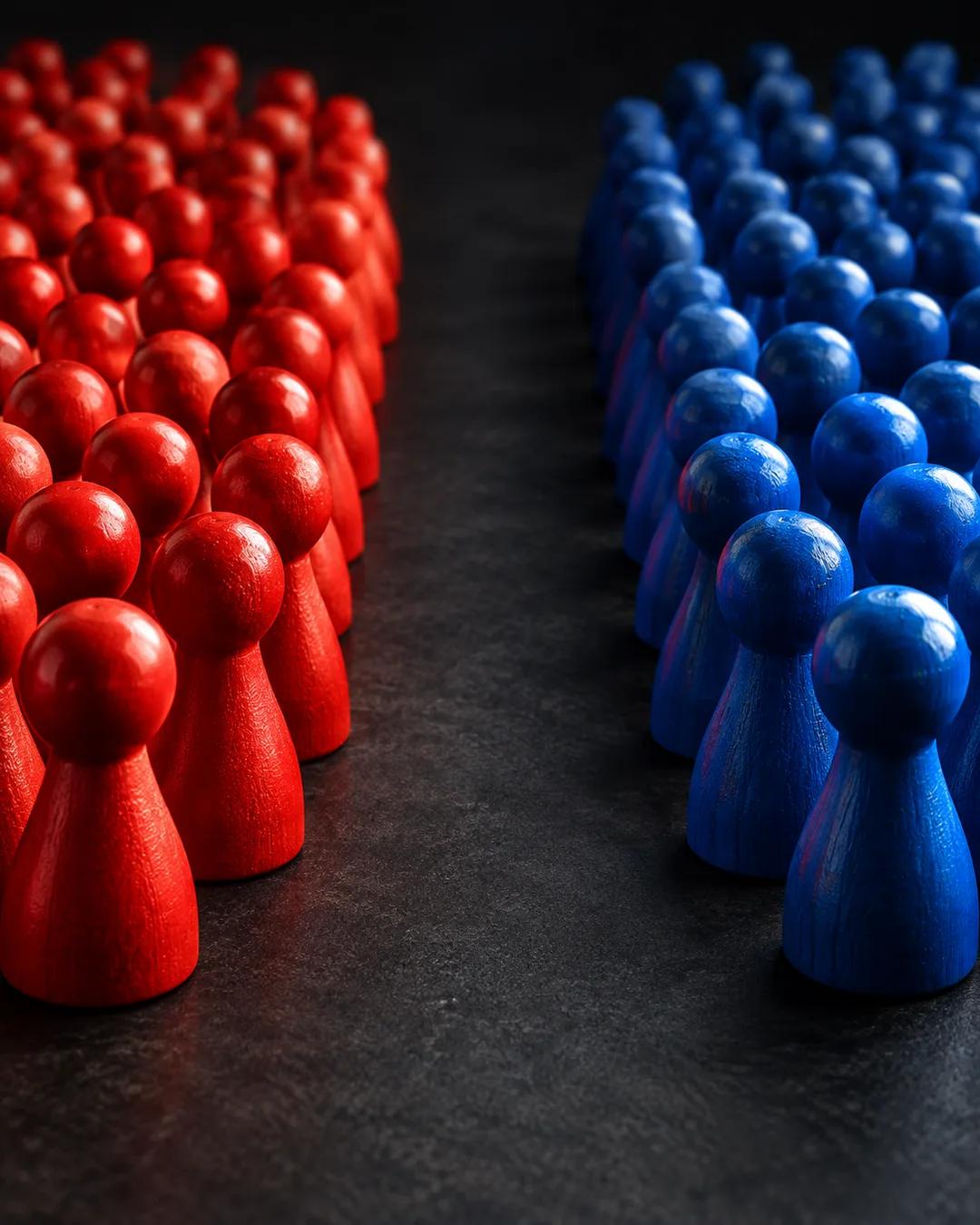
Group labels erase everyone's differences

The Shortcut
The brain loves shortcuts, called heuristics, and sorting people into groups is one of them. Researchers call it the category accentuation effect: once people identify as members of one group and others as members of another, the details and nuance go away and a big lumpy picture that is good enough takes their place.
Flattened Groups
Inside your own group, the variation fades. Picture a crowd of Falcons fans: plenty makes them different from each other, and all of it vanishes because they are all Falcons fans. The other side gets flattened too, only less kindly, so every Steelers fan becomes the same terrible person. The differences between the two groups get boosted on top of that.
Why Groups Form
Two reasons are given for why people form groups at all. Humans have always classified the world by looking for patterns, and early on a group paid off: pooled resources, divided hunting and gathering and co-parenting, and protection from predators and rival tribes.
Does labeling change how we see differences?
In 1963, Henri Tajfel and A. L. Wilkes showed people a series of lines of different lengths. When the shorter lines were labeled A and the longer lines B, people judged the gap between the two classes as larger than when no labels were used. The labels also made the lines within each class look more alike. The effect appeared with simple lines long before Tajfel applied it to people.
Why do outsiders all look alike?
Psychologists call it the out-group homogeneity effect. In 1980, George Quattrone and Edward Jones had Princeton and Rutgers students predict how members of each school would choose in a simple decision. Students expected members of the other school to behave much more uniformly than members of their own. Both sets of students judged the other school as the more uniform one.
More from Stuff You Should Know