Korva is a scroll of the internet’s best ideas.
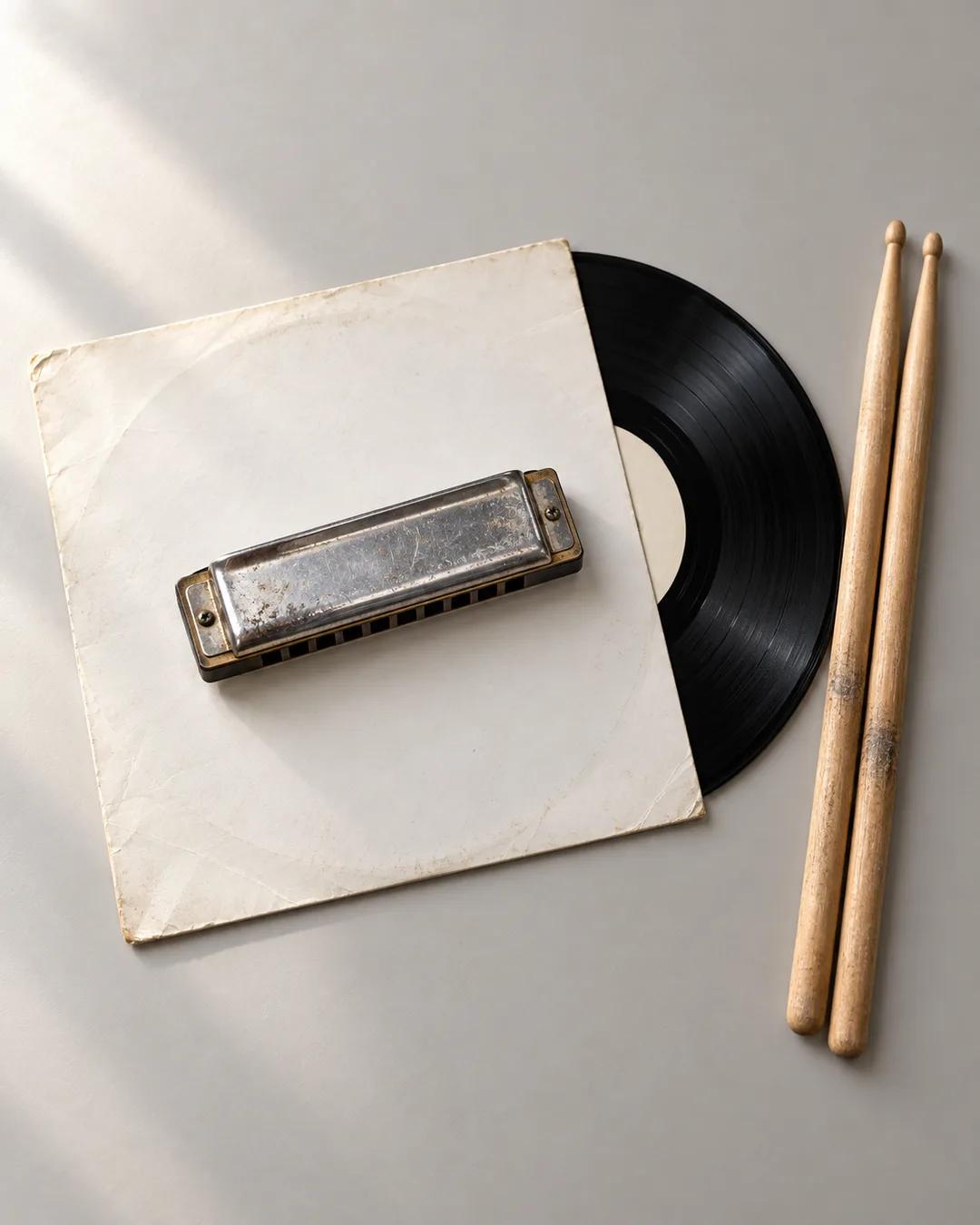
Harmonica after the drums stopped

A piece left unfinished
Mac was a drummer who worked at his father's foundation for veterans. In early 2023, with cancer taking up everything and music far from his mind, he got the idea to go back and finish a piece he had written years earlier in college.
He could no longer play drums. Paralyzed from the chest down, with damage to his right hand from his fifth spine surgery, he could still hold a harmonica, and he taught himself to play it. Amazing Grace was one of the first pieces he learned.
The album takes shape
The project grew into an album called Resurrection and Revival, with members of his father's Lieutenant Dan Band playing alongside his harmonica. Mac designed the cover: a photograph of his great-great-grandfather, about 17 years old, training in Yuma, Arizona, in 1917 before heading to World War I. He wanted to press 100 vinyl records to give to friends.
After it went to press
The album went to press just before he died, so Mac never held a copy. He heard everything and saw all the videos, and it gave him amazing joy. His father kept finding more of his music afterward, and it became two more records.
Why is the harmonica easy to start on?
The common ten-hole harmonica is tuned so that blowing or drawing across neighboring holes produces notes that sound good together. The player shapes the music with breath and mouth, not with fast finger work. This layout is called Richter tuning, after Josef Richter, who is credited with designing it in the 1820s.
Why do beginners start with Amazing Grace?
The melody uses only five notes, in what musicians call a pentatonic scale, so it moves in small, singable steps. John Newton, an English clergyman, wrote the words, and they were first published in 1779 in a collection called Olney Hymns. The tune most people know today was paired with the words in the early 1800s.
How is a small run of vinyl records made?
A lathe cuts the music as a groove into a lacquer-coated disc. That disc is electroplated into a metal stamper, which presses heated vinyl into the shape of a record. Short runs of a hundred copies are possible because pressing plants can set up a single stamper for one job. The long-playing record that spins at 33 and a third revolutions per minute was introduced by Columbia in 1948.
More from All There Is with Anderson Cooper