Korva is a scroll of the internet’s best ideas.
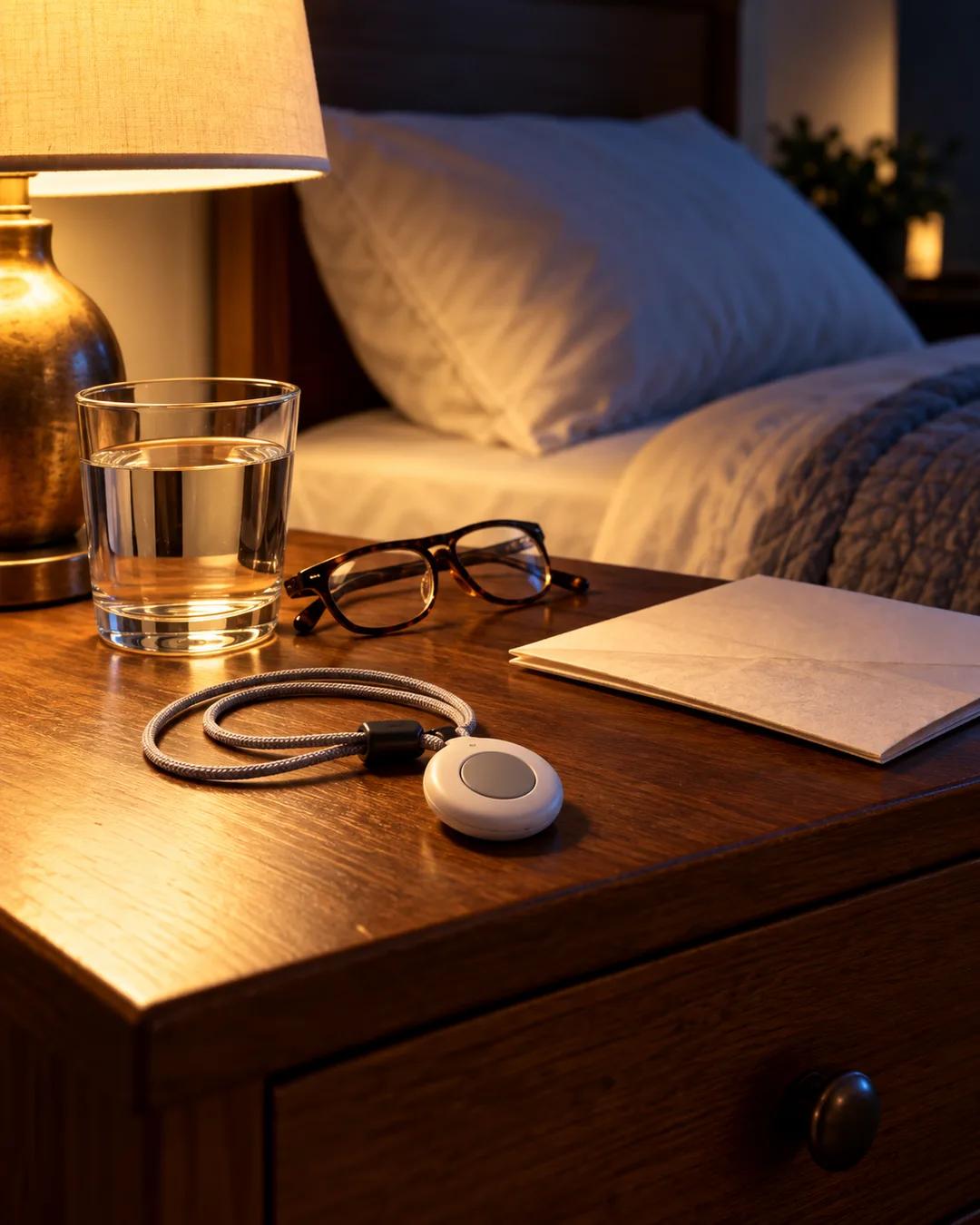
He wouldn't press the alert button

Love and balance
Wooden coached UCLA basketball and thought of himself as a teacher. When a UCLA psychologist interviewed him in his 90s, he made the psychologist guess the two most important words in the English language. The answer was love and balance: be around the people you love and do the things you love.
After his wife died, he wouldn't sleep on her side of the bed, and he wrote her a letter every month. His grandchildren's report cards hung on the wall right next to letters from presidents, and former players were at his bedside when he died.
The fall
Balance was physical, too. When he fell at night, he was wearing the button that would have called for help. He didn't press it, out of pride and a wish not to bother anyone. He waited until his caretaker arrived in the morning, and the caretaker rushed him to the hospital. He survived.
Balance was also mental. His coaching success had meant a lot of travel and a lot of time away from his family, and as he got older he spent more time with the people and on the things he wanted. He lived to nearly 99, several years after the fall.
Why do close relationships track with long life?
The Harvard Study of Adult Development has followed participants since 1938, making it one of the longest studies of adult life ever run. Its directors have reported that the quality of people's relationships at midlife predicted their health in later decades better than their cholesterol levels did. Researchers think close ties lower the wear that chronic stress puts on the body. The study began with Harvard sophomores and a group of boys from inner-city Boston.
Why do falls break wrists and collarbones?
When people fall, the instinct is to throw out a hand, which sends the force of the whole body through the wrist and up the arm toward the collarbone. Bones also thin with age as the body rebuilds them more slowly than it removes old bone, so the same impact does more damage. Hips, wrists, and collarbones are among the most common fracture sites in older adults. The US Centers for Disease Control and Prevention reports that falls are the leading cause of injury death for Americans 65 and older.
Why do people hesitate to ask for help?
Experiments by Francis Flynn and Vanessa Lake, published in 2008, found that people consistently underestimate how willing others are to help them. Asking feels like an imposition to the person asking, but the person being asked usually feels flattered and agrees. The gap between those two views keeps many people from requesting help they would easily get. In their studies, people needed to ask far more strangers than they expected to reach their goal, because they underestimated how many would say yes.
More from Andrew Huberman