Korva is a scroll of the internet’s best ideas.
Heavy lifting beats running for bone

How bone responds
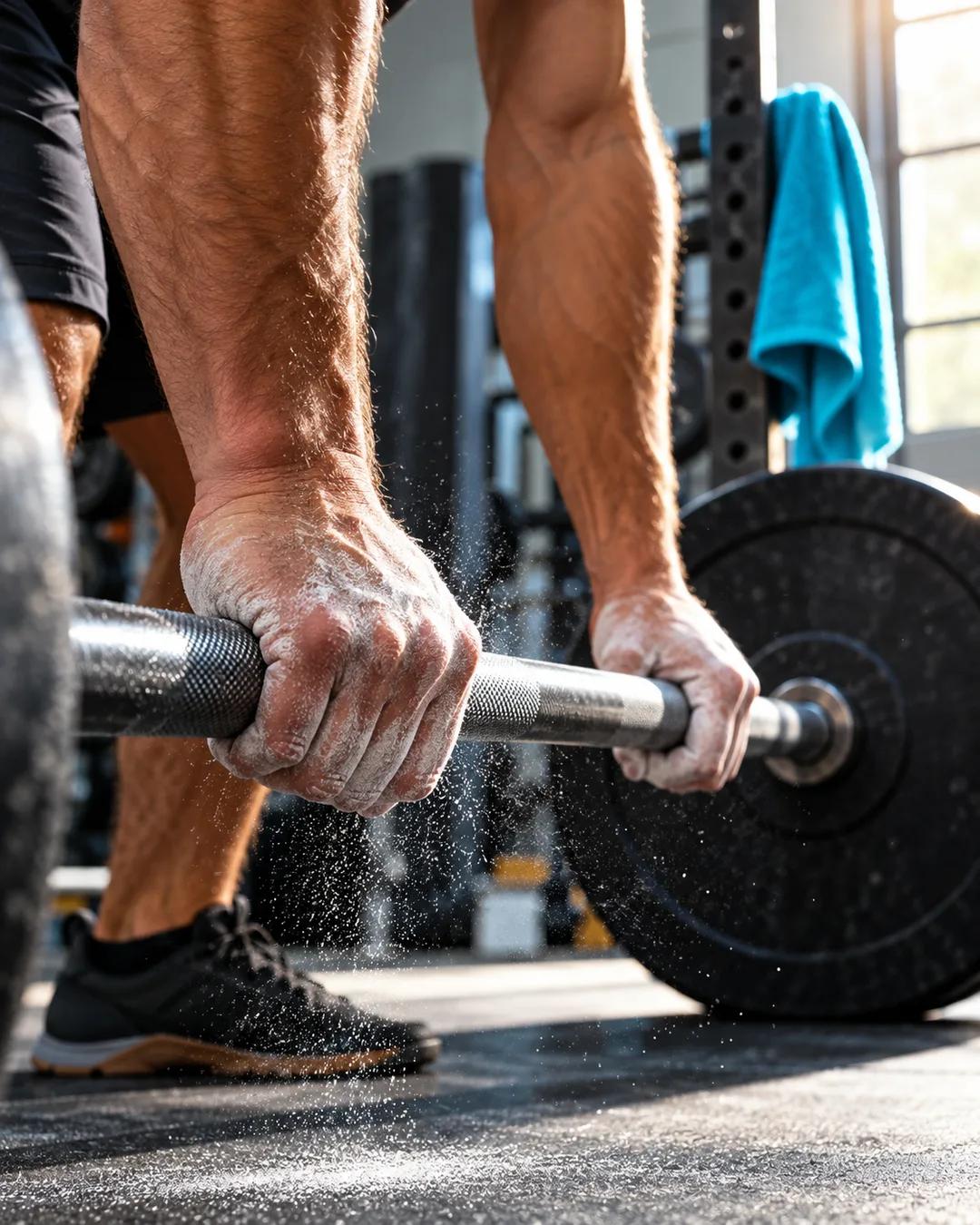
Power lifting sends shear force from the muscle through the tendon onto the bone, and bones sense it. That activates osteoblasts, the cells that build bone. The response is mostly local to the bone being loaded. Osteopenia and osteoporosis are diagnosed from just three sites, the left hip, right hip, and lumbar spine, though ankles and wrists break too.
The window for building bone
Bone grows from birth to about 20, plateaus until about 50, and then declines, slightly for men and precipitously for women as estrogen drops. How high it climbs by 20 or 25 largely sets the trajectory for the rest of life, especially for females. For someone over 65, a broken hip carries a one-year mortality of about 30% to 40%.
Large amounts of corticosteroids during that window impair bone building, in kids on steroid inhalers for years for severe asthma, for example. Inhalers that are beta-agonists are fine. The damage depends on dose and time, so a little cortisone cream on a rash probably doesn't matter.
Older women and lifting
In an Australian study, women in their 60s or 70s with osteopenia, and some probably with osteoporosis, who had never lifted weights did good mornings and deadlifts, picking up something like 50 or 60 kilos. Their bone health improved.
How do bones sense mechanical force?
Cells called osteocytes live inside the bone matrix and sense strain through fluid that moves in tiny channels when bone flexes. Loading lowers their production of sclerostin, a protein that normally restrains bone building, which lets osteoblasts add new bone. The orthopedic surgeon Harold Frost described this feedback in the 1960s as the mechanostat. An antibody against sclerostin is now an approved osteoporosis treatment.
Why do astronauts lose bone so fast?
In microgravity, bones lose the load that gravity normally puts on them. NASA research has found astronauts lose about 1 to 1.5 percent of bone mineral density at the hip and spine per month in space. Bone resorption rises while formation does not keep pace. A 2022 follow-up in Scientific Reports found that bone density had not fully recovered in many astronauts a year after return.
Why does menopause speed bone loss?
Estrogen restrains osteoclasts, the cells that break down bone, so when levels fall at menopause, breakdown outpaces building. The Study of Women's Health Across the Nation, a US cohort study, tracked bone density through the transition. It found that loss accelerates about a year before the final menstrual period and continues for roughly two years afterward.
More from Andrew Huberman