Korva is a scroll of the internet’s best ideas.
History painted on Belfast's walls

Murals on both roads
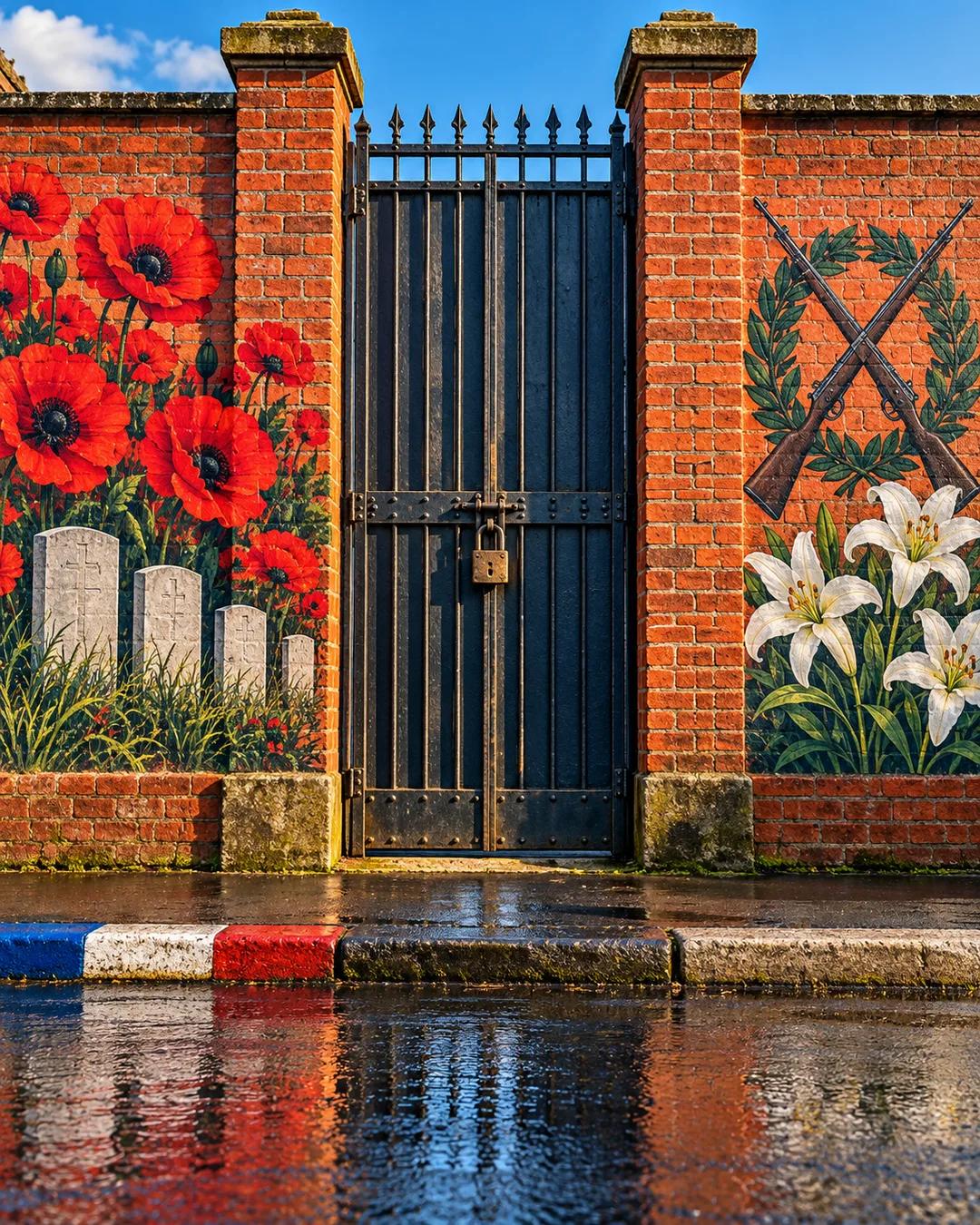
The Shankill Road runs through the Protestant heartland of Belfast and the Falls Road through the Catholic one. Peace walls separate them now, with checkpoint-style gates where they meet. On one side are murals of the Battle of the Somme, poppies, graveyards, and British military heroes. On the other, all the way up the Falls, are murals of the Easter Rising. Both describe the same year in completely different terms.
The two years are not accidents. In 1916 many of Ulster's volunteers were fighting at Gallipoli and the Somme, which became a sacred moment for Ulster's Protestants. That Easter a nationalist uprising in Dublin was followed by a guerrilla campaign in the Catholic south that undermined British authority completely.
History in daily life
History is woven into the texture of life in Northern Ireland, from parades and marches to celebrations of 17th-century battles. Generations grow up on stories of separate identity and antagonism, and many IRA members of the 1960s and 1970s had parents and grandparents who told them what happened in 1920 and 1921.
Other conflicts
The murals later pulled in other conflicts. The Shankill filled up with the Israeli flag and the Falls Road with the Palestinian flag. Unionists, especially some years ago, pictured themselves as the chosen people, the children of Zion, and nationalists' comparison with the Palestinians goes back to the 1970s.
Why are there peace walls in Belfast?
The first barriers went up in 1969 as temporary barbed wire and corrugated iron, built by the British Army after the August riots. More were added through the 1970s and 1980s as violence between neighboring districts continued. Many were later replaced with steel and concrete structures with gates that are closed at night.
When did republican murals take off?
Republican murals multiplied after the 1981 hunger strikes, in which ten republican prisoners starved to death. Bobby Sands, the first to die, became one of the most painted figures in Belfast. Loyalist murals were older, with images of William of Orange dating back to the early 20th century. Both traditions grew into a way of marking territory.
Why are the Falls and Shankill so close?
Both districts grew in the 19th century as working-class neighborhoods around the linen mills of west Belfast. They run roughly parallel into the city, separated by a narrow strip around Cupar Way. The best-known peace wall now stands on that line.
More from The Rest Is History