Korva is a scroll of the internet’s best ideas.
Improbable is fine, impossible isn't

The rule rules out the Road Runner and coyote situation, where the coyote explodes into seventy-five pieces and is reassembled by the next scene. If Homer falls down a gorge, he arrives at the bottom bruised and bloody, and he stays that way. In real life he might have died.
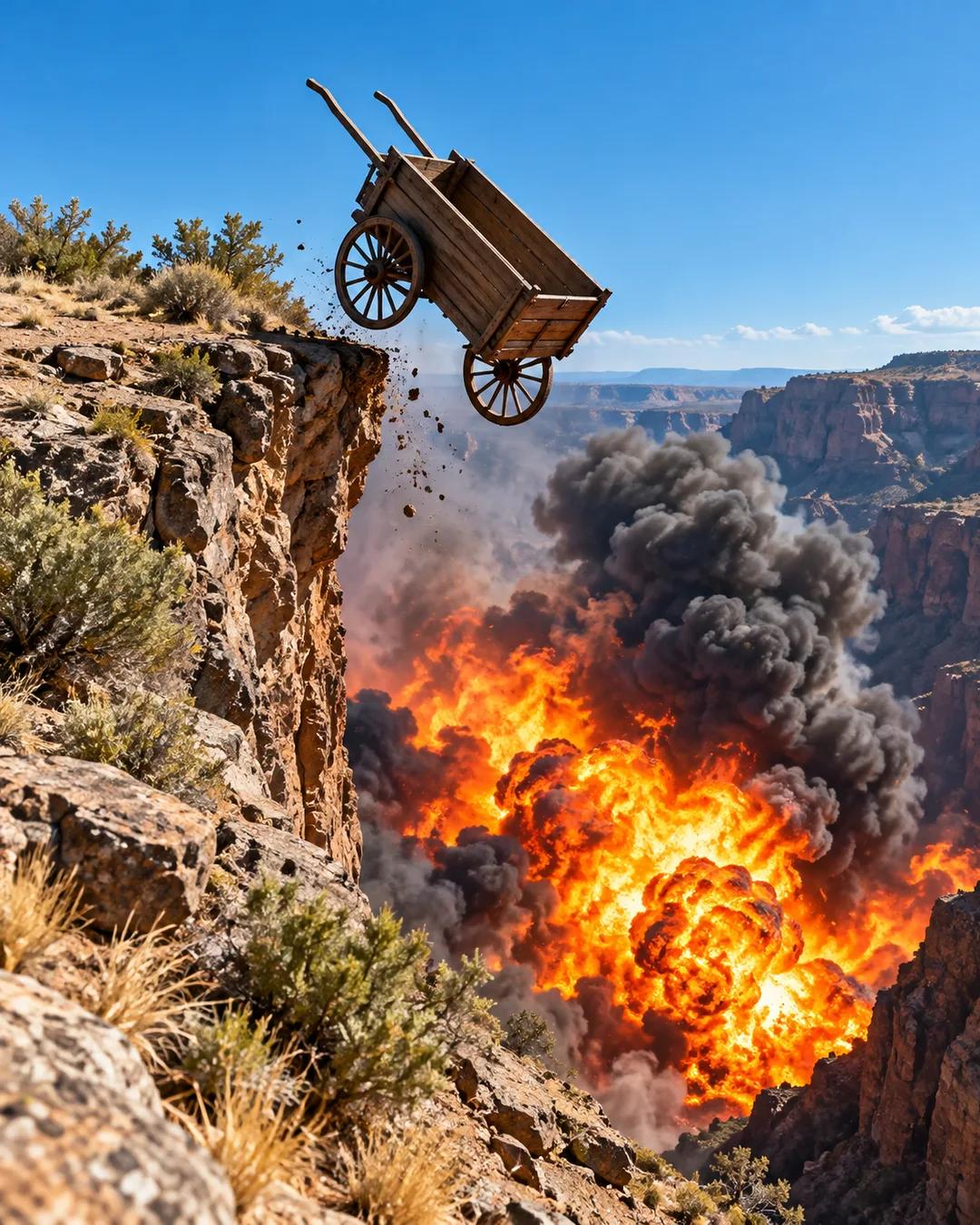
The rule leaves room for exaggeration. When a four-wheeled vehicle of any kind crashes, it explodes into flames, like a car in a 1970s detective series. An Amish man's cart and horse go over a cliff in a huge fireball. That wouldn't really happen, but it isn't impossible, because the wood could have been soaked with kerosene.
Consequences stay attached to the stunt, and the explosions stay possible. That keeps the audience believing in a world where Homer is hurt by what happens to him and is still funny when a fireball follows.
Why did Road Runner cartoons follow strict rules?
Director Chuck Jones and writer Michael Maltese built the Road Runner series around a formula, and Jones later described its rules in interviews and writing. The coyote could be hurt only by gravity or by his own devices, and the Road Runner stayed on the road. A fixed formula let each short spend its time on the gag instead of on explaining the setup. The first Road Runner short, Fast and Furry-ous, came out in 1949.
Why did Aristotle favor believable impossibilities?
In the Poetics, Aristotle argued that a poet should prefer a believable impossibility to an unconvincing possibility. His point was that an audience judges a story by whether its events follow from one another, which can matter more than whether they could happen in the world. A tale about a fantastic event can feel true if its characters and consequences behave consistently. The Poetics was written in the fourth century BC.
More from Conan O’Brien Needs A Friend