Korva is a scroll of the internet’s best ideas.

Fixed assets need utilization
Delivery offers a comparison. McDonald's and Starbucks have spent billions on stores and supply chains, and they run their own apps and front doors. They still work with the delivery marketplaces and reach agreements that suit both sides, because expensive fixed assets pay off at high utilization. A car is a fixed asset in the same way a store is.
The investor worry
Investors raise the opposing view: if only a few players reach autonomy, they will have strong leverage and squeeze the share of every dollar that goes to the network. That is a real risk if a single player alone reaches the finish line on the technology.
China's many players
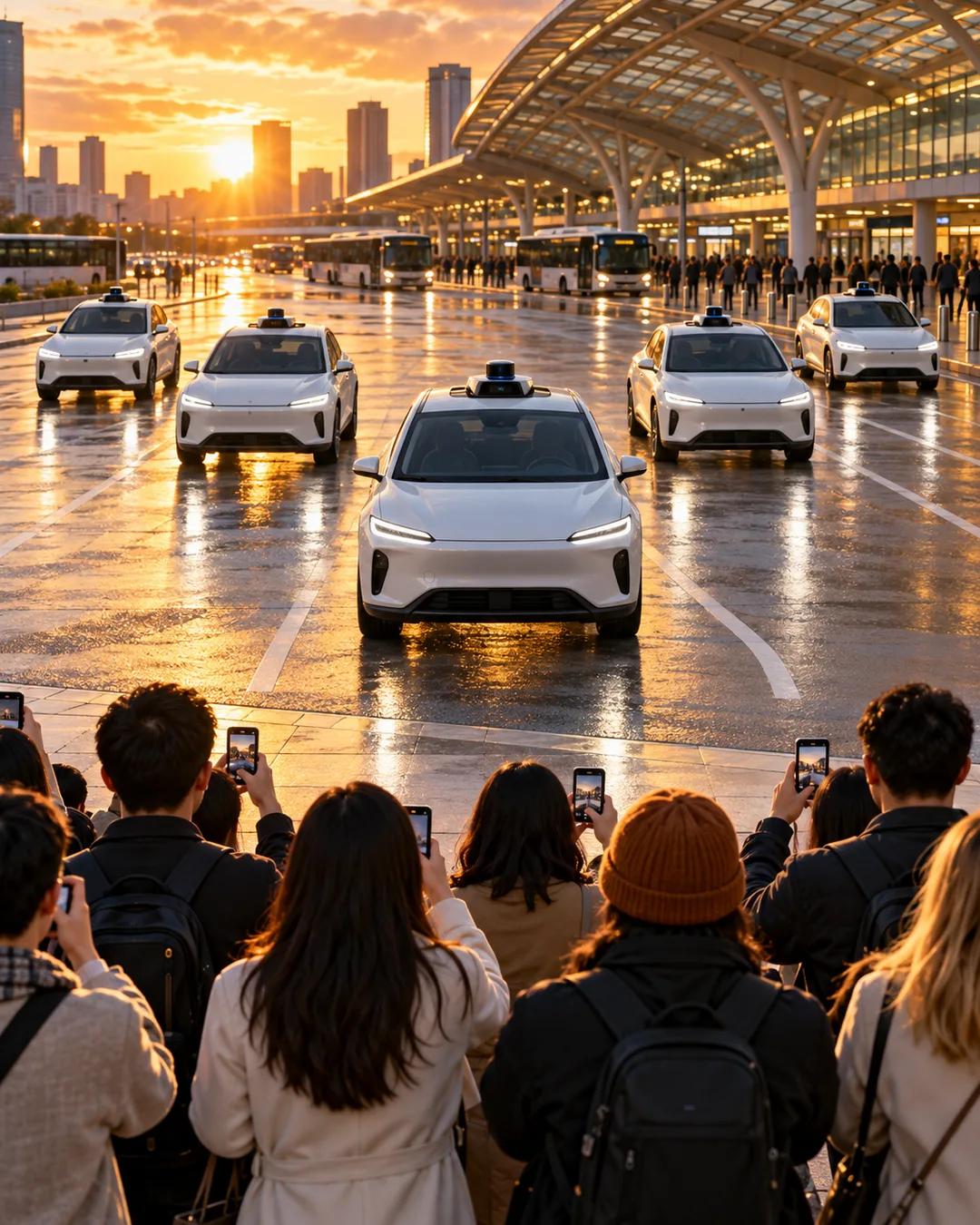
China points the other way. There are already four or five autonomous-vehicle companies emerging there, a number that will grow to eight or ten, and the rest of the world looks unlikely to converge around one player. With several winners, each with its own robotaxi app and its own relationships with rival rideshare and delivery platforms, the player with the largest audience is the one everyone works with.
Why do owners of fixed assets chase high utilization?
When an asset costs the same whether it is used or not, each extra hour of use spreads that cost over more revenue. Airlines track this as load factor, the share of available seats that are filled, and hotels track occupancy rate. Both industries sell through outside channels as well as their own sites. Airlines list fares on online travel sites such as Expedia and Kayak even though they run their own booking pages.
Why do platforms with big audiences hold so much leverage?
Writer Ben Thompson described the pattern in a 2015 essay called Aggregation Theory. A platform that wins the relationship with customers makes suppliers compete for access to them. Once customers start their search in one place, suppliers need to be listed there to be found. Thompson publishes his analysis at Stratechery.
How did China end up with several robotaxi companies?
Chinese cities issued local permits that let several companies test on public roads at the same time, and large technology firms funded rival efforts. Baidu started its Apollo autonomous driving program in 2017, and startups such as Pony.ai and WeRide emerged in the same period. Each company built its own vehicles, software, and ride-hailing app. Baidu's Apollo Go service operates in several Chinese cities.
More from The Twenty Minute VC (20VC): Venture Capital | Startup Funding | The Pitch