Korva is a scroll of the internet’s best ideas.
India shot down its own satellite

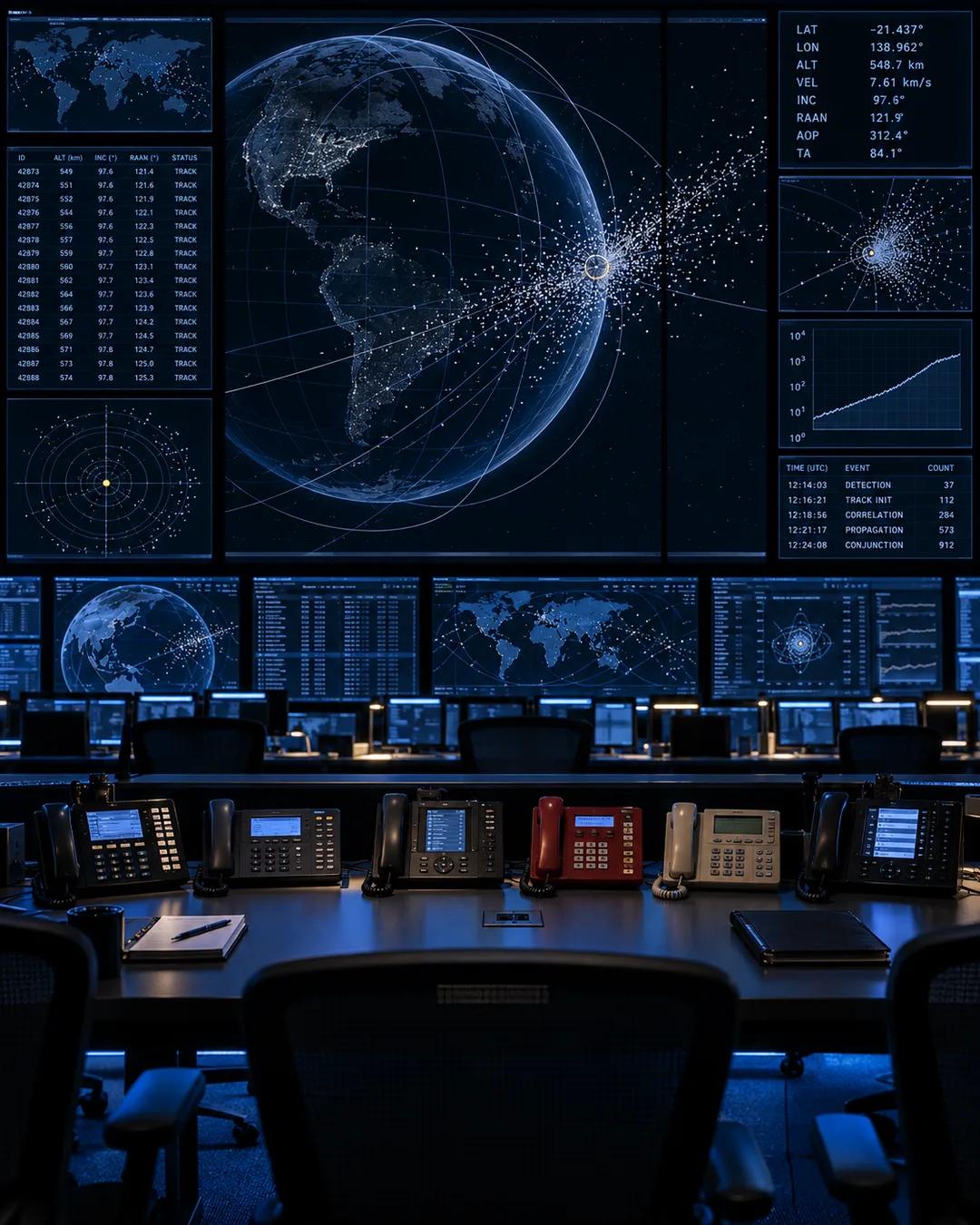
David Grusch was on duty in the operations center of the National Reconnaissance Office, which flies America's spy satellites. As a reservist he was the backup director of intelligence, handling the briefing for the director and leading the director's briefing team. He remembers all the different phones on his desk: he was calling the embassy and everyone else he could reach, asking what had just happened.
The test had been on purpose, and India had not told the US. The worry at the NRO was debris, because a cloud of fragments in orbit threatens spy satellites. He went to the orbital analysts on the watch floor, among the walls of screens, and asked them to calculate the debris field and flag anything that might need to maneuver.
Then he ran up to the director's office in uniform, out of breath. It was a big deal at the time, and it is public record today.
Why is orbital debris so dangerous?
Objects in low Earth orbit travel at about 7.8 kilometers per second, or roughly 17,500 miles an hour. At that speed a fragment the size of a marble hits with the energy of a bullet many times over. In 2009 an inactive Russian military satellite, Cosmos 2251, collided with an operational Iridium communications satellite and created thousands of trackable fragments. NASA and the U.S. Space Surveillance Network track objects down to about ten centimeters.
Why was India's 2019 test lower than others?
India's Mission Shakti test in March 2019 struck its target at an altitude of roughly 300 kilometers, which is low enough for atmospheric drag to pull debris down within months. China's 2007 test destroyed a satellite at about 860 kilometers, where fragments stay in orbit for decades. NASA reported that the 2007 test produced more than 3,000 trackable pieces. India's test made it the fourth country to shoot down a satellite.
Who keeps track of what is in orbit?
The U.S. Space Surveillance Network uses radars and optical telescopes around the world to catalog objects in orbit. The U.S. Space Force publishes the public catalog at space-track.org. Operators use it to decide whether a satellite needs to maneuver to avoid a close approach. The catalog lists tens of thousands of tracked objects.
More from The Joe Rogan Experience