Korva is a scroll of the internet’s best ideas.
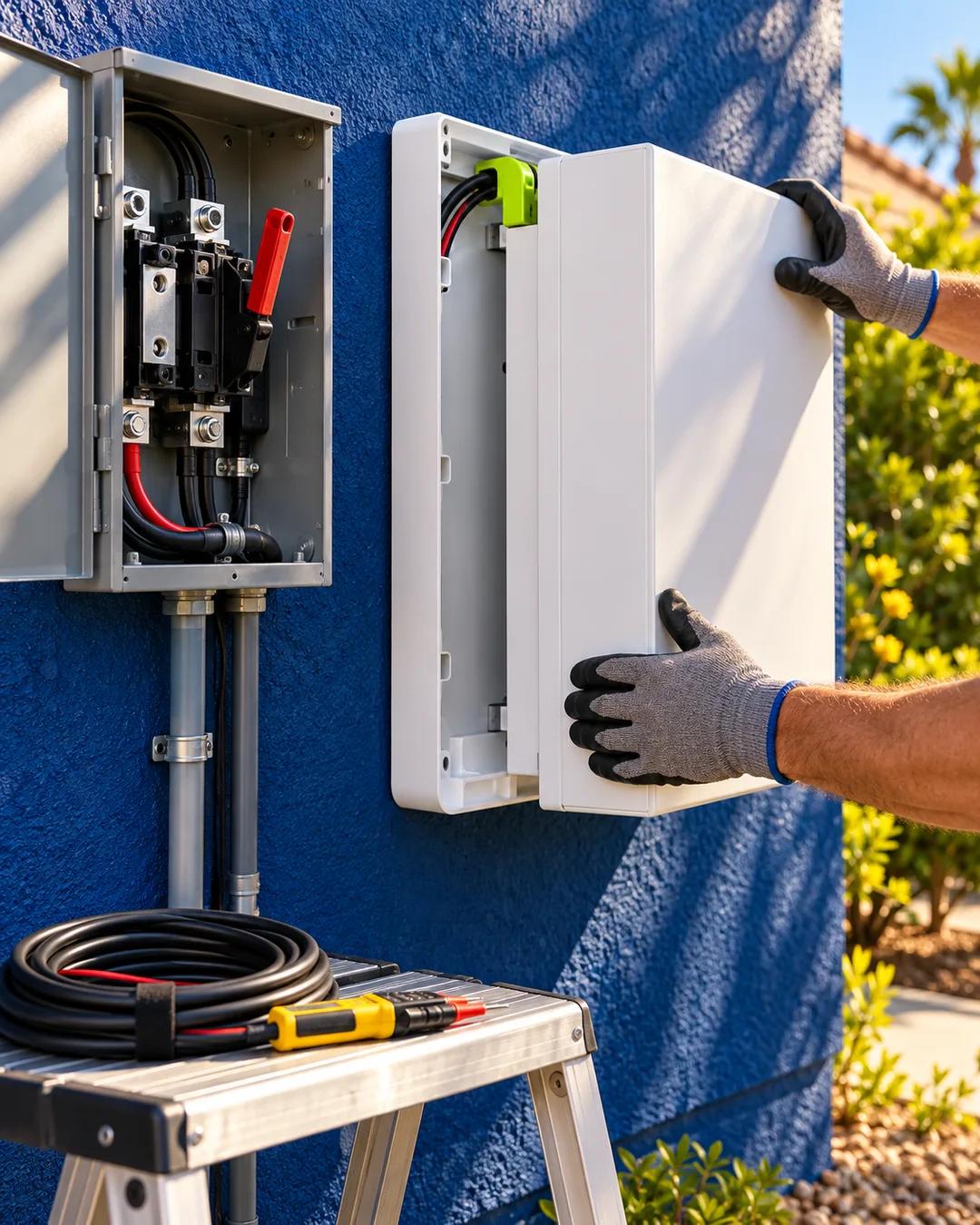
Install in two steps, not three
How Disco works
Disco is an internal disconnect that sits between the grid, the home's main panel, and Base Core. Electricians do the detailed electrical work when they disconnect the home from the grid with Disco, and installers come the next day to plug in the module. The install goes from three steps down to two, and each home uses less electrician time.
Designing for lifting
Designing for install meant accepting trade-offs. Base could have squeezed more energy into each module, but then every lift would have needed a piece of equipment, and a person could never have lifted it.
Remote diagnosis
Disco carries telemetry, too. For Gen 1, a customer would call about flickering lights and the team would diagnose from the customer's description and one-hertz telemetry, one reading per second. Disco now analyzes the actual waveform at seven kilohertz, 7,000 times a second, so the team can diagnose and fix most issues remotely and almost instantly.
Why is electrician time so scarce?
Becoming a licensed electrician takes years of supervised training. The US Bureau of Labor Statistics lists an apprenticeship of typically four to five years. Electricians are needed for housing, factories, data centers, and the work of connecting solar panels and batteries to the grid. Every home battery install competes with those jobs for the same trained workers.
Why does lifting weight limit module design?
The National Institute for Occupational Safety and Health sets a recommended weight limit of 51 pounds, about 23 kilograms, for a lift under ideal conditions. Real conditions such as awkward angles, tight spaces, and repeated lifts lower that figure. A module heavier than a person can lift needs a hoist, a cart, or a second worker. Each added piece of equipment complicates the install.
Why does 7,000 samples a second reveal more?
The Nyquist-Shannon sampling theorem says a signal must be sampled at more than twice its highest frequency to be captured faithfully. Grid power alternates at 60 hertz, but flicker and distortion appear as higher-frequency components. A reading once per second only shows slow averages and misses fast events. Sampling at 7 kilohertz can capture frequency components up to 3.5 kilohertz.
More from Packy McCormick