Korva is a scroll of the internet’s best ideas.
Intel scoffed at Nvidia's graphics machines

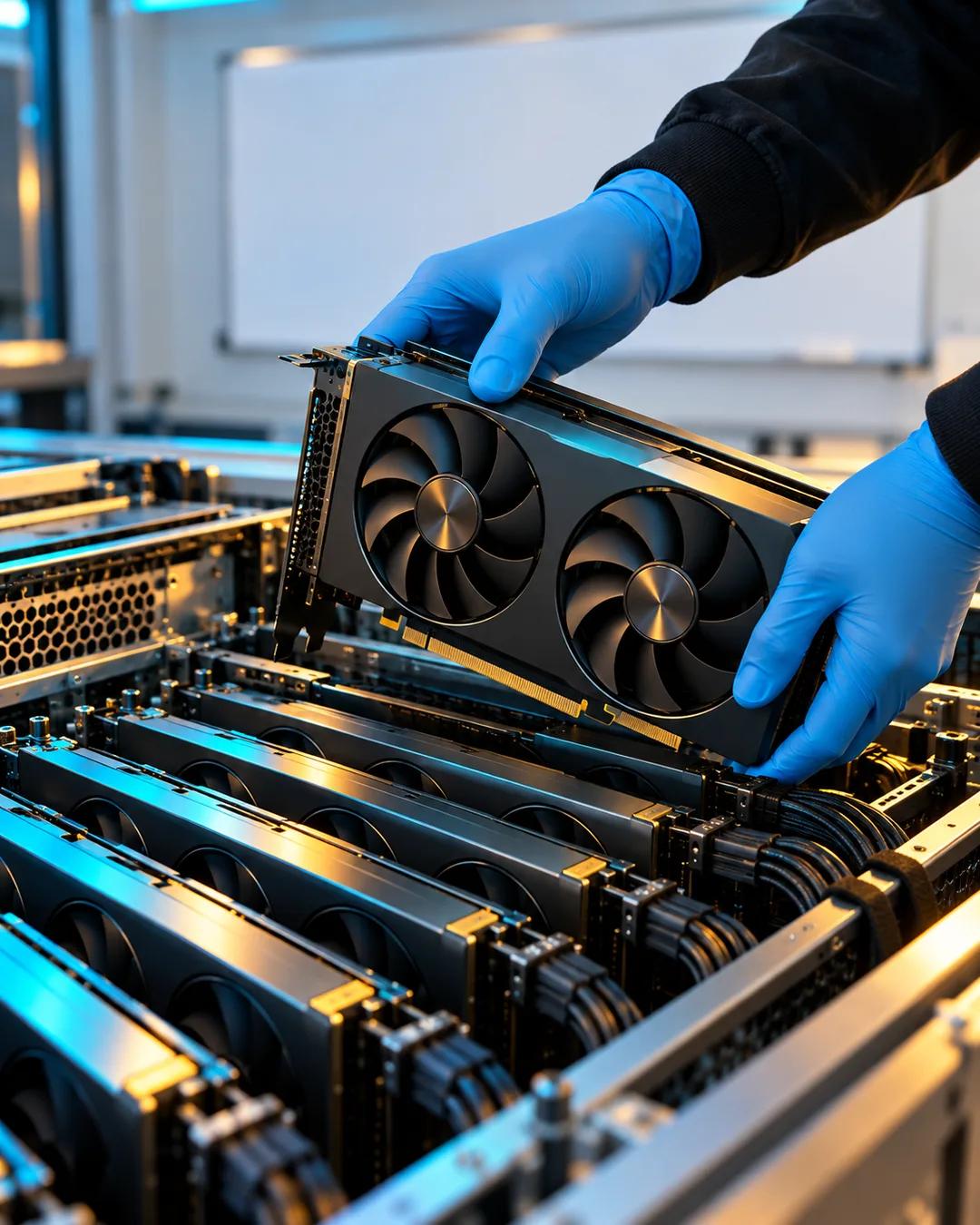
Intel was at the height of its strength on CPUs, and the picture was always the big CPU next to the little GPUs that some gamers wanted. Nvidia kept building high-performance throughput computers anyway. It built a real software stack around them, including CUDA and a multithreading approach called SIMT, and improved it a little with every release.
Then Japanese high-performance computing researchers realized they could take those graphics cards and start using them for their own workloads. The cards were a more computationally dense platform for attacking some of the world's most interesting workloads, and they were now general-purpose computing devices.
AI had gone through its fifth winter by that point, and the common feeling was that it would never matter. The community around it kept developing, and CUDA kept getting better generation after generation.
Intel had its own project aimed at doing the same thing with x86, called Larrabee. It was killed a week after the executive who ran it left the company.
Why are graphics chips good at AI math?
Training a neural network is mostly multiplying huge grids of numbers, and each multiplication can be done independently of the others. A graphics chip carries thousands of small cores built to do exactly that kind of parallel arithmetic for pixels. A conventional CPU has a few powerful cores designed to run one chain of instructions quickly. The same hardware that shades millions of pixels at once can therefore update millions of network weights at once.
What changed with AlexNet in 2012?
AlexNet was an image-recognition network built by Alex Krizhevsky, Ilya Sutskever, and Geoffrey Hinton at the University of Toronto. They trained it on two Nvidia GTX 580 graphics cards. In the 2012 ImageNet competition it reached a top-five error rate of about 15.3 percent, while the runner-up scored about 26.2 percent. That gap convinced many researchers that deep neural networks trained on graphics chips were the way forward.
What was Intel's Larrabee?
Larrabee was Intel's attempt to build a graphics processor out of many simple x86 cores, announced publicly in 2008. Intel cancelled it as a graphics product in 2009 after it fell short of performance targets. The design lived on in a line of many-core accelerator chips called Xeon Phi. Intel discontinued that line in 2018.
More from All-In with Chamath, Jason, Sacks & Friedberg