Korva is a scroll of the internet’s best ideas.
Japan ranks makers above merchants

What shokunin means
The word shokunin means a craftsperson, someone who makes something extremely well, whether a great sushi chef or a great ramen cook. The role is still revered, and the reverence dates back to the Edo era in the seventeenth century, when people who made and executed things ranked above the merchants who just sold them.
The merchant model
The merchant-first approach is the Walmart model, where the company that sells the good is number one and nobody cares who made it. A five-dollar pillow there is a commodity. In Japan, the person who made the pillow, and made it really well, is the most valuable one.
Ramen in practice
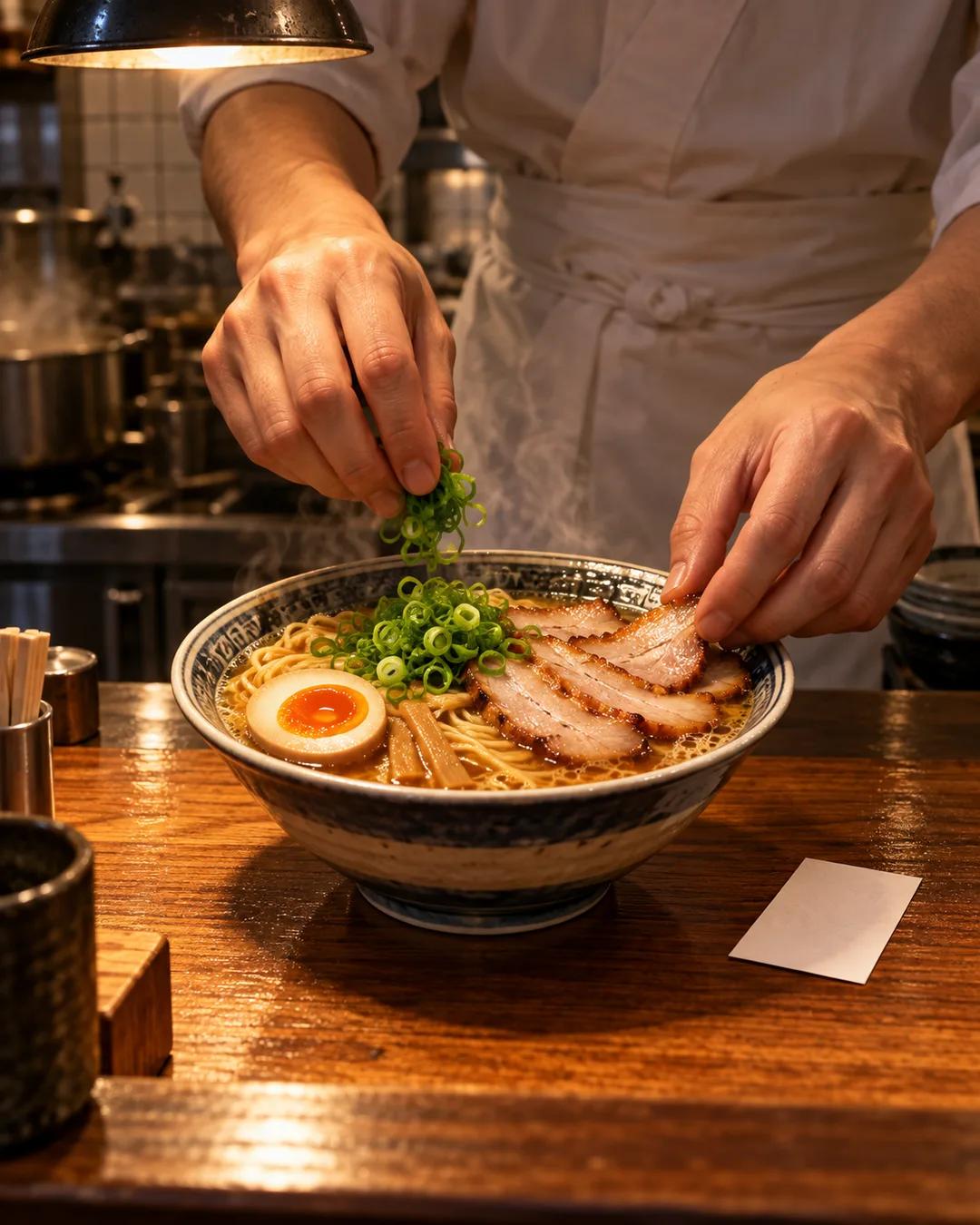
Ramen shows how it plays out. At a neighborhood's best ramen shop, with a line around the block, customers buy a ticket that says to come back at three PM for a seat at the little counter. Shops like this don't franchise, because a branch would put the noodles, the pork broth, the bamboo shoots, and the spring onions out of the owner's control. A shop might buy its spring onions from one grower in Chiba who grows the best, and that sourcing wouldn't survive a move to a new shop in Yokohama.
Why did Edo rank makers above merchants?
The Tokugawa shogunate organized society into four classes: samurai, farmers, artisans, and merchants. The system drew on Confucian thinking, which valued people who produced food and goods above those who only traded them. Merchants sat at the bottom of the official order even though many grew wealthy. Artisans such as swordsmiths, carpenters, and lacquer workers ranked above them.
Why does Japan have so many ancient businesses?
A 2008 Bank of Korea report found that Japan was home to more than three thousand companies older than two hundred years, far more than any other country. Many family firms pass to adopted heirs: if a son is unsuited to the trade, the owner adopts a capable adult, often a son-in-law, so the craft stays under the family name. The hot spring inn Nishiyama Onsen Keiunkan, founded in 705, is listed by Guinness World Records as the world's oldest hotel.
How long does shokunin training take?
Traditional apprenticeships are long and begin with humble work. A sushi apprentice has historically spent years washing dishes, cleaning, and cooking rice before being allowed to cut fish. The thinking is that repetition builds the senses a craft depends on, such as judging rice temperature or knife angle. The 2011 documentary Jiro Dreams of Sushi showed apprentices at Sukiyabashi Jiro in Tokyo training for years before being trusted with the egg sushi.
More from Search Engine