Korva is a scroll of the internet’s best ideas.
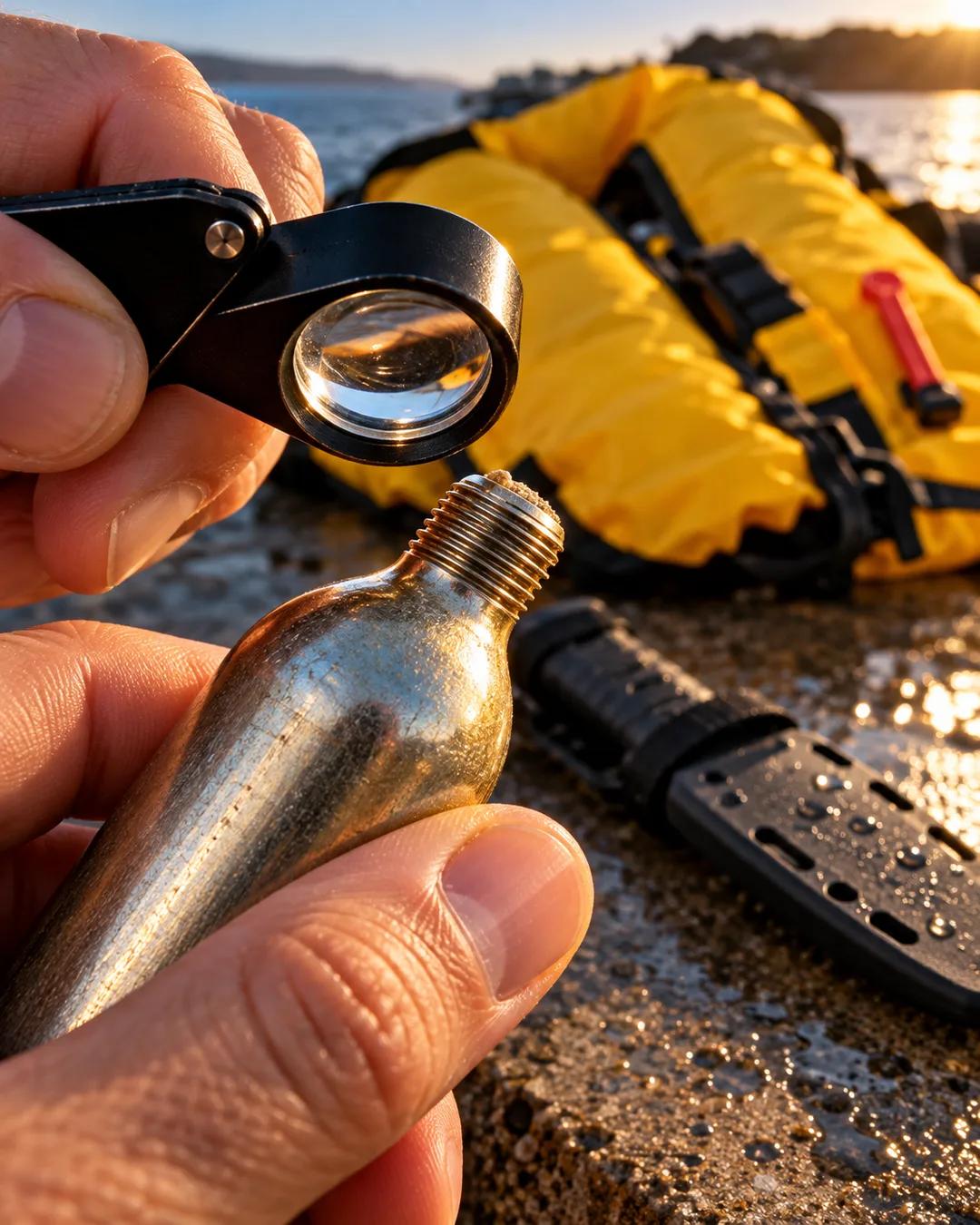
Jeweler's loop on a cartridge
During the two-mile swim, a trainee holds a K-Bar knife in one hand and a CO2 cartridge in the other while wearing a life jacket. The instructors examine the twist-in section of the cartridge through the loop. A trainee with a grain of sand or fleck of rust on it is in trouble.
The jacket would work regardless, because the knurling on the cartridge has nothing to do with inflating it. The order was to carry nothing that wasn't basically brand new, and the test was whether a trainee would follow it, because following the procedure is what saves a life. Can you do what you were told even when you're exhausted, don't want to, and have limited time?
Training is full of small tasks like this, and one of the team mantras is how you do anything is how you do everything. Many of them have nothing to do with anything except doing the small thing.
How does a CO2 life jacket inflate?
A small steel cartridge holds liquefied carbon dioxide under high pressure. When a firing pin or a pull of the cord pierces the seal, the gas rushes out and expands into the jacket's bladder. The expansion cools the cartridge sharply, and it can feel cold or frost over. A standard cartridge inflates a jacket in a few seconds.
How does Hell Week test SEAL candidates?
Hell Week is the fifth week of Basic Underwater Demolition/SEAL training, known as BUD/S, at Naval Amphibious Base Coronado in California. It lasts about five and a half days, during which candidates get only a few hours of sleep in total. Instructors run the candidates through constant physical evolutions in cold water and sand. A large share of each class drops out before the week ends.
More from Andrew Huberman