Korva is a scroll of the internet’s best ideas.
Joe Strummer's all-night campfires

Strummer's campfires
The Clash lasted only five years. Afterward Strummer wandered for a long time, grew out a beard, and moved to Spain without telling anyone who he was, until they eventually figured it out.
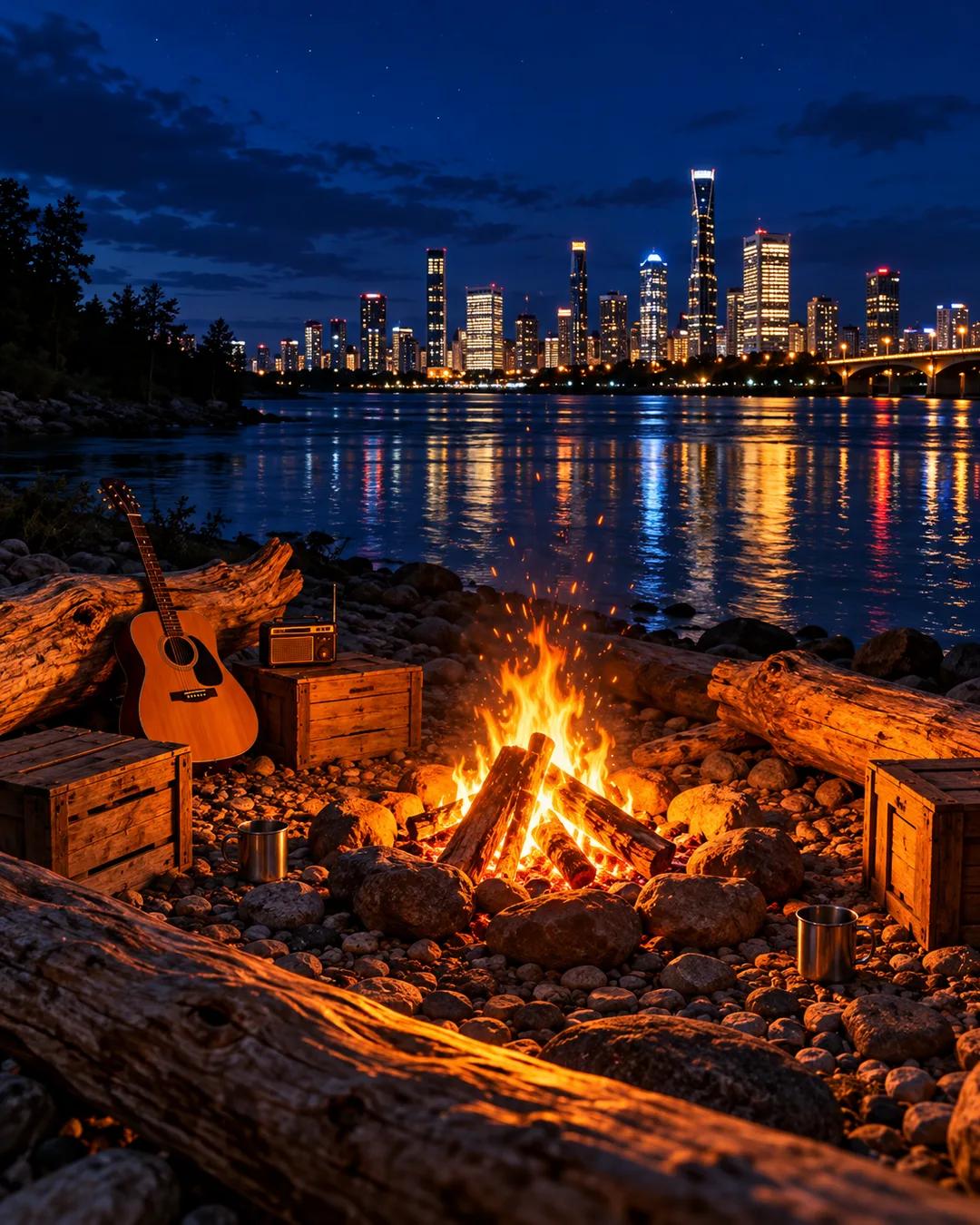
The campfires were what he kept doing. He took people down to the river in Manhattan and invited whoever came, including friends like Jim Jarmusch, and kids and adults sat around together. They played music, sang, and drummed, and people got up to talk.
He brought a radio along in case the night could turn into a radio show. A few of the nights were filmed, but recording was never the point.
Why fire gathers people
Gathering around fire is far older than any of it. Campfires go back several hundred thousand years, and people in small-scale societies still gather at night around them. They tell stories of how they are all connected and helping each other, and of what to watch out for in the dark.
Why do people tell stories around a fire?
Anthropologist Polly Wiessner recorded conversations among the Ju/'hoansi of southern Africa and reported her findings in 2014 in the Proceedings of the National Academy of Sciences. Daytime talk centered on economics, complaints, and gossip, and only about a third of it was storytelling. Around the evening fire, more than 80 percent of the talk was stories. Firelight extended the day and gave groups a stretch of relaxed time to share history and values.
How does singing together bond strangers so fast?
In a 2015 study in Royal Society Open Science, Eiluned Pearce, Jacques Launay, and Robin Dunbar compared adult-education classes. Strangers who took a singing class felt close to their classmates much sooner than strangers in craft or creative writing classes. The researchers called this the ice-breaker effect. They linked it to the release of endorphins during synchronized group activity.
More from Andrew Huberman