Korva is a scroll of the internet’s best ideas.
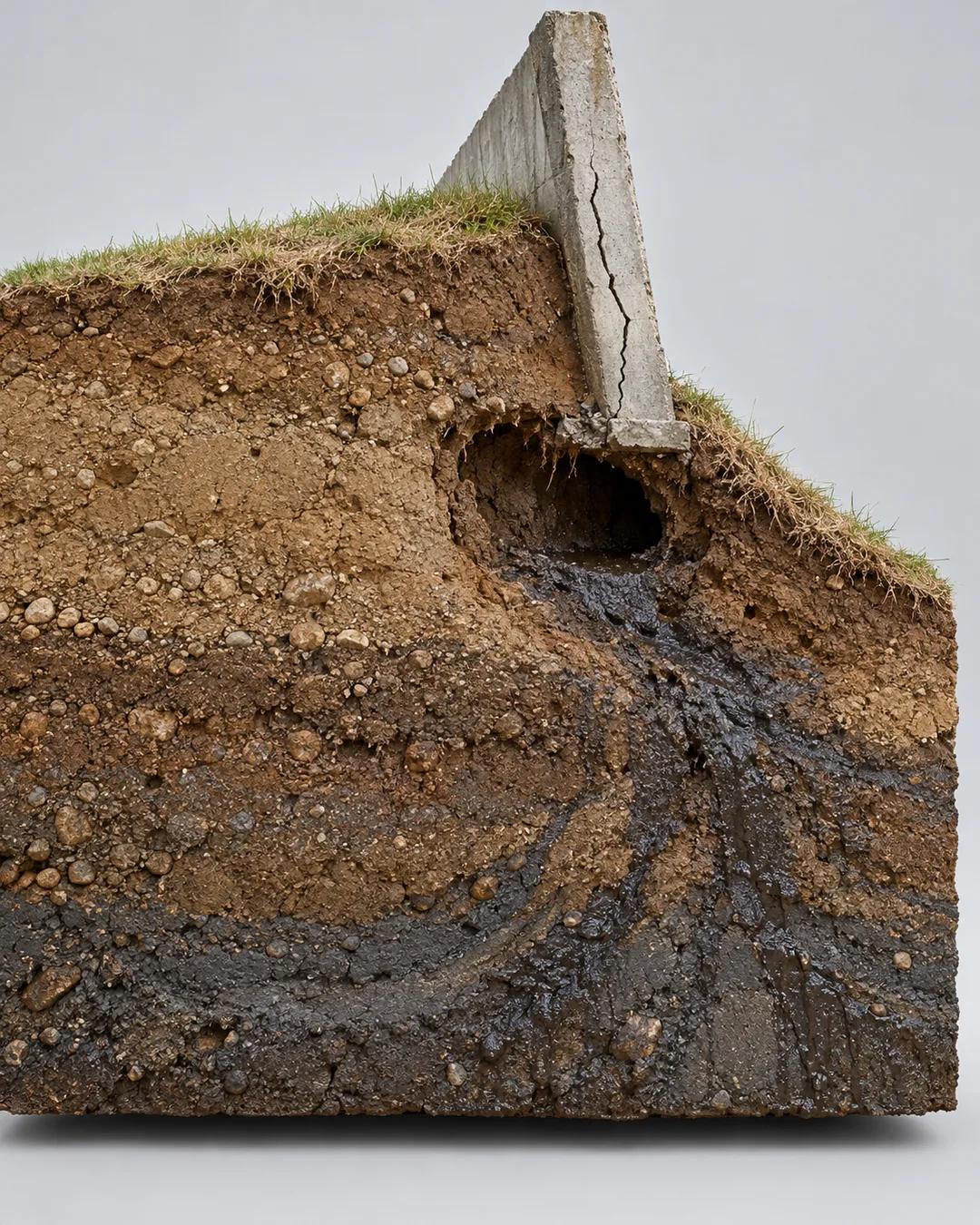
Katrina's levees failed from underneath

The toll
Katrina killed 1,800 people, displaced 400,000, and caused 125 billion dollars in damage. The Army Corps of Engineers, which built the levees, wanted the flooding read as water going over the top, an act of God.
The investigations
Several independent investigations reached a different conclusion. The House and the Senate each ran a commission, and two reporters who had written a series three years earlier about how this could happen went on to win two Pulitzers. The National Science Foundation funded a second team led by two University of California professors, and Louisiana hired a team from LSU. Sometimes they ran into each other and sometimes they shared notes, and all of them arrived at the same conclusion: the failure was man-made.
The Corps blocked, and so did a group it had brought inside. The American Society of Civil Engineers was paid a million dollars to join the internal investigation, and over time it was absorbed into the Corps and became a blocker itself. One of the University of California professors wrote a forty-two page report to the society listing every time it had blocked, and the document is on the internet.
The fixes
The investigations produced ninety recommendations, and those changes were made. The fifteen-billion-dollar seawalls have now held for twenty years.
Why did the floodwalls give way underneath?
Some of New Orleans' levees were concrete floodwalls set on earthen embankments, with soil of varying strength beneath. When floodwater pressed on a wall, weak soil under it could shift or wash out, letting the wall tilt away from the water. After Katrina, independent teams documented this kind of foundation failure at the 17th Street Canal and the London Avenue Canal. A wall that fails this way can collapse well before the water rises to its top.
Why does storm category miss flood danger?
The Saffir-Simpson scale rates a hurricane by its sustained wind speed alone. Storm surge also depends on the storm's size, its forward speed, and the shape of the coast and seafloor. Katrina had peaked as a category 5 over the Gulf of Mexico before weakening, and its large wind field kept pushing a very high surge ahead of it. The surge along the Mississippi coast was recorded at roughly 27 feet in places.
Why is New Orleans so low?
Much of the city sits near or below sea level, on land built from Mississippi River sediment. Levees along the river stopped the floods that once spread fresh silt across the delta. Without new sediment, the ground compacts and sinks, a process called subsidence. Pumps now move rainwater out of the city's bowl-shaped basin.
More from All-In with Chamath, Jason, Sacks & Friedberg