Korva is a scroll of the internet’s best ideas.
Killing a queen sets a precedent

The risks of killing a queen
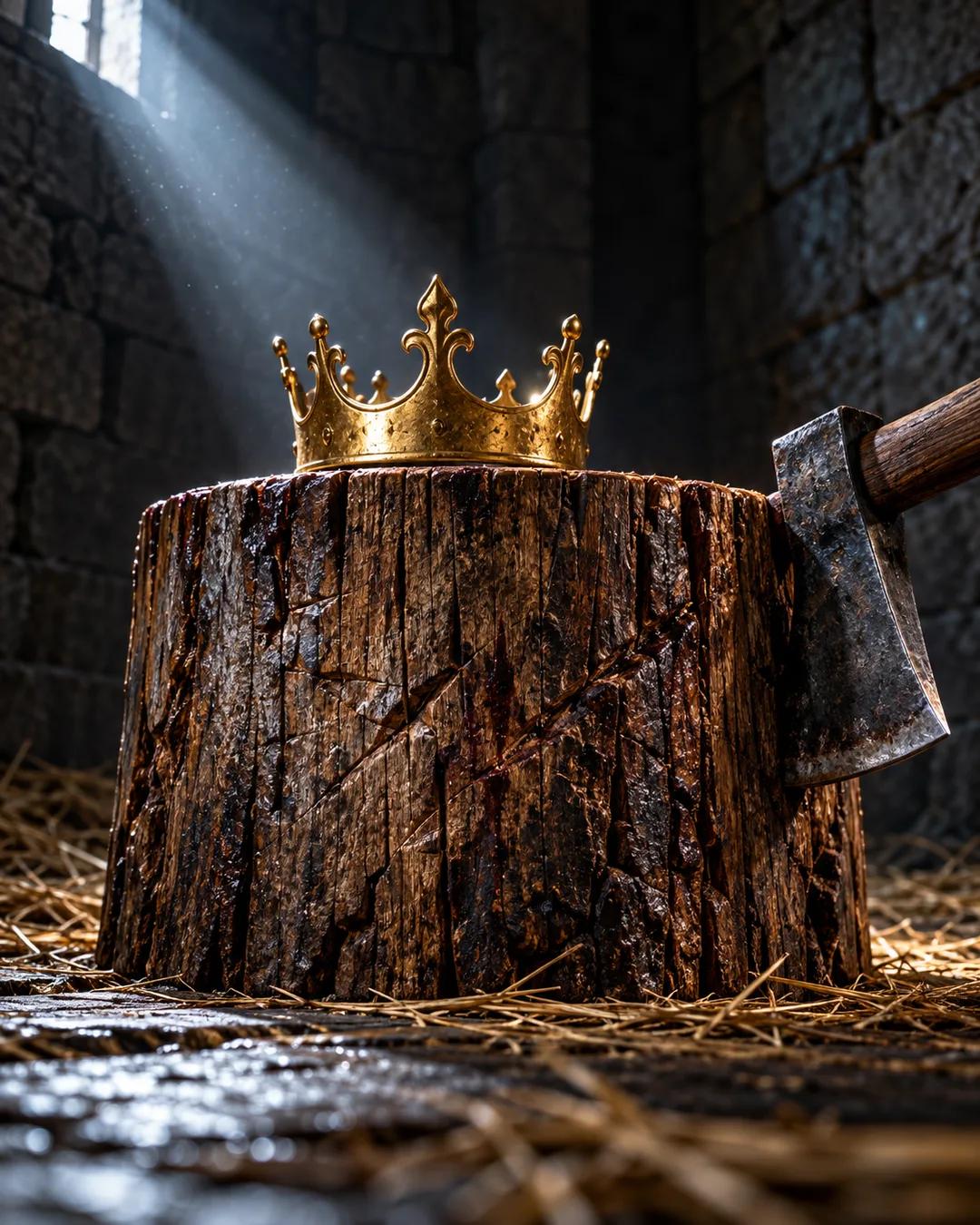
Putting Mary to death carried risks beyond foreign policy. It would outrage Europe and give Philip II of Spain the clinching justification for sending an armada. Mary was an anointed queen, as Elizabeth was, and Elizabeth did not want to damage the sense of divinity that hedges a monarch by cutting off a royal head. Mary had also been convicted under the Act for the Queen's Safety, which Parliament passed in 1585, so her execution could look like Parliament licensing regicide. Mary's grandson Charles I was later executed by a parliament, and Elizabeth's anxiety was not far-fetched.
What Burghley wanted
Burghley and Walsingham wanted exactly the public execution Elizabeth dreaded. It would remove Mary in full view, brand her a traitor, lock England into the war with Spain they expected, and build solidarity among Protestants. Elizabeth had no husband and no children, so if she died with Mary alive, the best they could hope for was civil war, and the worst was the complete triumph of popery and their own personal ruin.
Justice seen to be done
A quiet murder was never their method. They were devout Christians who held that justice should be seen to be done, and the reputation of English justice and of their religion depended on a lawful, public end.
Why were monarchs thought to be divinely chosen?
At a coronation the monarch was anointed with holy oil, a rite modelled on the anointing of the kings of ancient Israel. The ceremony gave the ruler a sacred status that no ordinary subject had. Elizabeth was anointed in 1559. Shakespeare put the idea into Hamlet in the line that such divinity doth hedge a king, written a little over a decade after Mary's death.
How did Parliament come to try Charles I?
Charles I was Mary's grandson, because her son James I was his father. In 1649 the House of Commons created a High Court of Justice to try him, after the House of Lords rejected the plan. He was beheaded on 30 January 1649 outside the Banqueting House in Whitehall. England then had no monarch until 1660.
Why did Protestants fear Catholic rule?
Under the Catholic queen Mary I, who reigned from 1553 to 1558, about 280 Protestants were burned for heresy. John Foxe's Book of Martyrs, published in 1563, told their stories in vivid detail. In 1571 the Church of England's Convocation ordered copies to be placed in cathedrals.
More from The Rest Is History