Korva is a scroll of the internet’s best ideas.
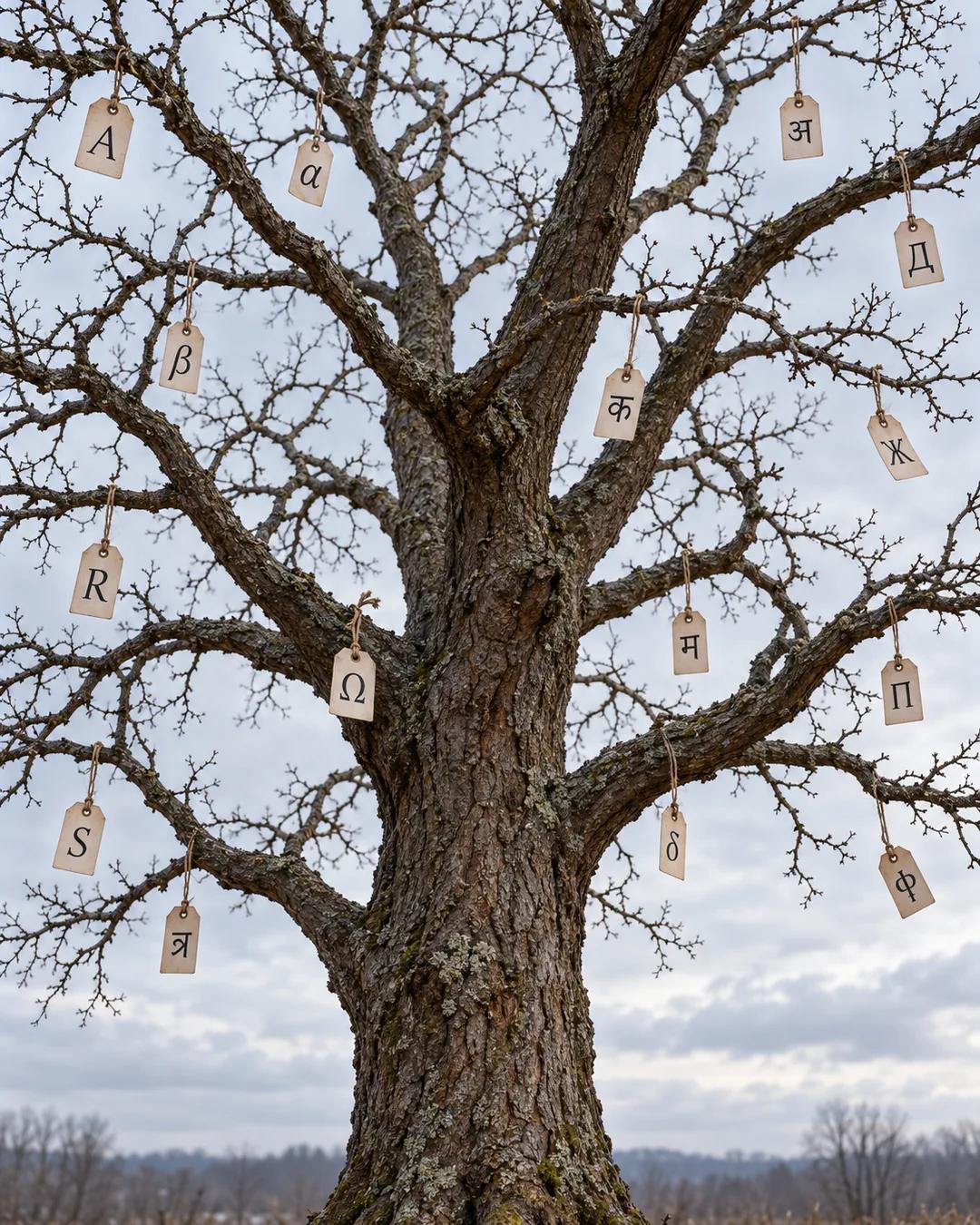
Languages have family trees

Language families
Comparative linguists identified an ancestral language they called Proto-Indo-European, the ancestor of Sanskrit and all the Indic languages, Iranian, and nearly all the European languages. English and German share a common ancestral language spoken a couple of thousand years ago, and that language in turn shares an ancestral language with Latin.
Species ancestry
Species trace back the same way. Geneticists use molecular dating methods to estimate how much time has passed since two species shared an ancestor. Humans and apes share one, and going further back all mammals do. Followed all the way, the lines reach LUCA, the last universal common ancestor of all living organisms.
Two extinction crises
A conservation biologist who spent years at WWF measuring trends in species populations applied the same methods to endangered languages. The result was the realization that the world faces two extinction crises, one of species and one of languages.
How did linguists link Sanskrit to Latin?
In 1786 the British judge Sir William Jones noted that Sanskrit, Greek, and Latin shared roots and grammar too closely to be an accident. Sanskrit pitar, Latin pater, and Greek pater are among the matching words. He suggested all three came from a common source that might no longer exist. Later scholars built that idea into the Indo-European family.
How do molecular clocks estimate time?
Mutations pile up in DNA at a roughly steady rate. Comparing the differences between two species' DNA, and calibrating the rate against fossils of known age, gives an estimate of when their lineages split. Emile Zuckerkandl and Linus Pauling proposed the idea in 1962 after comparing proteins in different animals. Rates vary between lineages, so modern methods adjust for that.
Why do languages split into daughters?
When groups of speakers lose contact, each accumulates its own sound changes and new words. The changes are regular rather than random. Latin pater and English father show one of them, the shift of p to f that the philologist Jacob Grimm described in the early 1800s. After enough centuries, the descendant tongues are unintelligible to each other.
More from On Humans