Korva is a scroll of the internet’s best ideas.
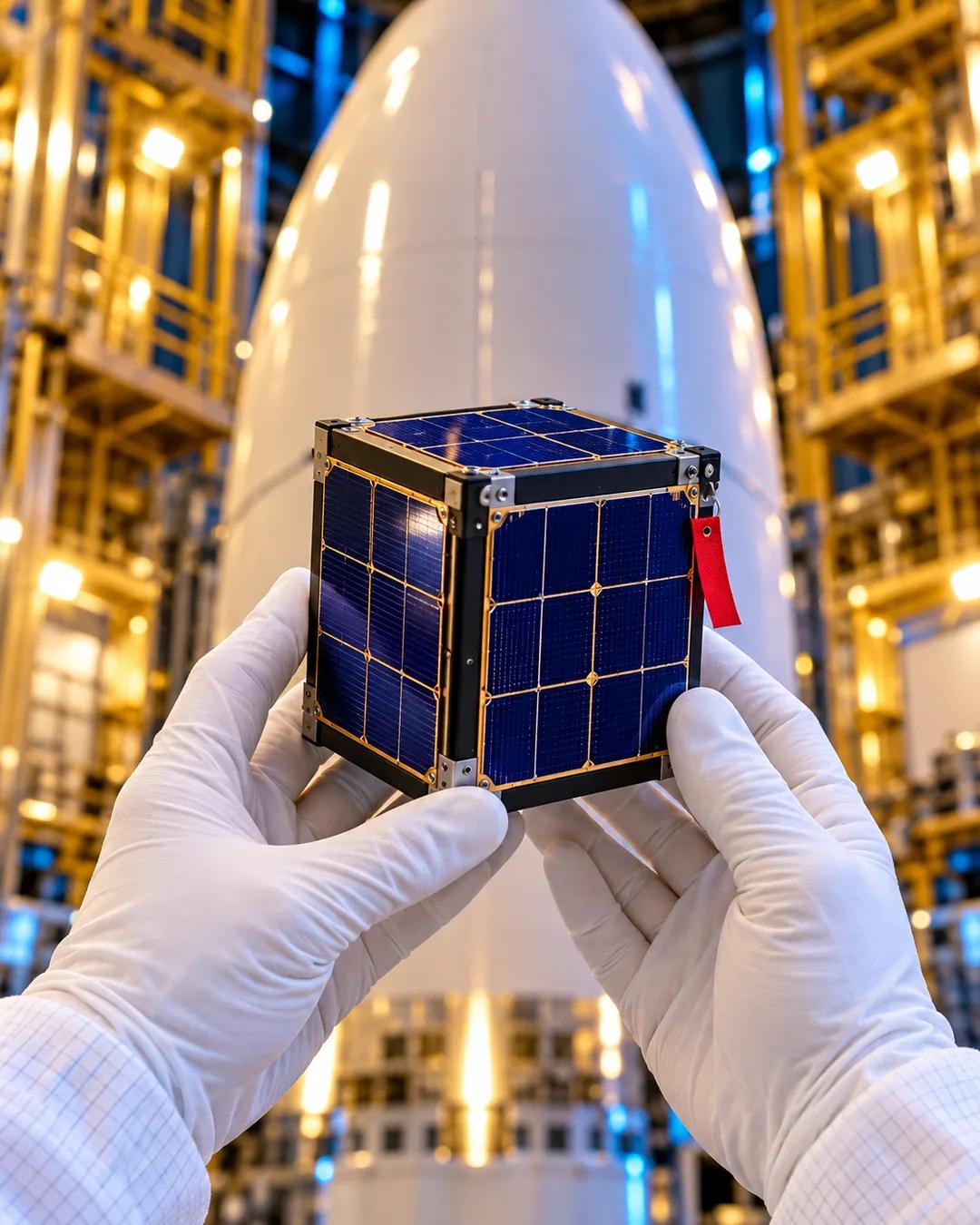
Launching to space got 60x cheaper

The price drop
That is a drop of 60 times, and the price is expected to fall another tenfold in the next four or five years. At that level, sending something to space costs about the same as moving it from one point on Earth to another.
Orbit fills up
Orbit is already filling up. There were around 1,000 satellites in space in 2010, and there are more than 10,000 now. The vast majority of everything humanity has ever sent beyond Earth went up in the last decade.
A new space economy
Humans have lived on one small planet for the whole of their existence, and an effective way off it is brand new. As launch costs keep falling, the human footprint in space is set to grow massively, and that opens up an entire space economy to build companies in.
How did reusable rockets cut launch costs?
For decades, rockets were thrown away after a single flight, which meant paying for an entire new vehicle on every launch. Propellant is a small fraction of that bill, so landing and reflying the booster removes most of the expense. SpaceX landed a Falcon 9 first stage for the first time in December 2015 and reflew one for the first time in March 2017. Individual boosters have since flown many times.
Why didn't the Space Shuttle make launches cheap?
The Shuttle was designed to be reusable, but its engines and heat-shield tiles needed extensive inspection and refurbishment between flights. That work kept turnaround times far longer than planned, and the fleet flew far fewer times than early projections. The program flew 135 missions between 1981 and 2011.
Why does cheap launching mean more satellites?
When a launch cost tens of thousands of dollars per kilogram, satellite makers built few, heavy, long-lived spacecraft and tested them exhaustively. Cheaper launches allow lighter, simpler satellites that can be replaced often. Constellations in low Earth orbit need hundreds or thousands of satellites because each one sees only a small patch of the ground. Starlink satellites orbit at roughly 550 kilometers altitude.
Why does a crowded orbit create debris risk?
In 1978, NASA scientists Donald Kessler and Burton Cour-Palais described a chain reaction in which collisions between objects in orbit create fragments that cause further collisions. Fragments in low Earth orbit travel at roughly seven kilometers per second, so even a small piece can destroy a satellite. A 2009 collision between an American Iridium satellite and a defunct Russian Cosmos satellite produced more than two thousand tracked fragments.
More from Lightspeed Venture Partners