Korva is a scroll of the internet’s best ideas.
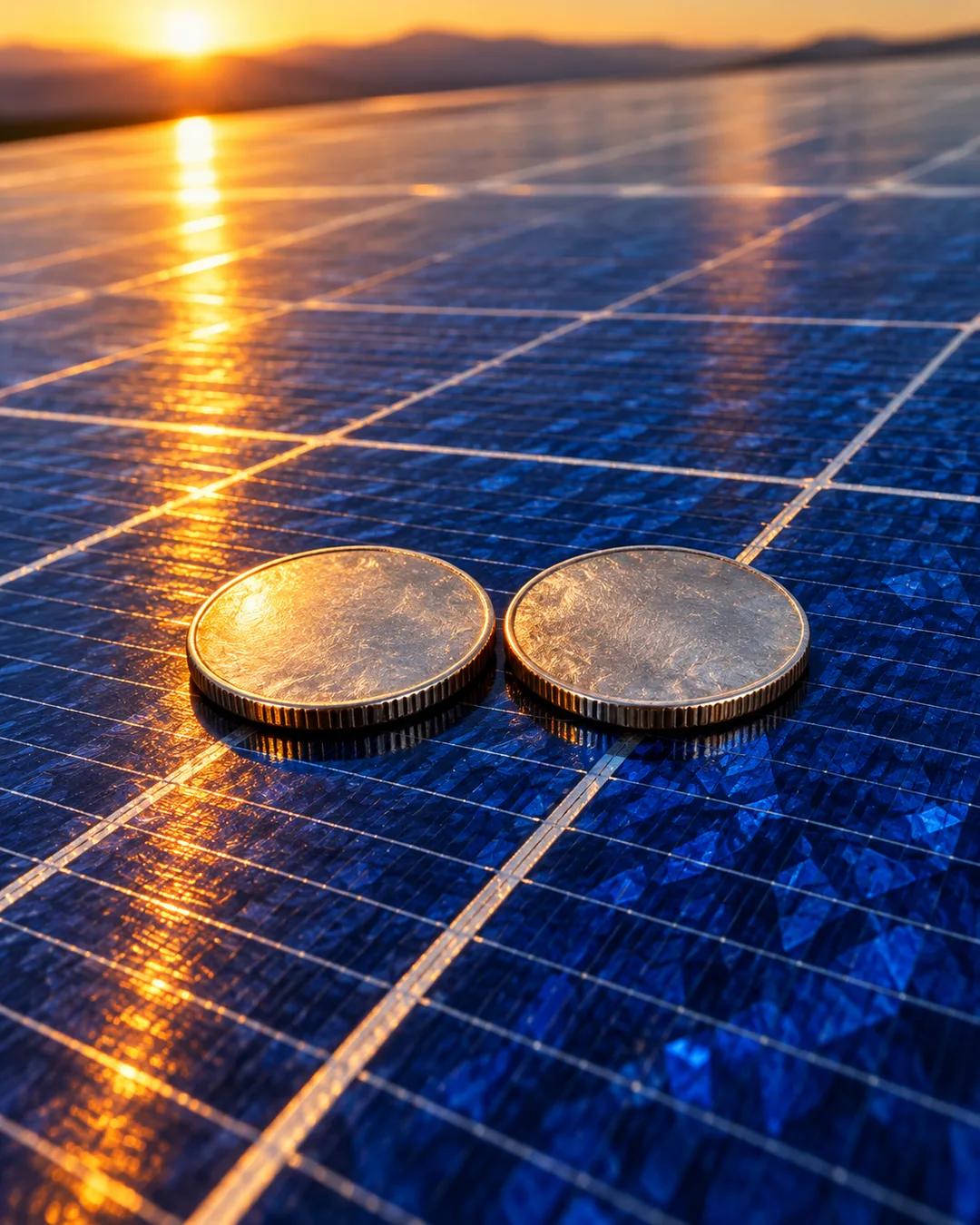
Solar fell from $100 to 20 cents

Cheap solar
In 2025 alone, more than 500 gigawatts of solar went up, which is more than all of civilization had installed before 2018. Energy is as cheap now as it has been at any point in living memory.
Demand from data centers
Demand is climbing faster. Cheap intelligence runs in data centers, and by 2030 they are expected to consume more energy than the entire country of Japan. Data centers in the US are on track to use more than many other industries combined.
Meeting the next jump
Energy has always worked this way: people invent things that consume it at scale, which forces them to build much more of it, and that pushes civilization further. Meeting this next jump means new ideas across the whole life cycle, from generation to interconnection to storage. Nuclear, both fission and fusion, is one of the places that work is happening.
Why does solar keep getting cheaper?
Solar follows a learning curve known as Swanson's law, named for SunPower founder Richard Swanson, which holds that module prices fall about 20 percent each time cumulative shipments double. Each doubling lets manufacturers build bigger factories and refine their processes, which lowers the cost of the next round. Swanson's law has tracked module prices across several decades.
Why do data centers use so much power?
Almost all the electricity a processor draws turns into heat, and cooling systems then use more power to remove it. The International Energy Agency estimated that data centers used about 415 terawatt-hours in 2024, roughly 1.5 percent of global electricity. Its projection for 2030 was about 945 terawatt-hours.
Why does solar power need batteries?
The sun produces power only in daylight, while demand often peaks in the evening, so grids need a way to shift energy across hours. Lithium-ion batteries do that job, and their prices have fallen sharply. BloombergNEF's annual survey found average pack prices dropped from about $1,400 per kilowatt-hour in 2010 to about $139 in 2023, in real 2023 dollars.
How does fusion differ from fission?
Fission splits heavy atoms such as uranium, while fusion forces light nuclei such as hydrogen isotopes together, the process that powers the sun. Fusion needs temperatures above 100 million degrees Celsius for the fuel most reactor designs use. In December 2022, the National Ignition Facility in California released more fusion energy from a target than the laser energy delivered to it, for the first time.
More from Lightspeed Venture Partners