Korva is a scroll of the internet’s best ideas.
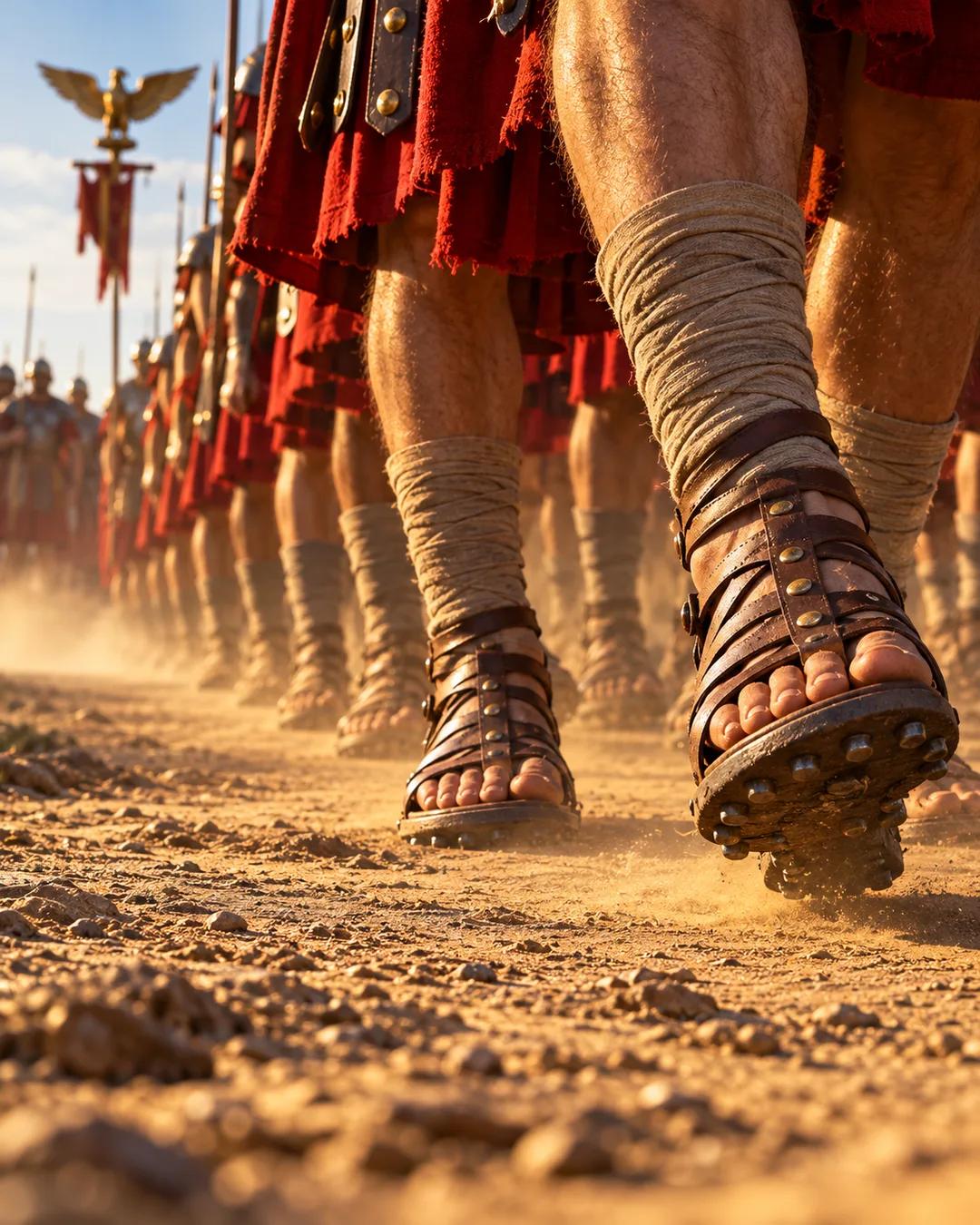
Left was the unlucky foot

How a legion is organized
A legion has close to 5,000 men. It divides into cohorts of about 500, and each cohort divides further into centuries of around 80 to 100 men. A centurion commands each century, and an aquilifer, or eagle-bearer, marches at the head of the legion carrying its eagle standard.
The march
The centurions march beside the legionaries and belt out the orders: dex, sin, dex, sin, which means right, left, right, left. Every march starts with the right foot, since the left is considered unlucky, or sinister.
Tension in the ranks
The discipline is strict, and tension runs under it. Last year, some legions in the area revolted, demanding better pay and a cut in the length of service. Only their general's charisma and negotiating skills prevented wholesale mutiny.
Why does sinister mean left in Latin?
The Latin word sinister meant left, and it also carried the sense of unfavorable. English borrowed the word with the unlucky meaning and kept it. The same pattern shows up in other languages: the French word for left is gauche, which also means awkward. In English, the word right means both a direction and something correct.
What did a legion's eagle mean to its men?
The Roman naturalist Pliny the Elder wrote that Gaius Marius made the eagle the single standard of every legion in 104 BCE. The eagle was a sacred object, and legions camped with it and carried it into battle. Losing one counted as a profound disgrace, and Rome spent years trying to recover lost eagles. Augustus made the return of eagles taken by the Parthians at Carrhae a celebrated achievement of his reign.
Why did legions mutiny over pay?
Tacitus described mutinies among the legions in Pannonia and on the Rhine in 14 CE, right after Augustus died. The soldiers saw a change of emperor as their chance to press grievances about pay, discharge, and harsh treatment by officers. In Pannonia, the mutineers demanded a daily wage of one denarius. Tacitus wrote that Germanicus calmed the troops on the Rhine, in part through his personal popularity.
More from TED-Ed