Korva is a scroll of the internet’s best ideas.

The night before
She had settled on the plan the night before. The Earl of Kent had refused her request for a Catholic priest by telling her that her life would be the death of their religion and her death its life. The remark confirmed her determination to die a martyr. Mary had never been a particularly militant Catholic, but now she meant to play a Catholic persecuted to death by heretics, and she sat up writing to her brother-in-law, Henry III of France. In that last letter she wrote that she was condemned for the Catholic faith and her claim to the English crown, yet was not allowed to say she died for her religion.
The great hall
On the morning of 8 February she kept her executioners waiting an hour and appeared in the great hall at nine. Carpenters had spent the night draping the walls and the scaffold in black. When Elizabeth's chosen preacher, Robert Fletcher, the Dean of Peterborough, began his sermon, Mary intimidated him into abandoning it. As he started his English prayers, she and her six women answered in Latin until their voices drowned his. Then she knelt with a silver cross and prayed in English for her enemies, for Elizabeth, and for England.
The crimson gown
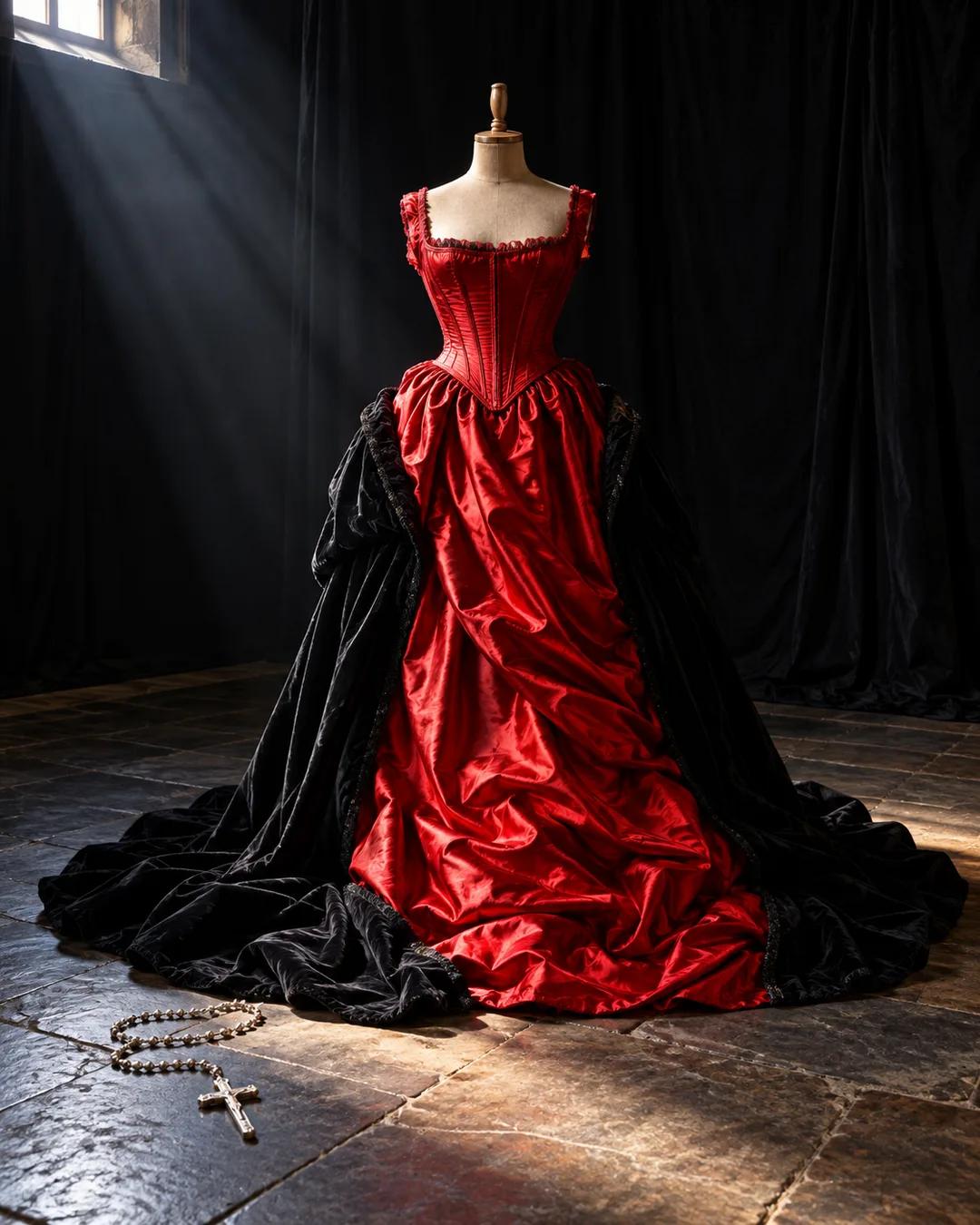
Her attendants took off her veil and her black outer garments. The velvet gown fell below her knees to reveal a crimson silk underbodice and petticoat, blood-red against the black hall. The Protestants present were so appalled that none of the official reports of her death mention it, and her six Catholic women were the ones who spread the story.
Why is red the colour of martyrdom?
In Catholic liturgy red stands for blood shed in witness to the faith. Priests wear red vestments on the feast days of martyrs, and the same colour is used at Pentecost for the fire of the Holy Spirit. Cardinals' scarlet robes carry the same symbolism of willingness to shed blood for the Church.
Why did Catholics think Mary should be queen?
Mary's grandmother Margaret Tudor was the elder sister of Henry VIII, which gave Mary a strong blood claim to the English throne. Many Catholics held that Henry's marriage to Anne Boleyn was invalid because the pope never annulled his marriage to Catherine of Aragon, which made Elizabeth illegitimate in their eyes. In 1559, when Mary's husband became king of France, the couple had quartered the royal arms of England with their own.
What happened to Mary's body after the execution?
Her body was embalmed and left in Fotheringay Castle for months, then buried at Peterborough Cathedral in the summer of 1587. After her son James became king of England in 1603, he had her remains moved to Westminster Abbey. She was reburied there in 1612 beneath an elaborate marble tomb.
More from The Rest Is History