Korva is a scroll of the internet’s best ideas.
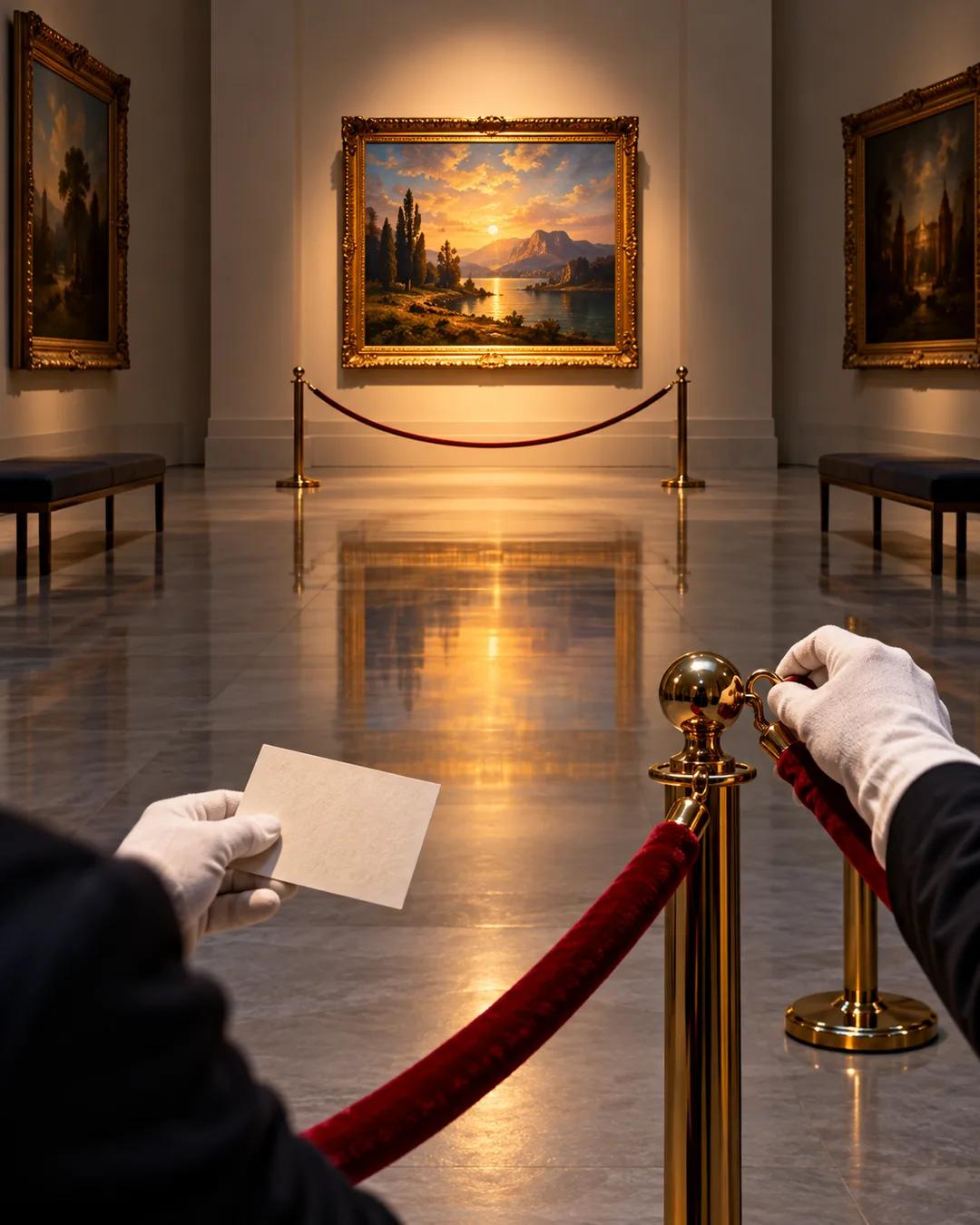
Mathematicians as museum curators

Curators of ideas
The AI solved the thing, so the art exists, and it can even explain it really well. Someone is still wanted to help people navigate a nearly infinite space of ideas worth engaging with. Even if AIs were better at that, people would still prefer a human they have a relationship with, because the way people get motivated to be interested in things is a social phenomenon.
Audiences follow people
Audiences already work this way. They follow a creator's choices about what is interesting instead of arriving with a topic in mind. A lot of the work behind a video is deciding what is worth saying in the first place. It is the same reason human musicians keep a role even when the audio file from a model is objectively better: the story behind the musician is a social function.
Teaching
Teaching sits close to this. It is relational, a social, coaching, mentor-type job, and parents with an abundance of wealth spend it on good teaching. That makes it one of the most stable careers over the next fifty years.
How did chess survive computers beating champions?
IBM's Deep Blue beat world champion Garry Kasparov in a six-game match in 1997, by 3.5 points to 2.5. Chess did not fade afterward. Tournaments, online play, and professional careers grew, and top players such as Magnus Carlsen became better known than before. Engines became a standard training tool, while audiences kept following human players.
Why does tutoring beat the classroom?
In 1984, educational psychologist Benjamin Bloom reported studies in which students taught one-on-one with feedback scored about two standard deviations higher than students in a conventional class. That put the average tutored student above roughly 98 percent of the classroom group. He called finding a group method that matched this the two sigma problem.
What do museum curators actually decide?
Curators choose which works are acquired, which are shown, and how they are grouped and explained. Most museums show only a small share of their holdings at any time, with the rest in storage. A curated exhibition frames objects with a story, which changes how visitors see the same works.
More from Dwarkesh Podcast