Korva is a scroll of the internet’s best ideas.
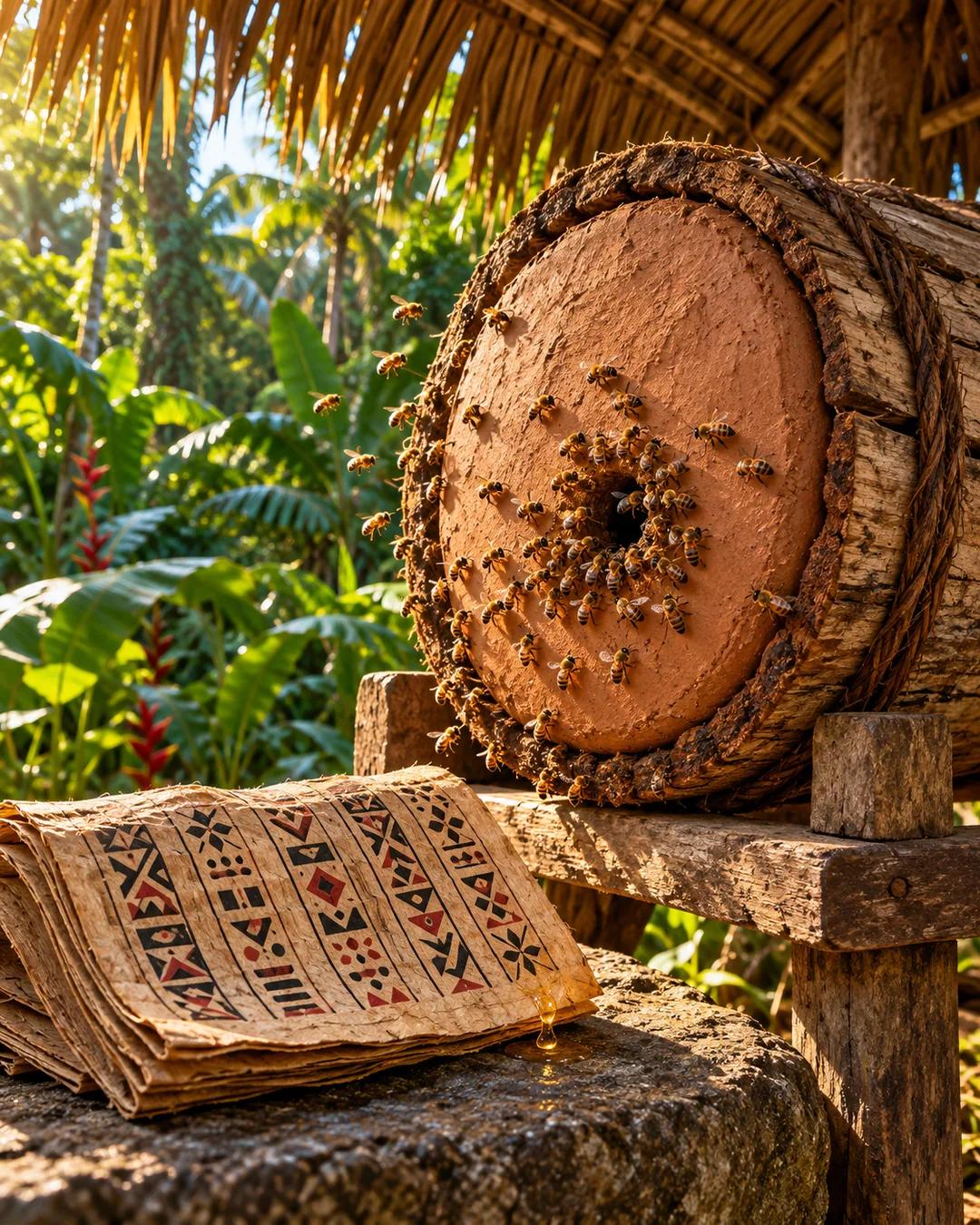
Maya almanac ranked days for beekeeping

A calendar horoscope
Maya priests used the calendar like a horoscope. Each almanac is a short run of four to six glyph blocks: a man beekeeping, and a verdict. Bad days get a euphemism such as burial or famine. Good days read as an abundance of tortillas, or simply happy.
Deer and turkeys
The deer hunting pages of the Madrid Codex, about ten pages of them, work the same way. They are less about how to kill a deer than about the right time to go hunting and the right time to eat deer. Hunting luck belongs to Ekchua, a god with a striped black face, and the hieroglyphs mark which dates he favors.
Turkeys were domesticated, and pages beside the deer sections apparently cover the best time to slaughter them.
How does the 260-day calendar work?
The Maya count of 260 days pairs 20 day names with the numbers 1 to 13. Each day gets a name and a number, and the combination repeats every 260 days. It meshes with the 365-day solar calendar to make a cycle of 52 years called the Calendar Round. Many Maya communities in highland Guatemala still keep the 260-day count.
How did the Dresden Codex survive?
The Royal Library in Dresden bought the codex in 1739 from a private owner in Vienna. Spanish friars burned most Maya books in the sixteenth century, and only four survive. Water damaged the Dresden manuscript during the bombing of Dresden in 1945. It is held today in the Saxon State Library.
Why did the Maya keep bees?
The Maya kept stingless bees of the species Melipona beecheii in hollow log hives. They harvested honey and wax, which were traded and used in ceremonies. A bee god named Ah Muzen Cab appears in the codices. Beekeepers in the Yucatan still keep these bees today.
More from Shawn Ryan Show