Korva is a scroll of the internet’s best ideas.
Maya found the eclipse cycle

Counting lunations
They figured out that eclipses can only happen every five or six lunar cycles, the concept of nodes. They did not know the sun, moon, and earth were lining up. The charts count 148, 148, 148, 148, then every so often 177, which fits those five or six lunations, and it was a shotgun approach: not as good as the Greeks, but the idea was there.
The surviving book
Pictures beside the numbers show a sky band with the moon goddess hanging dead from it and a sun that is half black. Only four Maya books survive, and the Dresden Codex is the one with a couple of pages on eclipses.
Fear of eclipses
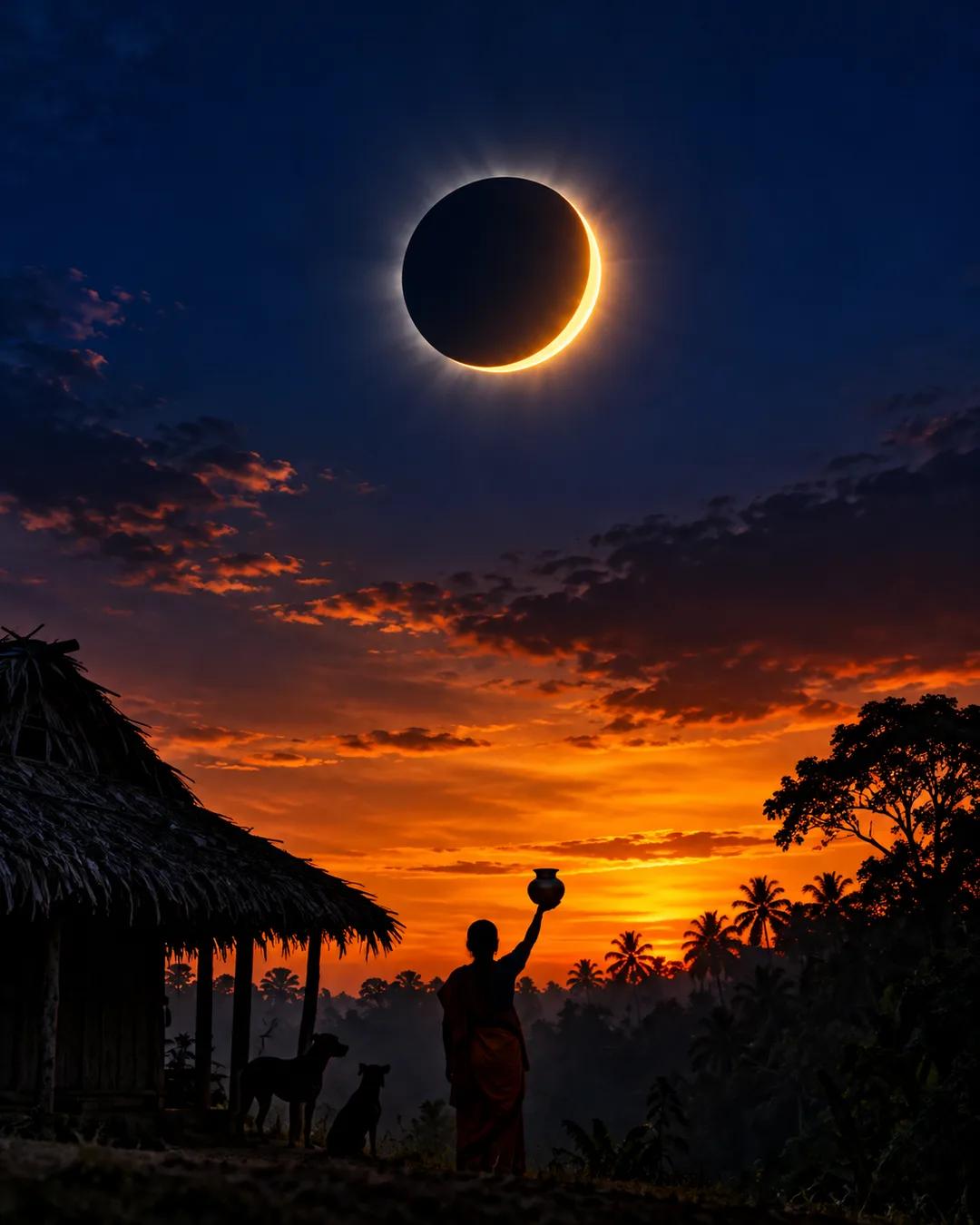
Eclipses frightened the Maya. In Maya villages today, people still go outside and bang pots and pans while the dogs bark, trying to chase the eclipse off, especially when the moon goes away.
Why does 148 days predict eclipses?
The moon passes through the plane of Earth's orbit twice a month, and eclipses happen only when a new or full moon falls near one of those crossings. A lunar month lasts about 29.5 days, so five months come to about 147.7 days and six come to 177.2. The Maya tables jump by 148 and 177 days to match those spans. Each step lands on the next date when an eclipse is possible.
How did Babylonians predict eclipses?
Babylonian astronomers kept records of eclipses from at least the eighth century BCE. They found that eclipses repeat after 223 lunar months, a span of about 18 years and 11 days called the saros. Greek astronomers inherited the cycle and used it in later centuries. The Antikythera mechanism, a Greek device from the ancient world, has a dial that tracks the saros.
More from Shawn Ryan Show