Korva is a scroll of the internet’s best ideas.
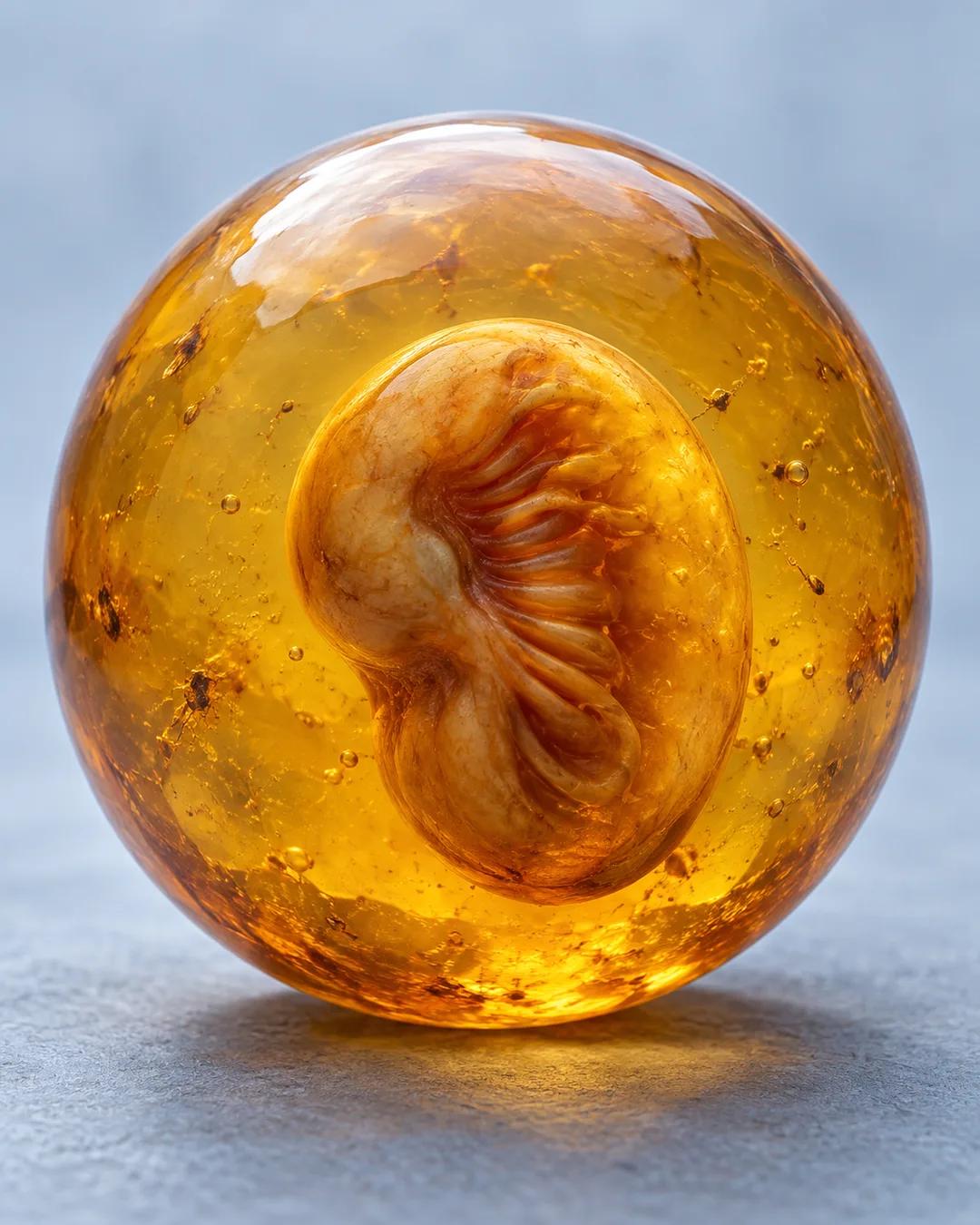
Mitochondria were once bacteria
Cells out of nowhere
Every plant, fungus, and animal is built from cells with a nucleus, and nothing sits between those cells and simple bacteria. They seem to appear out of nowhere. In the 1960s, an American microbiologist named Lynn Margulis looked at mitochondria under a microscope and saw that they look very much like bacteria. They turned out to be descended from bacteria.
Bacteria turned specialists
The trapped bacteria became specialists. Mitochondria make ATP, the molecule a cell spends as energy, the way foreign income has to be converted into local currency before it can be spent. Their genomes shrank to the few genes needed for that job, and the rest of the genes moved into the host cell's nucleus. The mitochondria cannot survive alone, and the host cannot survive without them.
The payoff
The division of labor paid off. The mitochondria focused on capturing energy while the host took over information processing and looked after them, so the cell gained far more energy than it could have otherwise. Later, some of these cells captured cyanobacteria that kept right on photosynthesizing inside. Those captured bacteria became plastids, such as the chloroplasts in green plants, and their host was the ancestor of all algae and plants.
Why do mitochondria still carry their own DNA?
Human mitochondria hold a small circular genome of 16,569 base pairs that codes for 37 genes. Circular DNA is the bacterial arrangement, and mitochondria also make their own ribosomes, which resemble bacterial ones more than those in the rest of the cell. The genes that stayed behind mostly build parts of the machinery that makes ATP. The biochemist John Allen has argued that keeping those genes on site lets each mitochondrion adjust its machinery quickly.
How did Margulis's idea win acceptance?
Margulis published her theory in 1967 after many journals had turned it down. At the time, most biologists expected a cell's organelles to have evolved gradually from within. Sequencing of mitochondrial DNA in the following decades showed that its genes are most closely related to those of a group of bacteria called alpha-proteobacteria. Chloroplast genes turned out to match cyanobacteria in the same way.
Why did mitochondria give cells so much more energy?
Bacteria make ATP across their cell membrane, so a larger bacterium has less membrane surface for each unit of volume. Mitochondria move that work inside the cell and fold their inner membranes into many layers. Nick Lane and William Martin calculated in a 2010 paper in Nature that a typical eukaryotic cell has about 200,000 times more energy available per gene than a typical bacterium. That surplus paid for far larger genomes.
More from On Humans