Korva is a scroll of the internet’s best ideas.
Oxygen began as bacterial waste

Oxygen as waste
The bacteria kept the hydrogen from the water and combined it with carbon dioxide to build carbohydrates for food. Oxygen was only the waste product. Because oxygen is extremely reactive, most life forms that could not handle it retreated to places it could not reach, like the deep oceans.
Rusting oceans
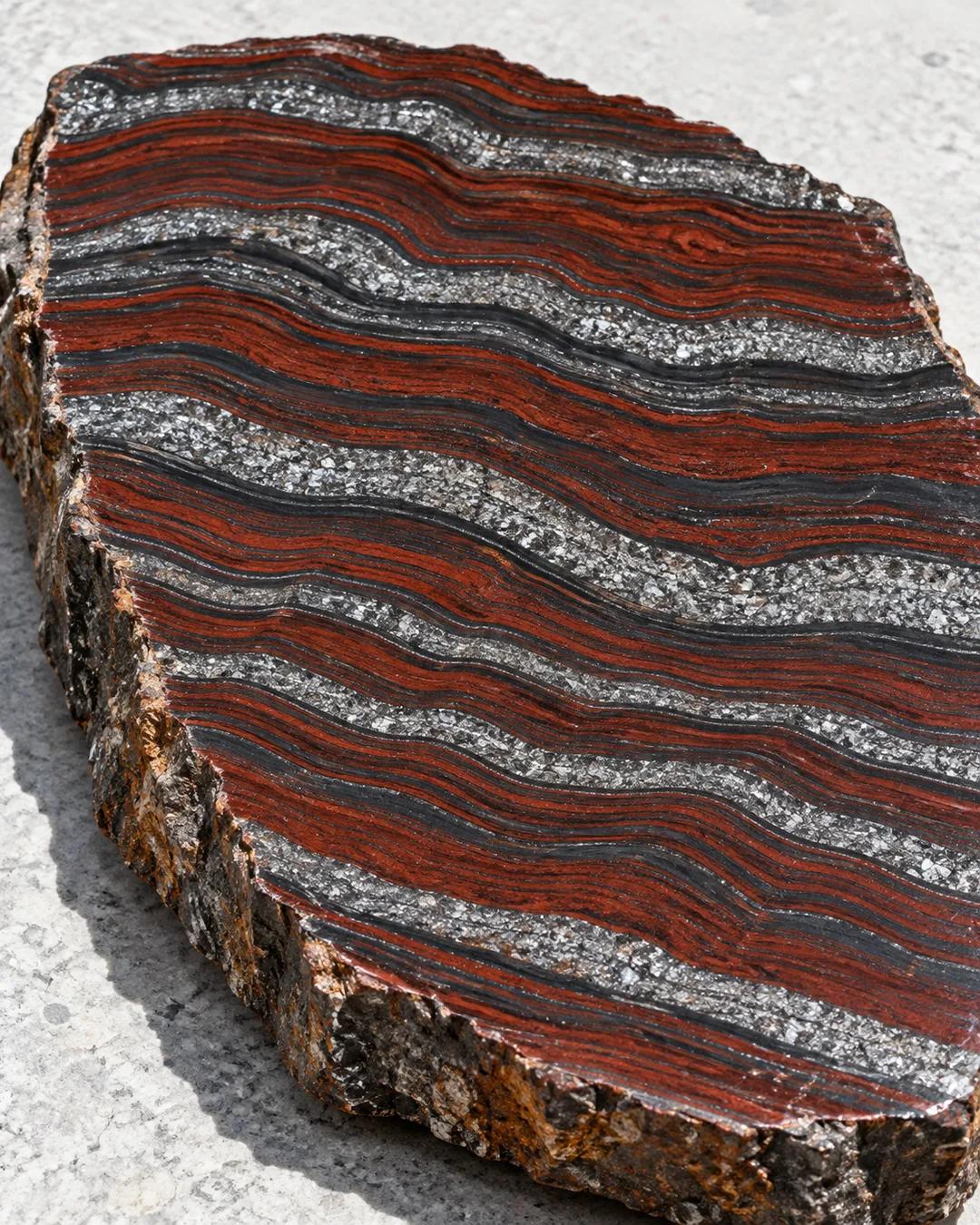
The oceans of that era were full of iron. It reacted with the oxygen, rusted, and settled on the seabed as banded iron formations. Those formations are the major source of the iron ore mined today.
A new way to live
The crisis also opened a new way to make a living. Once oxygen existed, some organisms evolved to use it for respiration, burning the carbohydrates that the photosynthesizers made. The great oxidation event also brought on Snowball Earth, when the planet froze over for millions of years. Life survived it.
Why did oxygen build up so late?
Cyanobacteria were probably producing oxygen long before it accumulated in the air. The gas was absorbed as fast as it appeared by dissolved iron in the oceans, by volcanic gases, and by minerals in exposed rock. Only after those sinks were used up did oxygen begin to build up in the atmosphere. Geologists place that rise about 2.4 billion years ago.
Why did rising oxygen trigger Snowball Earth?
The early atmosphere likely held a good deal of methane, a powerful greenhouse gas. Oxygen reacts with methane and turns it into carbon dioxide and water, which trap far less heat. With the warming blanket thinned, the planet cooled sharply in what geologists call the Huronian glaciation. Glacial deposits from that time have been found in rocks that sat near the equator.
Why is oxygen dangerous to living cells?
Oxygen readily forms reactive molecules that damage proteins, fats, and DNA. Cells that survived evolved defenses such as the enzyme superoxide dismutase, which neutralizes one of the most damaging of these molecules. Breathing oxygen also pays well, since aerobic respiration yields roughly 30 molecules of ATP from a molecule of glucose, against two from fermentation.
More from On Humans