Korva is a scroll of the internet’s best ideas.
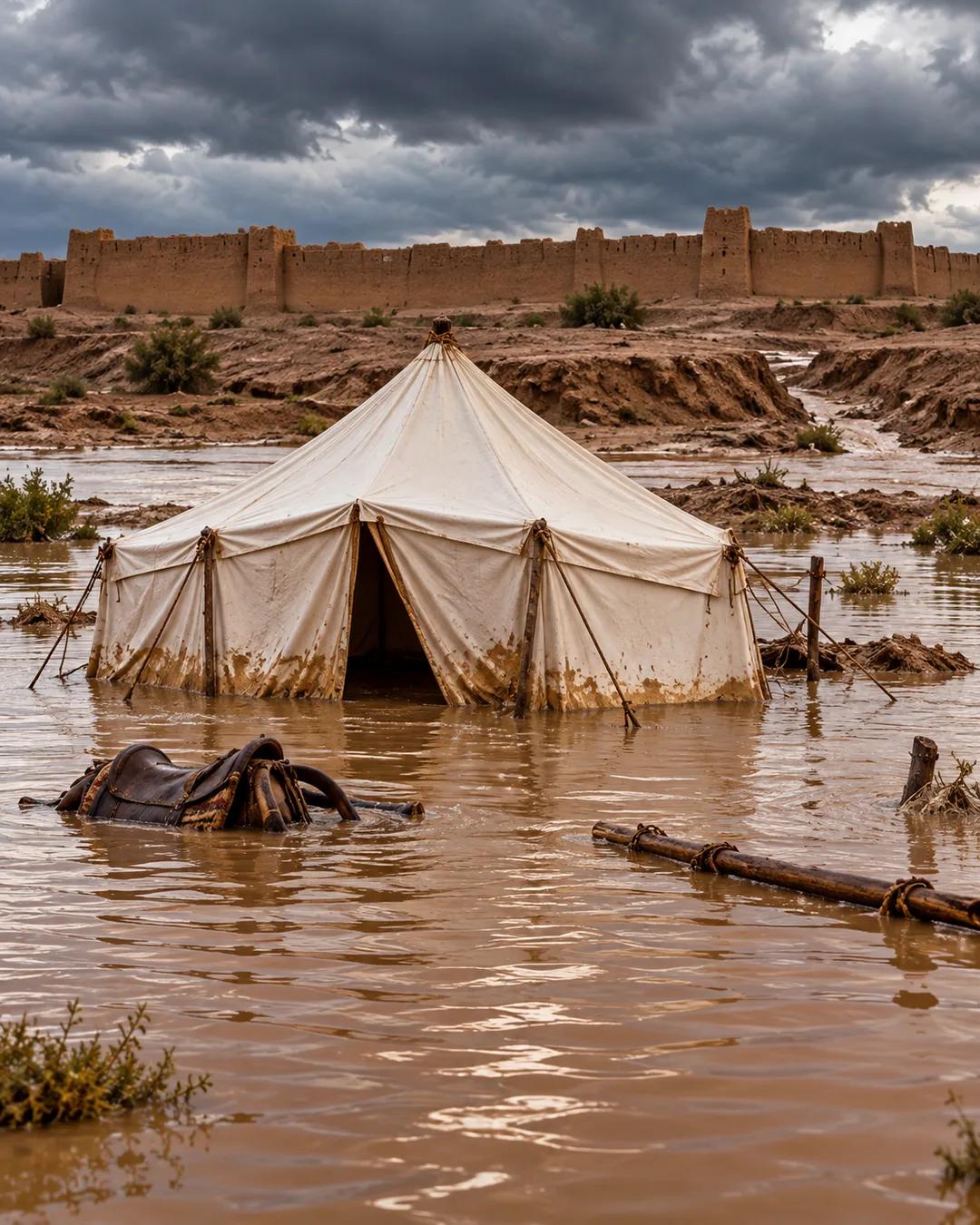
Mongols flooded their own camp

A New Obstacle
He had founded his nation in 1206 and raided into Tangut territory in what is now northwestern China, near the upper Yellow River. Walls were new to him, since the only ones he knew were the felt walls around a tent. For a Mongol, anything that moves is a potential weapon and anything that doesn't move is a target, and here was a river full of channels beside a wall that stood still.
The Flood Plan
The men dug a channel to bring the river down on the wall. The embankments were not high enough, and too much water came in from the Yellow River and flooded out the Mongol camp. They kept the idea and improved it, and it became a strategy that worked for the next fifty years, all the way to the conquest of Baghdad in 1258.
Borrowed Technology
The Mongols kept doing this, picking up whatever technology they met and putting it to work against the next enemy. The armies of settled kingdoms tend to get stuck in their ways, making the same methods a little faster or a little bigger. Genghis Khan had no set way to think.
How did the Tangut siege end?
Genghis Khan besieged the Tangut capital, Yinchuan, in 1209 after diverting the Yellow River toward it. The embankment broke, and the flood spread into the Mongol camp as well. The siege was lifted, and the Tangut ruler offered tribute and a daughter in marriage. The Tangut stayed independent until 1227.
How did the Mongols learn siege warfare?
They hired Chinese and Muslim engineers, and put captured craftsmen to work. During the siege of Xiangyang in the early 1270s, two engineers from the Middle East, Ismail and Ala al-Din, built counterweight trebuchets for Kublai Khan. These could throw much heavier stones than earlier catapults. The city fell in 1273 after a siege of about five years.
How did floods win at Baghdad?
In 1258 Hulagu's army besieged Baghdad, the Abbasid capital. According to Persian historians, the Mongols broke dikes along the Tigris and flooded the ground around the Abbasid forces. The caliph's army, cut off by water, was destroyed in the field. The city surrendered days after the siege began.
More from Lex Fridman Podcast