Korva is a scroll of the internet’s best ideas.
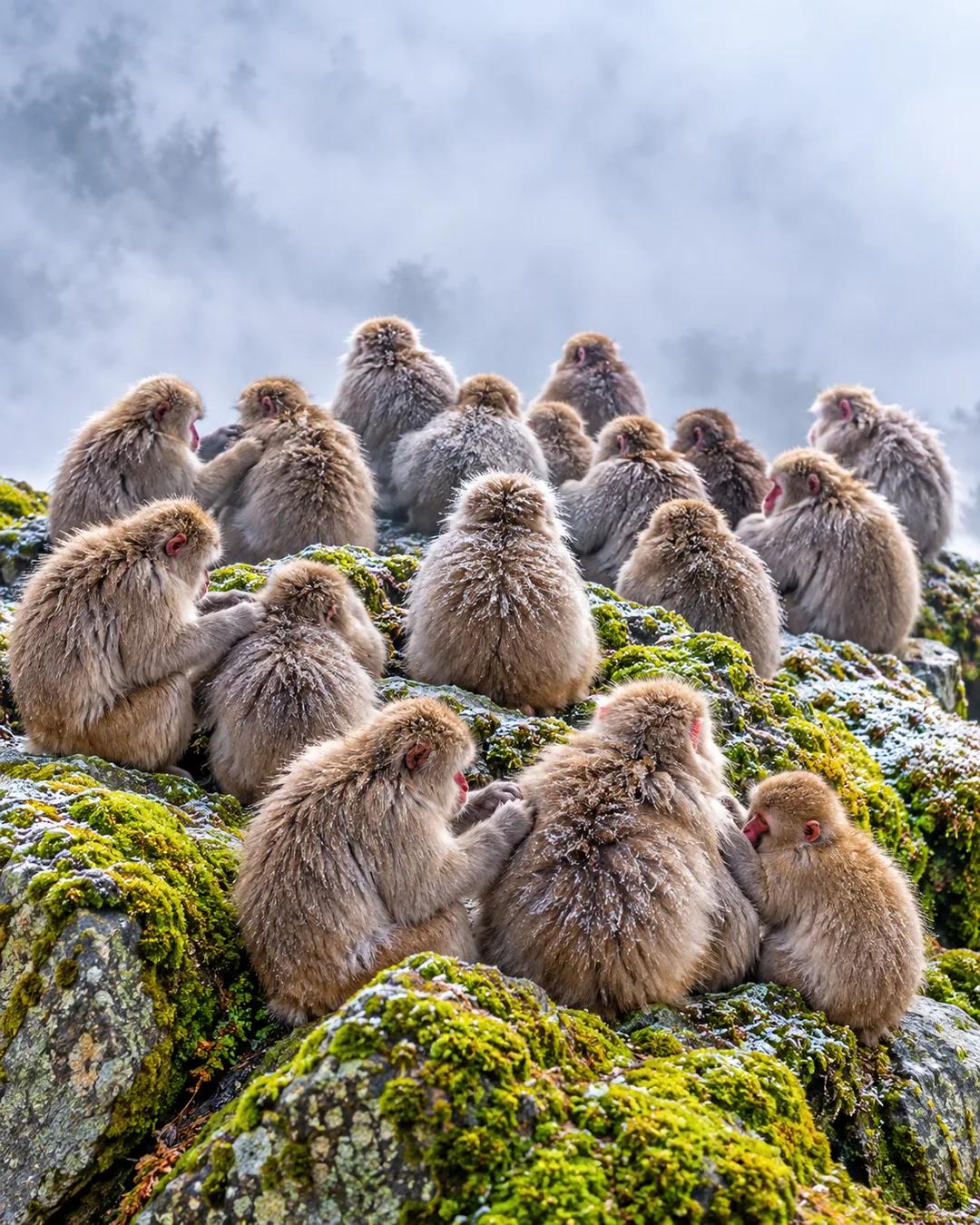
Monkey brains predicted human group size

Why primates have big brains
Primates have unusually large brains for their body size, much bigger than any other animal group. One explanation, the Machiavellian intelligence hypothesis, holds that bigger brains gave primates an edge in building complex social strategies, which led to greater reproductive success. In short, a bigger brain meant better manipulation of others, and that meant more offspring.
Dunbar's brain comparison
In 1992, anthropologist and evolutionary psychologist Robin Dunbar took the ratio of neocortex size to total brain volume for different types of primates and set it beside the size of each type's typical social group. The two lined up in a clear correlation.
Extending that relationship to the human brain gave humans an average social group of 148 people, a figure usually rounded to 150 and now known as Dunbar's number.
Why would a bigger brain help socially?
The number of relationships in a group grows much faster than the number of members, so every added animal makes social bookkeeping harder. Primates maintain their bonds largely through grooming, which takes time. Dunbar's own comparisons of primate species found that those living in larger groups spend a larger share of their day grooming. A group of 10 has 45 possible pairings, while a group of 20 has 190.
Why measure the neocortex instead of whole brain?
The neocortex is the folded outer layer of the brain that handles conscious thought, language, and planning. In humans it makes up roughly 80 percent of brain volume, a far larger share than in most other mammals. Using a ratio rather than raw size sets aside how big an animal's body is. Comparing ratios lets a small monkey and a large ape sit on the same scale.
Why do some scientists doubt the 150 figure?
Dunbar's number comes from extending a line fitted to other primates out to humans, who sit far from the other species in the data. A 2021 paper in the journal Biology Letters by Patrik Lindenfors and colleagues reported that the statistical uncertainty around the human prediction is very wide. Their analysis found the range of plausible group sizes runs from a handful of people to several hundred. Dunbar has defended the figure, pointing to the many human groups that cluster near 150.
More from Half as Interesting