Korva is a scroll of the internet’s best ideas.
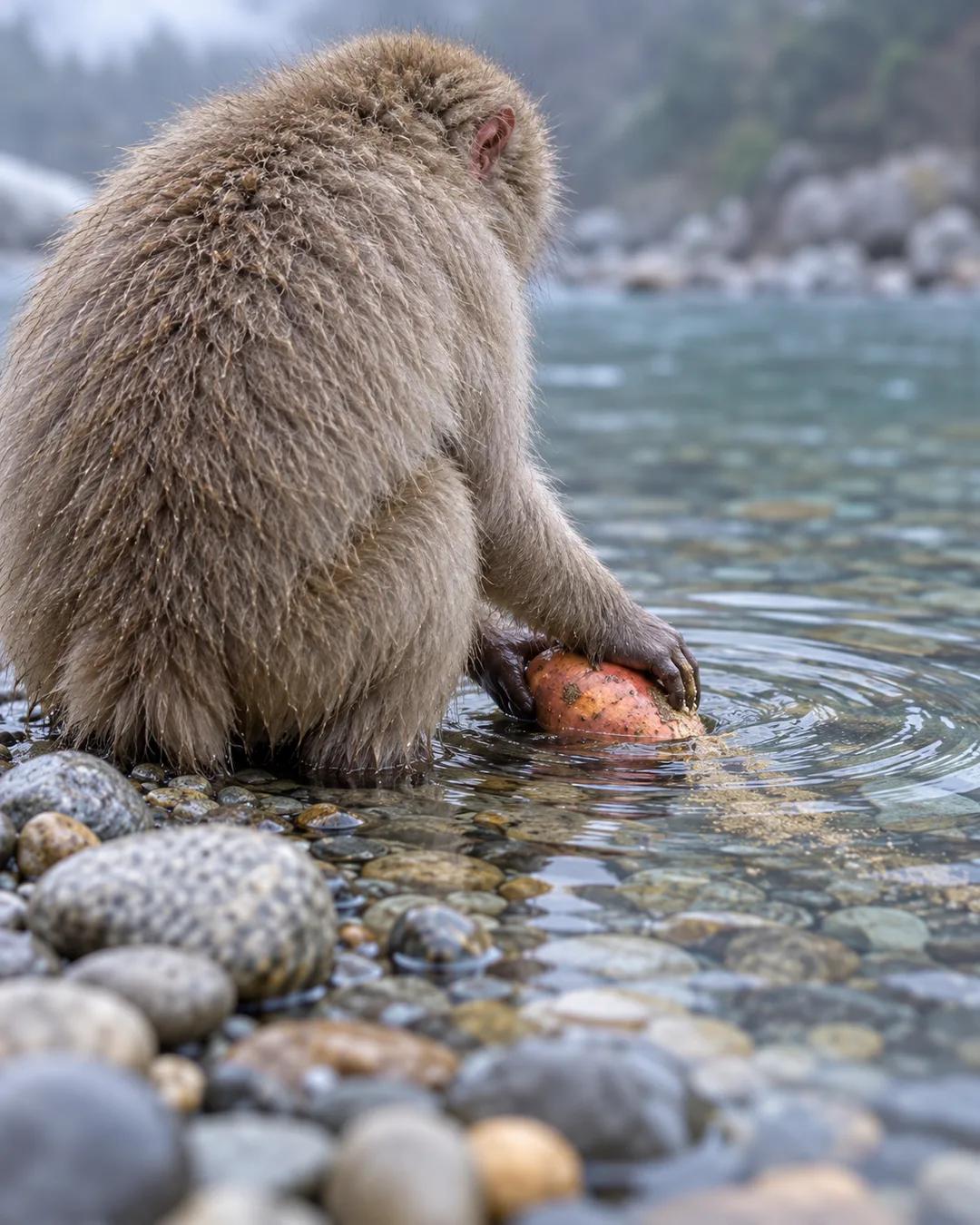
Monkeys washed their sweet potatoes
A better way to clean
Scientists have studied a troop of Japanese macaques on an island in Japan since the 1950s, feeding them sweet potatoes left on the beach. The monkeys picked them up and brushed the sand off by hand. Then one young female started washing hers in the stream, which got all the sand off.
How the habit spread
Her siblings and friends copied her, then other females, until the whole troop was washing its potatoes. The older males never picked it up and kept brushing. By the next generation every macaque did it, and the habit had spread through copying alone, with no genetic mutation involved.
Switching to the sea
Later, one of the monkeys, maybe the same female or a different one, started washing potatoes in the sea instead of the stream. That left them salty as well as sand-free, and eventually the whole troop switched to the sea.
How do researchers know it was learned, not genetic?
A genetic change would take many generations to spread through a troop, yet the habit moved through the monkeys within years. Infants picked it up by watching their mothers wash. Older males, who had the same genes as their sons, never took it up. The spread followed the troop's social ties, which is the pattern of learned behavior.
Which other animals pass habits on this way?
Chimpanzee communities use different ways of cracking nuts and fishing for termites, and a 2005 study in Nature led by Andrew Whiten showed that a technique introduced to one group spread through it. In 2015, researchers led by Lucy Aplin reported in Nature that a feeding technique seeded in a few wild great tits spread through the whole local population. Humpback whale song also changes from year to year and travels between whale populations across ocean basins. Each of these cases rests on copying rather than inheritance.
More from On Humans