Korva is a scroll of the internet’s best ideas.
Museums said wait until 2028

Finding digital art
Five years ago, a scroll through Twitter led Micky Malka and his wife to a digital artwork that resembled a physical piece from the 1970s hanging in their home. They began pairing digital artists with beautiful pieces from history and getting to know the artists, who are alive, mostly trained in computer science, and chose to tell stories in a different way.
Museums say wait
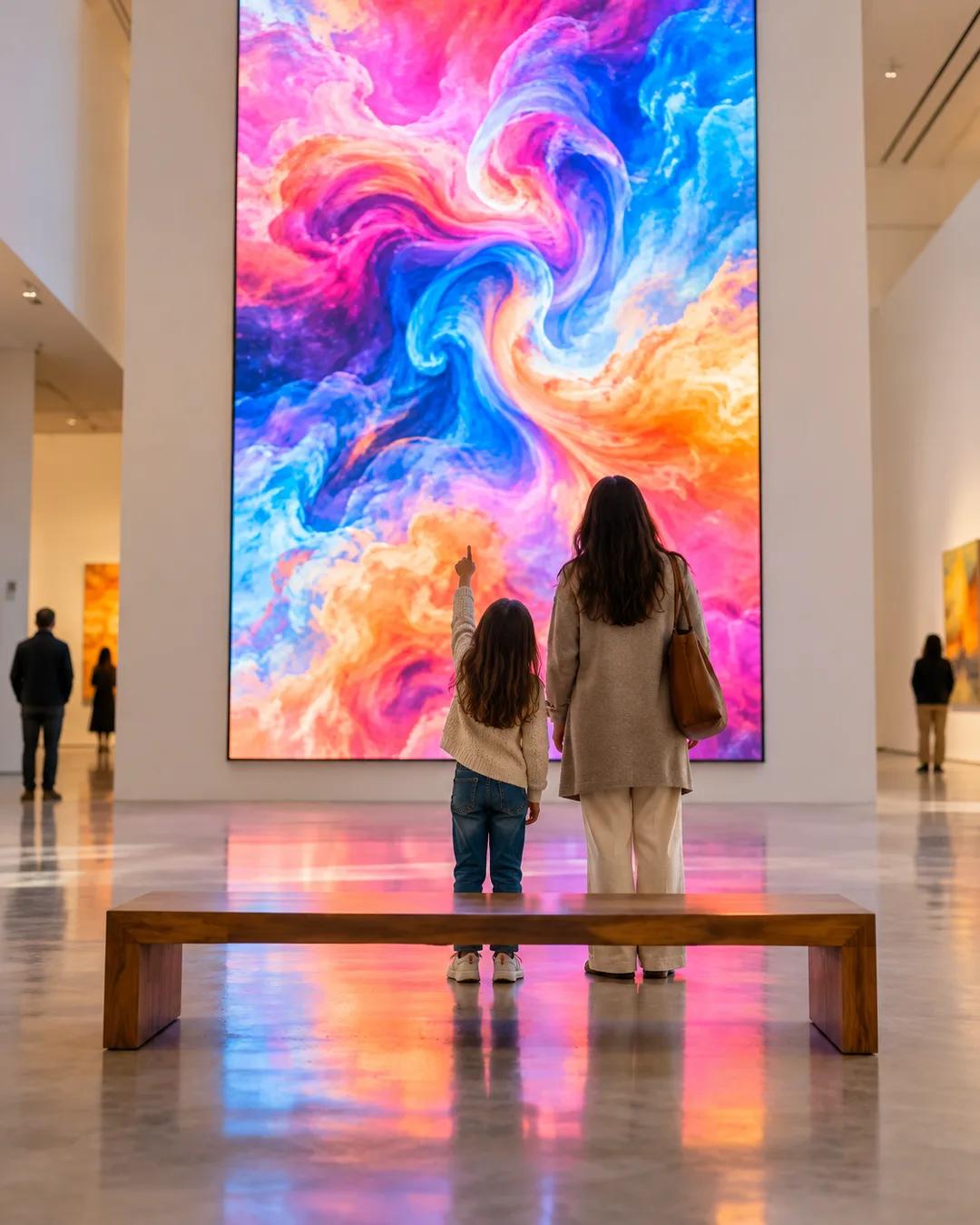
At home, their teenage children and the children's friends spent 15 or 20 minutes in front of the digital pieces, talking to them and asking questions. When the couple approached museums, the answer was a date in 2028, four or five years away, and a curator to be found for what the artist wanted to do. They decided it needed to happen today.
Opening Node
Node is the first digital art studio designed for digital artists, where the artist is also the curator. Five months after opening, close to 60,000 people had come through, entry is free, and weekends keep breaking records, with kids bringing their parents. The name marks it as one node in a network, and the Paris rebels shut out of museums who became the Impressionists are the model.
Why were the Impressionists shut out of museums?
In nineteenth-century Paris, artists built careers through the Salon, an official exhibition judged by a jury drawn from the established art academy. In 1863 the jury rejected about 3,000 works, and Emperor Napoleon III responded by ordering a separate Salon des Refusés. In 1874 a group of rejected painters including Monet and Renoir held their own show in the studio of the photographer Nadar. The critic Louis Leroy mocked it by taking the name Impressionists from a Monet painting called Impression, Sunrise.
Why do museums book exhibitions years ahead?
Major exhibitions that borrow works from other institutions are often scheduled three to five years ahead. Loan agreements, insurance, shipping, and conservation checks all have to be settled first. Curators also need time to research, write catalog essays, and raise funding.
How do museums keep digital art working?
Digital works depend on software and hardware that go obsolete, so conservators use two main strategies. Migration moves the work to newer formats, while emulation recreates the old environment on current machines. Both require documenting the artist's intent, which is why many museums now interview living artists when they acquire a work.
More from David Senra