Korva is a scroll of the internet’s best ideas.
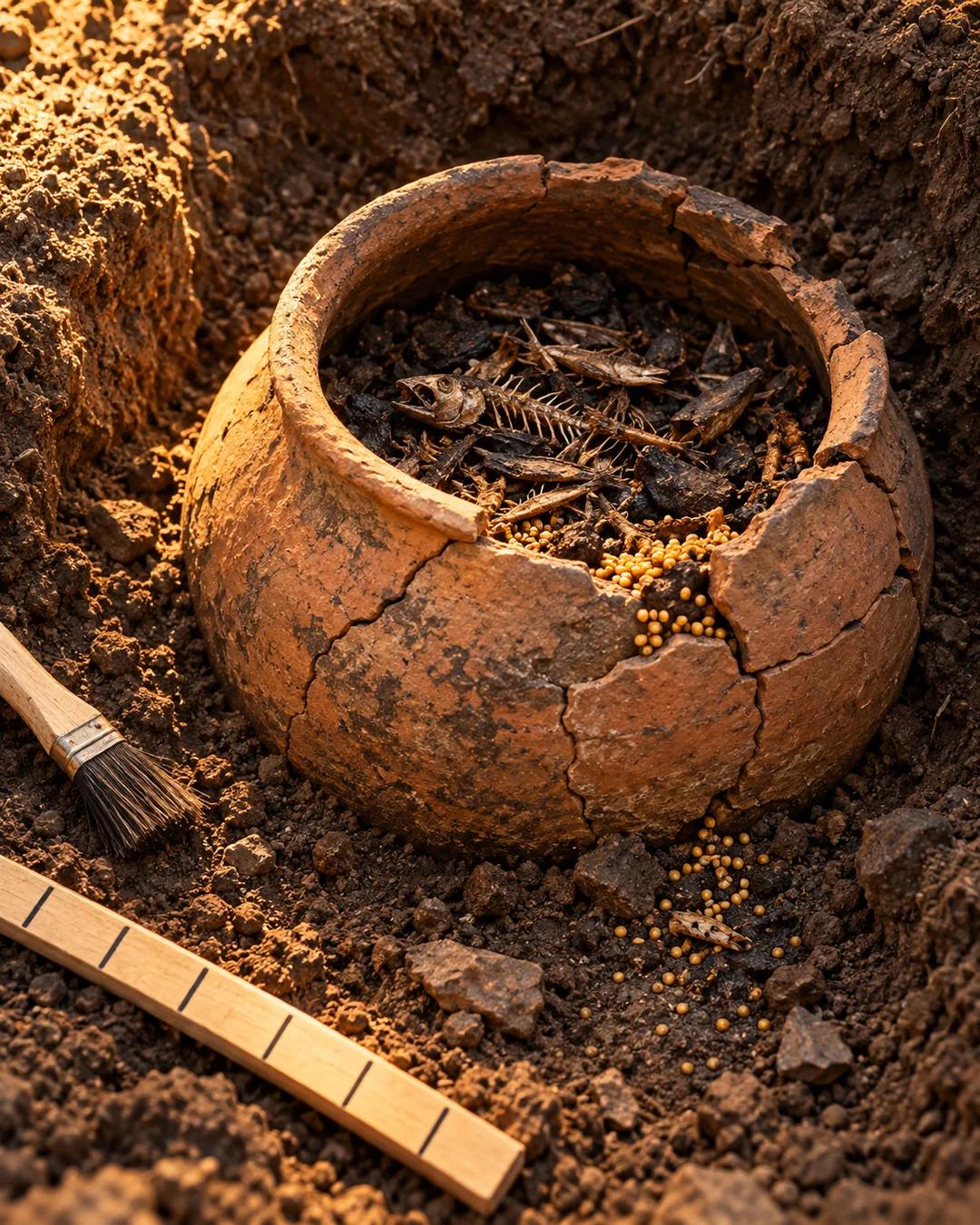
Mustard in a 6,000-year-old crockpot
Nobody really knows when or why humans started eating hot peppers. Archaeologists have found spices like mustard alongside human artifacts dating as far back as 23,000 years ago, but they don't know whether those spices were used for food, for medication, or just for decoration.
More recently, the 6,000-year-old crockpot turned up with mustard inside, alongside the charred remains of fish and meat.
One theory holds that humans started adding spices to food to kill off bacteria. Some studies show that spice developed mostly in warmer climates, where microbes also happen to be more prevalent.
How could spices fight bacteria?
Many spice plants make compounds that kill or slow microbes as a defense of their own. Paul Sherman and Jennifer Billing of Cornell University analyzed 4,578 recipes from 93 cookbooks across 36 countries. They found that recipes from hotter climates called for more spices, and that garlic, onion, and allspice killed a large share of the bacteria tested in lab experiments. Their 1999 paper in the Quarterly Review of Biology proposed that spicing food helped people avoid foodborne illness.
How do archaeologists find spices in old pots?
Plants build microscopic silica bodies called phytoliths, and these survive in charred cooking residue for thousands of years. Each plant makes phytoliths with its own characteristic shapes. A 2013 study in PLoS ONE led by Hayley Saul found garlic mustard phytoliths in pottery from Denmark and Germany that was about 6,100 years old. The residue sat alongside traces of fish and meat.
How did spices become worth fighting over?
Black pepper traveled from India to the Mediterranean along trade routes that were already active in Roman times. Rarity and distance pushed its price very high. When the Visigoth king Alaric besieged Rome in 408 CE, he demanded 3,000 pounds of pepper as part of the ransom, according to the ancient historian Zosimus.