Korva is a scroll of the internet’s best ideas.

Nailed it or got away?

The rush to jump
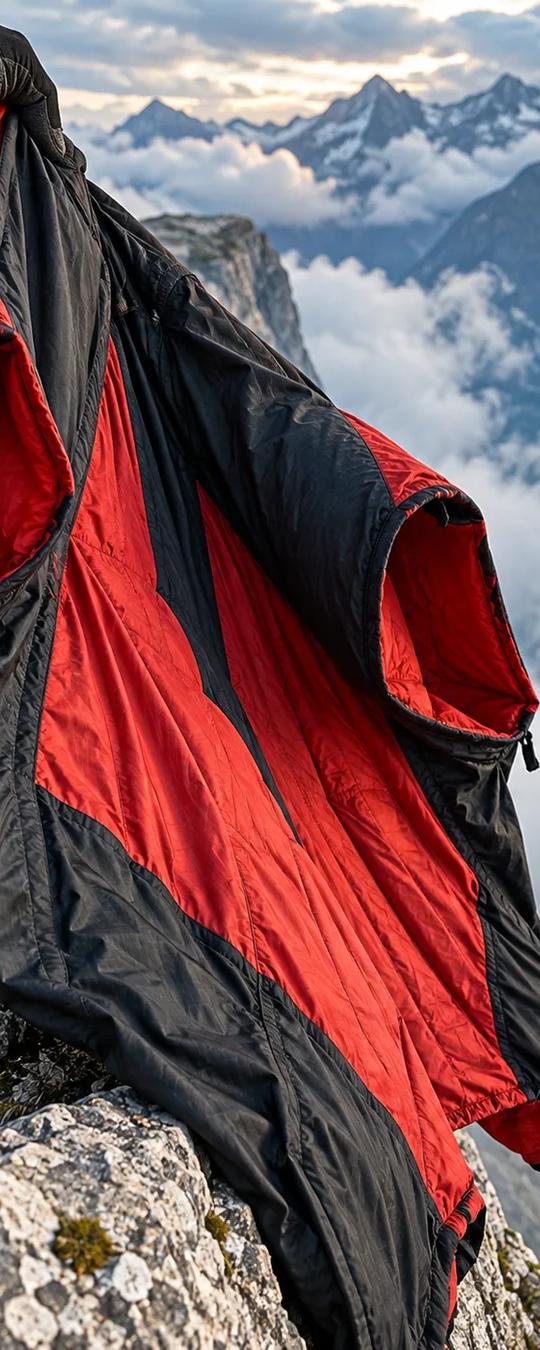
In wingsuit BASE jumping, newcomers post on forums asking to get into the sport as fast as possible, and the replies tell them to make 200 skydives before even putting on a wingsuit, which takes a year or two for someone who isn't doing it professionally. The person with no time for that is the one the sport tends to claim early. The titans who have jumped the longest are a lesser worry.
Confidence outruns knowledge
Picture a run down a mountain after leaping toward a west-facing slope, with a strong uprush of air at the exit that feels perfect. Partway down, three quarters of the slope is in shade, the thermals may have switched, and a pressure like a hand on the back may start to build. The jumper who lands never learns any of that, and the confidence keeps climbing: the ascending line of the Dunning-Kruger curve.
Knowing better
A flying instructor taught the rule that once you know better, you can do better. Before that sits a phase where you don't know any better, so you think what you're doing is correct. It ends when somebody points it out, or when you watch something horrific happen and learn from the debrief, or when only one or two of three jumpers make it out and all three had the same plan.
A friend named Alex, who had been jumping for years, died in that middle stretch where it feels as if everything is dialed. His earlier close calls included a few bad decisions. He had probably gotten away with it more than he had nailed it.
Why do beginners overrate their own skill?
Psychologists David Dunning and Justin Kruger of Cornell University published the finding in 1999 in a paper titled Unskilled and Unaware of It. They tested students on humor, grammar, and logic, then asked them to estimate their own performance. The lowest-scoring students rated themselves well above average. The authors argued that the skills needed to do a task well are the same skills needed to recognize how well it was done.
Why does surviving make a risk look safer?
The pattern is called survivorship bias, and a famous illustration comes from World War II. Mathematician Abraham Wald, working with the Statistical Research Group at Columbia University, was asked where to add armor to bombers. The military had studied bullet holes on returning planes, and Wald pointed out that the planes shot in other places had never come back. He advised armoring the spots where returning planes showed no damage.
Why can a slope's air change mid-flight?
Thermals are columns of rising air created when the sun heats the ground and the ground warms the air above it. A slope that falls into shade stops being heated, so the rising air weakens. Cooler air over shaded ground can even sink, which changes how a flying body behaves partway down. Pilots also deal with wind effects, since air pushed up against a slope creates lift that varies with direction and speed.
More from Andrew Huberman