Korva is a scroll of the internet’s best ideas.
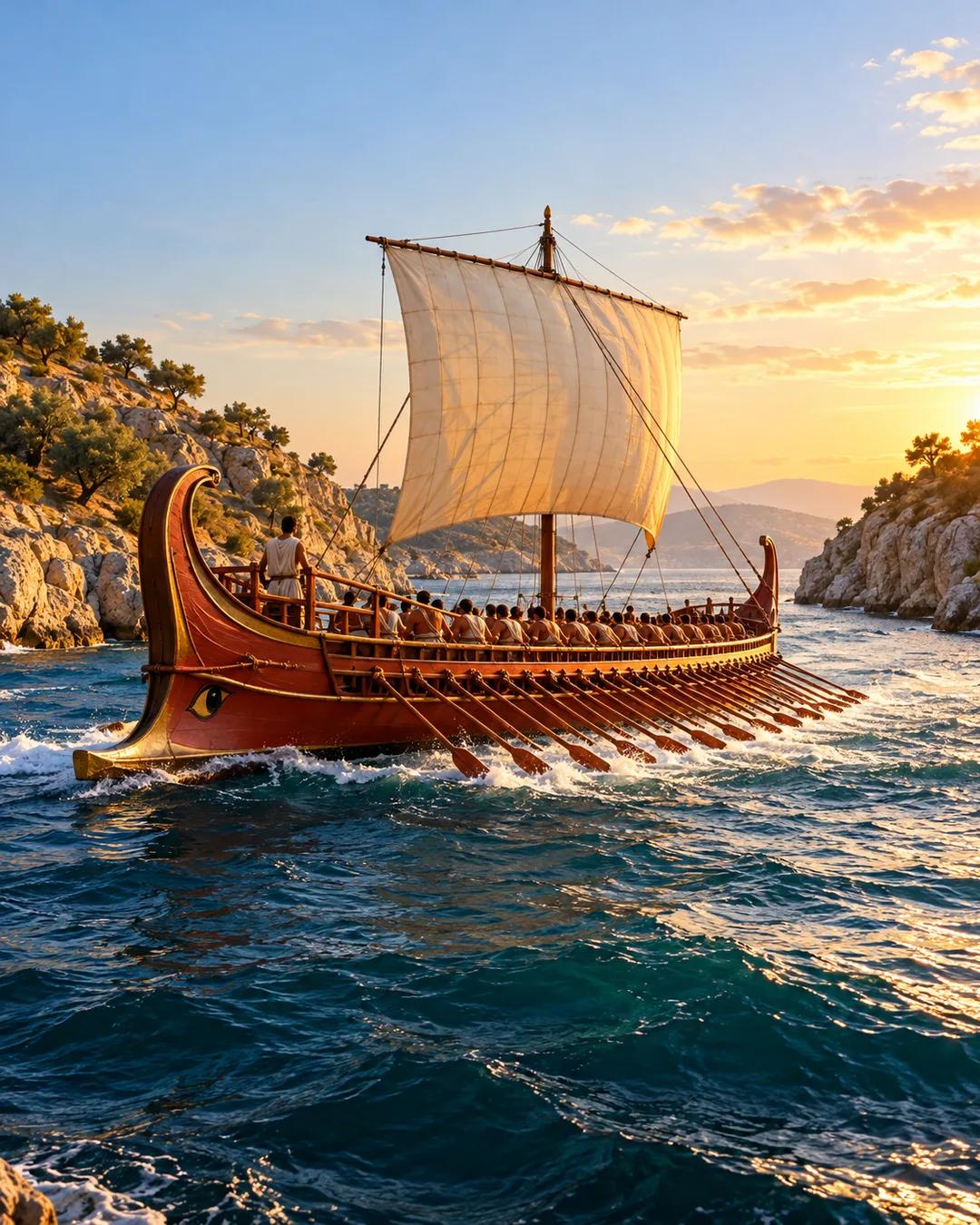
Named for the Battle of Salamis

The battle
The battle came after Thermopylae, the famous stand of the 300 Spartans, and it ranks among the most famous naval battles in history. The Greeks were wildly unmatched at sea. The Persians had much, much larger ships and a much larger fleet.
The Greeks lured the Persian fleet into a narrow strait. There, their smaller, more maneuverable ships defeated the Persians.
The company's name
A defense company with Greek-heritage founders took its name from that gulf. Saronic builds small autonomous boats, like the 24-foot Corsair, and every product name was chosen on purpose in the same way.
Why did a narrow strait favor smaller ships?
The Greek ships were triremes, light warships with three banks of oars that relied on speed and tight turns to ram enemy hulls. In the cramped waters between the island of Salamis and the mainland, the larger Persian fleet could not spread out, and Herodotus reports that ships fouled one another. The battle took place in 480 BC. The playwright Aeschylus described it in his play The Persians in 472 BC, only eight years later.
How did Athens afford a fleet of triremes?
According to Herodotus and Aristotle, the Athenian statesman Themistocles persuaded his city to spend a windfall from its silver mines on building about 200 triremes. The alternative was to divide the money among the citizens. The decision came in the early 480s BC, before the Persian invasion began. The silver came from the mines at Laurion in Attica, which were worked for centuries.
What happened to Persia after Salamis?
King Xerxes returned to Asia with part of his army after the defeat and left the general Mardonius to continue the campaign in Greece. A Greek alliance led by Sparta defeated Mardonius at the Battle of Plataea in 479 BC. The Greeks also won a naval and land battle at Mycale that same year. Persia never again mounted an invasion of mainland Greece on that scale.
More from All-In with Chamath, Jason, Sacks & Friedberg