Korva is a scroll of the internet’s best ideas.
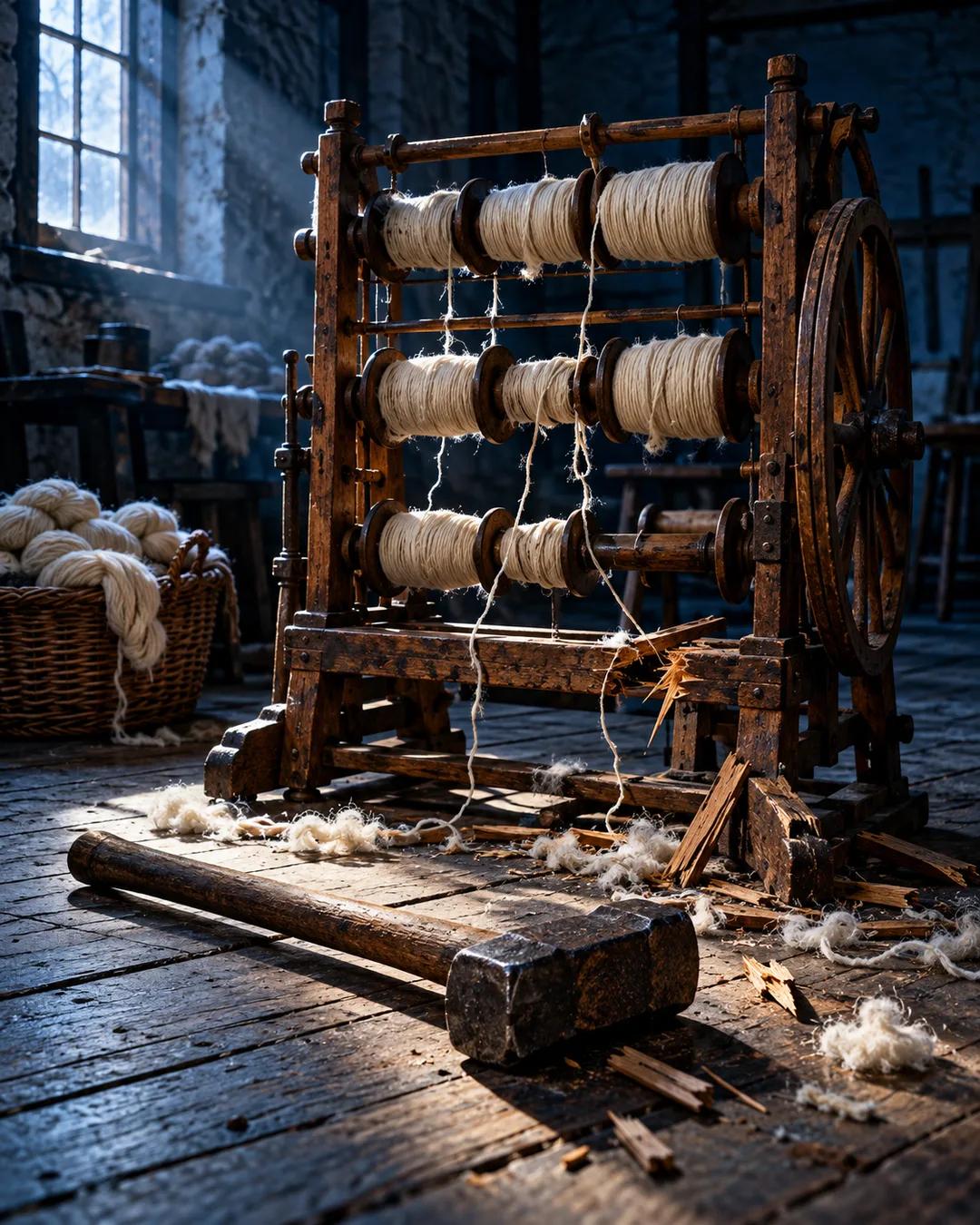
Ned Ludd was never real

Somewhere between 500,000 and 800,000 people in England made yarn by hand during the Industrial Revolution, and they were considered craftsmen. Then the machine arrived and put them out of business.
Ned Ludd was a made-up character, which meant he was a person nobody could go after. In his name, groups of workers went around smashing the new machines. The authorities took it so seriously that breaking one was punishable by death, and still hundreds of thousands of people were willing to risk their lives to ruin the technology.
Their name, the Luddites, is now an insult for someone who refuses to adopt new technology. Back then it was not. When technology makes a product that already has demand more efficient, the people directly affected go through turmoil, and the Luddites are the best-known case of it.
How did machines replace hand spinners?
The spinning jenny, invented by James Hargreaves around 1764, let one worker spin several threads at once. Richard Arkwright's water frame of 1769 then powered the spinning with a waterwheel. Both moved the work out of cottages and into factories. Each machine did the work of many spinners.
Why did Parliament make machine breaking a capital crime?
Parliament passed the Frame Breaking Act in 1812, which made destroying a textile machine punishable by death. Mill owners had pressed the government for protection as attacks multiplied in the English Midlands. In 1813, a mass trial at York ended with seventeen men hanged, many of them for Luddite offenses. The army was sent into the affected counties to enforce order.
Where did the legend of Ned Ludd come from?
Folklore described Ned Ludd as a young man from Leicestershire who smashed two knitting frames in a fit of rage in the late 1700s. By 1811, workers in Nottinghamshire signed threatening letters as General Ludd or King Ludd. The signature let a whole movement speak with one invented voice. Those who attacked machines at night often worked in disguise.
More from My First Million