Korva is a scroll of the internet’s best ideas.
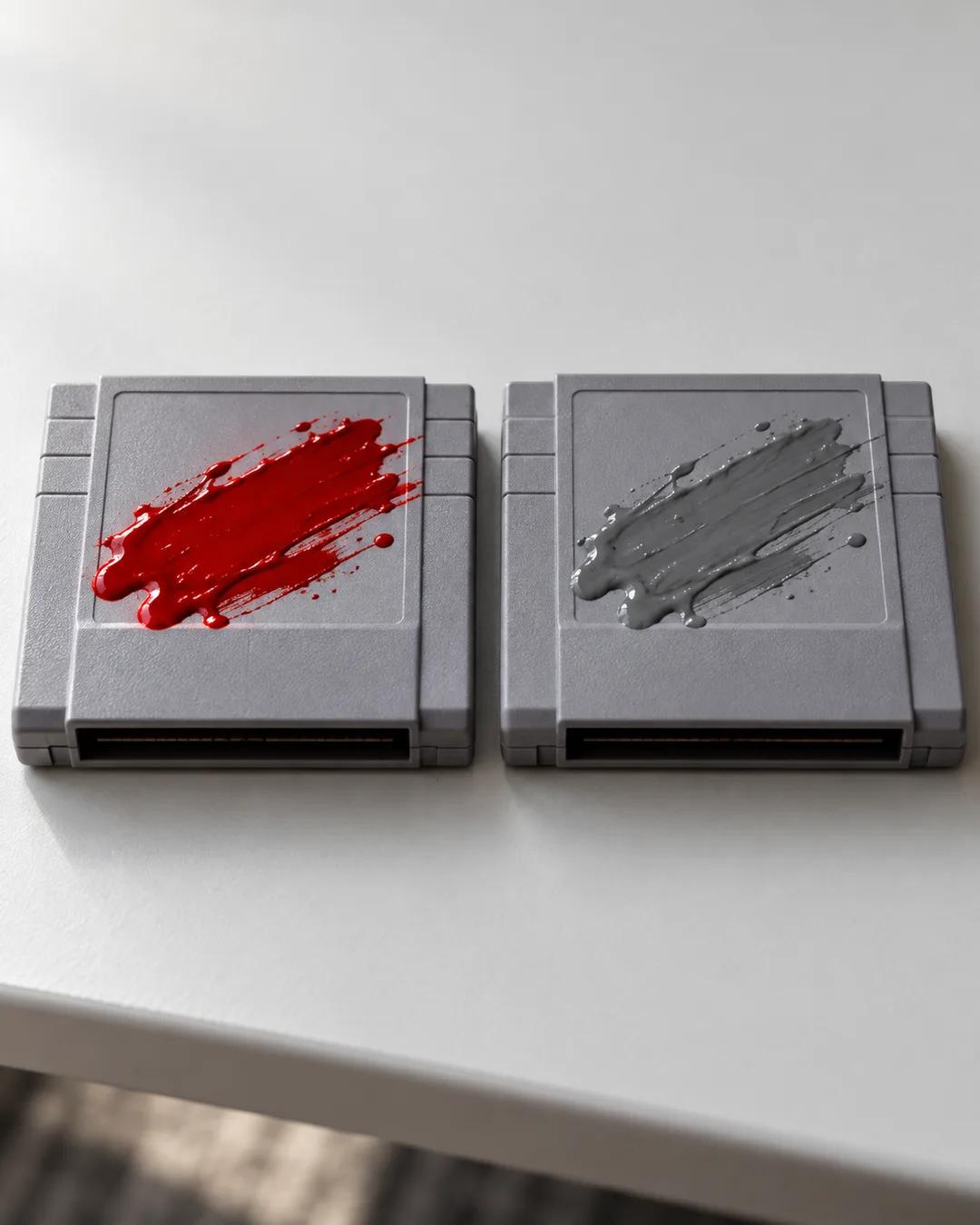
Nintendo turned blood into sweat

A violent game, two consoles
Mortal Kombat arrived just as video games were moving out of arcades and into living rooms. Two console makers could sell it to families: Nintendo, with the Super Nintendo Entertainment System, and Sega, with the Genesis. Nintendo had built a family-friendly reputation, and the game let winners pull an opponent's spine out of their back and hold it up like a trophy.
So Nintendo struck a compromise. On its systems the blood became a grayish color and was called sweat, as if the fighters were perspiring instead of bleeding, and many of the finishing moves were altered or removed entirely.
Sega's bet pays off
Sega was a much smaller company, and the Super Nintendo outnumbered it in American households by probably five to one. Sega bet on showing the game in all its gory glory. The blood stayed red, and every finishing move stayed in.
The Sega Genesis version outsold the Nintendo version by a wide margin. The two releases were the same game, one tamer and one more violent, and the more violent one won.
Why did the Senate hold video game hearings?
In December 1993, Senators Joe Lieberman and Herb Kohl led hearings on violent video games, with Mortal Kombat and Night Trap shown as examples. Executives from Nintendo and Sega testified. Sega had introduced its own rating system for its games earlier that year. The hearings pushed the industry to form the Entertainment Software Rating Board, which was established in 1994.
How did Mortal Kombat look so realistic?
The arcade game from Midway used digitized footage of live actors instead of hand-drawn characters. The developers filmed actors performing each move, then converted the frames into the sprites players controlled. Ed Boon and John Tobias created the game. Street Fighter II, released in 1991, had used hand-drawn sprites.
More from Hidden Brain