Korva is a scroll of the internet’s best ideas.
Nobody returned for 50 years

Two dives, then silence
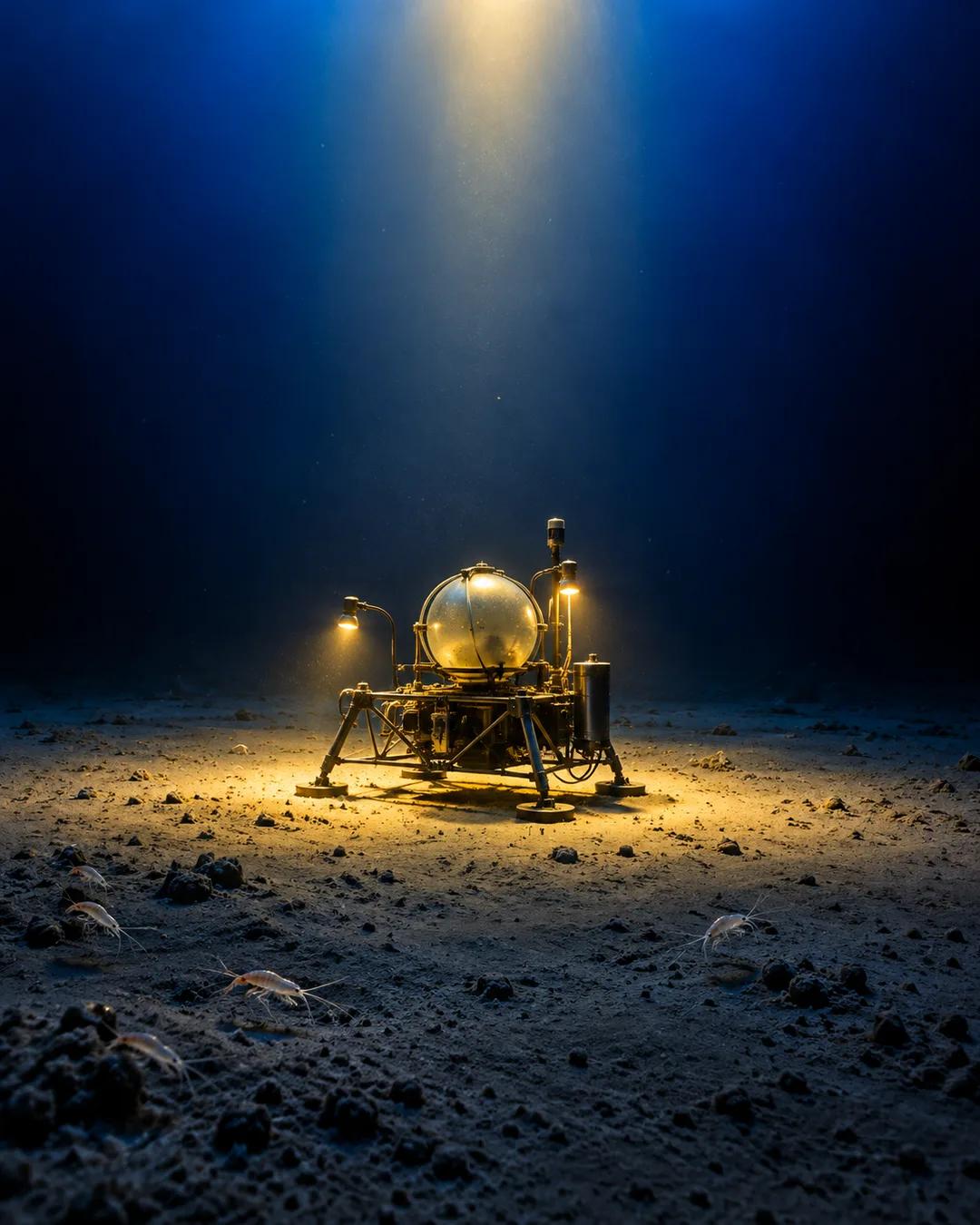
The deepest part of the oceans is the hadal zone. In the 1960s two men went down there in a submersible, made one dive to the deepest part of Challenger Deep, and that was it. Then, around 2011, James Cameron went back by himself in his own submersible.
Challenger Deep sits at the southern tip of the Mariana Trench in the Pacific, and as of now only 27 people have reached it.
Living on almost nothing
The hadal zone has immense pressure and ice-cold temperatures, and one more big stressor: there is very little food. How creatures stay alive on so little is a fundamentally important question.
Microbes in the hadal zone, and microbes deep under the ocean crust, eke out a living on almost nothing. That is damn efficient, though it is not a perpetual motion machine, and studying it shows the actual limits of life: how much energy a creature needs to harness, which changes where life might be found.
How did the 1960 dive reach the bottom?
The craft was the bathyscaphe Trieste, piloted by Jacques Piccard and Don Walsh in January 1960. It had a steel crew sphere hung under a large float filled with gasoline, which is lighter than water. Iron shot served as ballast to sink it. The descent took nearly five hours, and the pair stayed about twenty minutes at the bottom.
How much pressure is at Challenger Deep?
The pressure at the bottom is more than 1,000 times the pressure at the surface. That is roughly eight tons on every square inch of a vessel's hull. Submersibles built for the trip use extremely thick, carefully shaped hulls to survive it. The water temperature there is only a few degrees above freezing.
Why do ocean trenches form?
Trenches form where one tectonic plate slides beneath another in a process called subduction. At the Mariana Trench, the Pacific plate dives beneath a smaller plate to the west. The sinking plate bends downward and carves a long, narrow gash into the sea floor. The result is a trench nearly 11 kilometers deep at its deepest point.
More from Ologies with Alie Ward