Korva is a scroll of the internet’s best ideas.
Old ad formats never stopped working

Why formats fade
Engineers want to impress other engineers, and advertising creatives want to impress other advertising creatives, so they chase whatever has never been done before. Loads of things get discarded that way. Jingles are still around, though they are called sonic branding now. Even when the evidence shows that direct mail is very successful, competitors often find an old-fashioned medium too difficult or too unfashionable to be comfortable with, so they copy much less than expected.
Comic strip ads
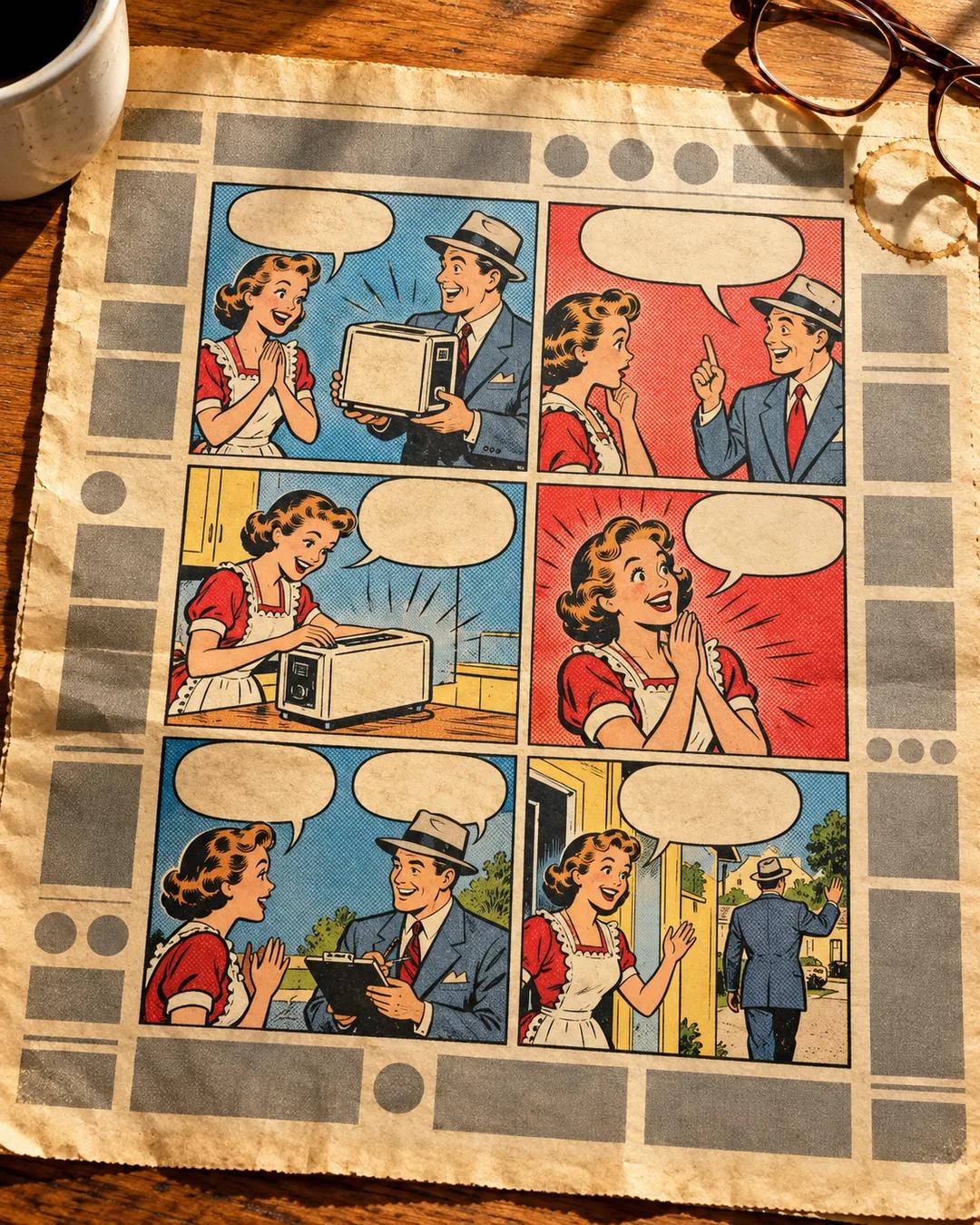
In the 1950s many ads were half-page or quarter-page cartoon strips that told a story in speech bubbles, and the form stayed big into the 1960s. David Ogilvy called it the single most readable form of print, since people put down with a newspaper read the comic strips first. For whatever reason, nobody is doing it now.
Manga today
Kids today are into manga, so an ad in that style, illustrated differently, would be about the coolest thing a brand could do to reach them. New customers keep arriving who do not know what people born ten years earlier already know, because an advertiser faces a moving parade.
How did Charles Atlas ads use comic strips?
Ads for the Charles Atlas bodybuilding course ran in comic books from the 1940s as small comic strips. In the best known, a skinny boy on a beach has sand kicked in his face, builds his body, and returns to win the respect of the crowd. Panels and speech bubbles let the ad tell a story in the same form its readers were already enjoying. The ads ran for decades.
How did jingles become sonic branding?
The Wheaties jingle, Have You Tried Wheaties, first aired on Minneapolis radio on Christmas Eve 1926 and is often cited as the first radio singing commercial. Radio and later television made short musical tags a staple of advertising. Today the same practice covers audio logos, such as short chimes that identify a company in a second or two.
Why did manga spread beyond Japan?
An English edition of Akira appeared in 1988 and was an early landmark for Western readers. In the 1990s, television broadcasts of Dragon Ball Z, Pokémon, and Sailor Moon created a large young audience for anime and the comics behind them. In 2002, the publisher Tokyopop began printing manga in its original right-to-left format.
More from My First Million