Korva is a scroll of the internet’s best ideas.
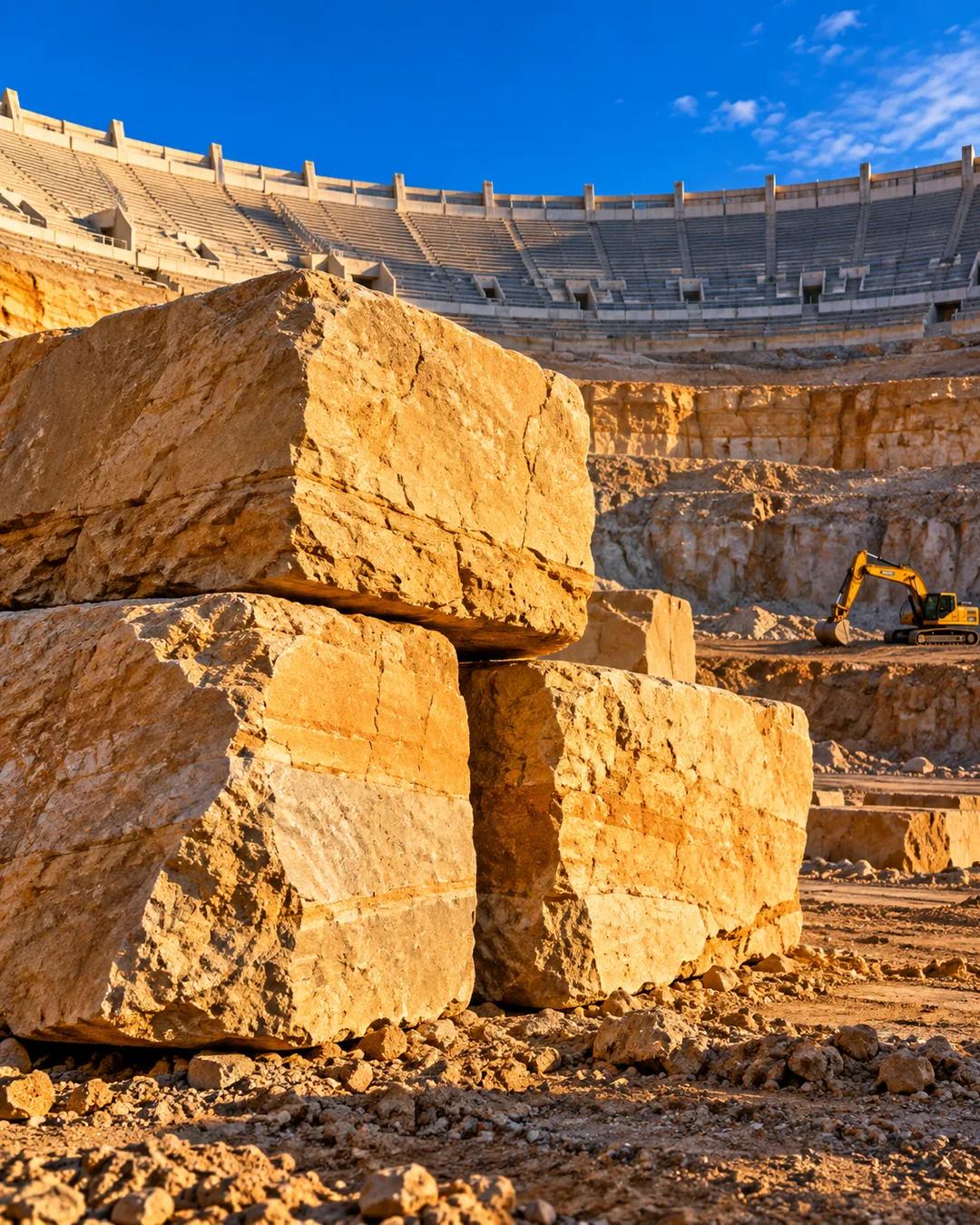
Olympic stadium dig supplied the stone

The mountain's stone
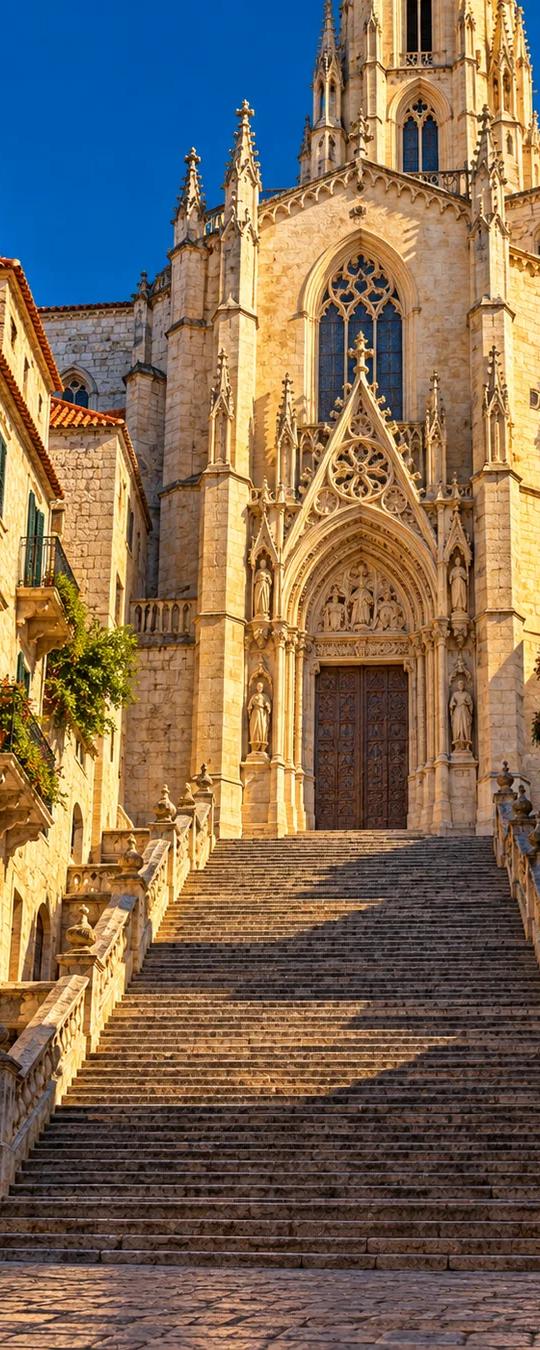
Montjuïc is the mountain beside Barcelona's old city, and it became the growing city's main source of stone in Roman times, along with a valuable export to the empire. Its sandstone gives the Sagrada Família its tan color, and its high quartz content makes it more durable than most sedimentary rocks. It went into the Barcelona Cathedral, the Basilica of Santa Maria del Mar, and the Roman Temple of Augustus. Hebrew writing still shows on city walls, left on ancient Jewish gravestones taken from the mountain.
Running out
Use in ordinary buildings across the city eventually made the stone scarce, and mining intensified. In 1957, Montjuïc became a protected city park. With no suitable replacement, the sculptors' hands went idle, and the supply shrank to leftovers in stock and whatever could be scavenged from other buildings in Catalonia.
The stadium's gift
The old Olympic stadium sits in the center of that protected park. Expanding its spectator capacity meant lowering the plain field, and the excavation produced the stone the Passion facade needed. Its six skeletal, angled columns call for the highest quality silicated sandstone. The Nativity facade's spires, by contrast, are built from smaller bricks, a sign of the dwindling supply of large quarry blocks.
Why does quartz make sandstone last longer?
Quartz is a hard, chemically stable mineral that resists weathering. It sits at 7 on the Mohs scale of hardness, higher than the calcite found in limestone and the feldspar found in many other rocks. Rain slowly dissolves calcite, but it barely touches quartz. A sandstone rich in quartz grains therefore wears away far more slowly than one built from softer minerals.
Why was Montjuïc's stadium built so long before the Olympics?
The stadium opened in 1929 for Barcelona's International Exposition. Barcelona bid for the 1936 Olympics but lost to Berlin. Organizers then planned an alternative People's Olympiad at the stadium, set for July 1936. It was cancelled when the civil war broke out, and the stadium waited until 1992 to host an Olympics.
How did sandstone form on Montjuïc?
Rivers carried sand and gravel to the coast near Barcelona and spread them in layers. Over time, the layers were buried, pressed together, and cemented by minerals in groundwater. Geologists date Montjuïc's sandstone to the Miocene epoch, which ran from about 23 to 5 million years ago.
More from Real Engineering