Korva is a scroll of the internet’s best ideas.
One in four crash after muffins

The sugar dip
The data come from studies that gave 50,000 people in the US and UK the same foods at the same time of day. Blood sugar normally rises after a muffin. In one in four people it then comes down below baseline, a real sugar dip three hours on.
The next meal
Those people end up overeating at the next meal and feel more tired and more hungry during the day. It is the 11 o'clock slump after a carb-heavy breakfast, which some people feel and others don't.
Someone eating an identical muffin with identical calories will then overeat by another 10 percent or so that day. A pattern like that undercuts the idea that calories in equals calories out and that everything is the same.
Why does blood sugar fall below baseline?
After a carbohydrate-rich meal, rising glucose triggers the pancreas to release insulin, which moves sugar from the blood into cells. In some people the insulin response overshoots or lingers after the glucose has been absorbed, pulling levels beneath where they started. A 2021 study in the American Journal of Clinical Nutrition by Wyatt and colleagues, using data from the PREDICT project, found that bigger dips were followed by hunger sooner and more calories eaten over the rest of the day.
Why do identical meals cause different blood sugar spikes?
In a 2015 study in Cell, Eran Segal's group at the Weizmann Institute had 800 people wear glucose monitors for a week. Responses to the same food varied widely: some people spiked on bread, others on cookies. An algorithm that combined gut microbiome data, blood tests, and lifestyle predicted individual responses better than counting carbohydrates or calories.
How do continuous glucose monitors work?
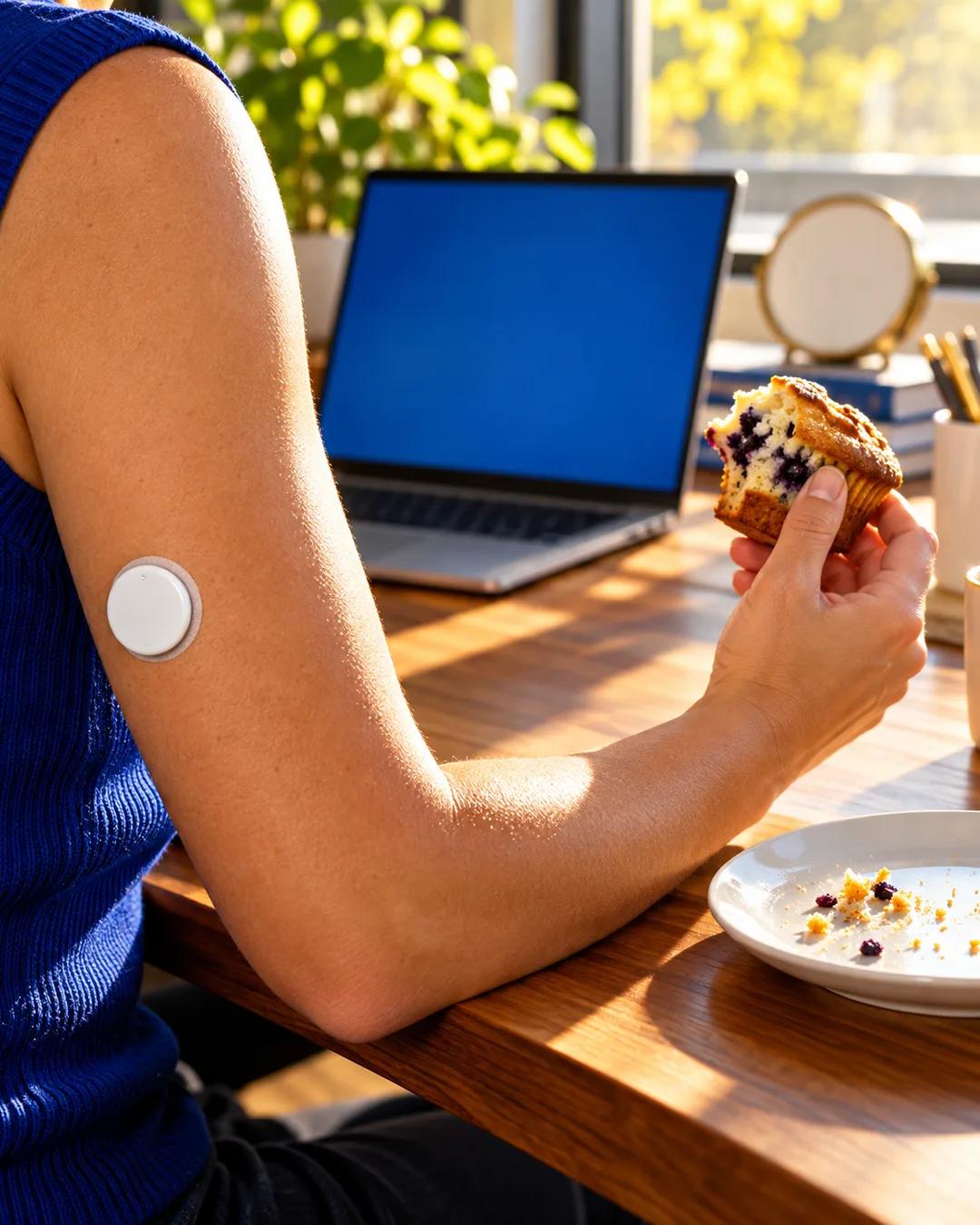
A thin filament inserted just under the skin measures glucose in the fluid between cells. An enzyme on the sensor, glucose oxidase, reacts with glucose and produces a small electrical current in proportion to the amount present. The device records a reading every few minutes. Because it measures fluid rather than blood, its readings lag behind blood glucose by roughly 5 to 15 minutes.
More from The Diary Of A CEO with Steven Bartlett