Korva is a scroll of the internet’s best ideas.

One Tribune story, 1,437 leads
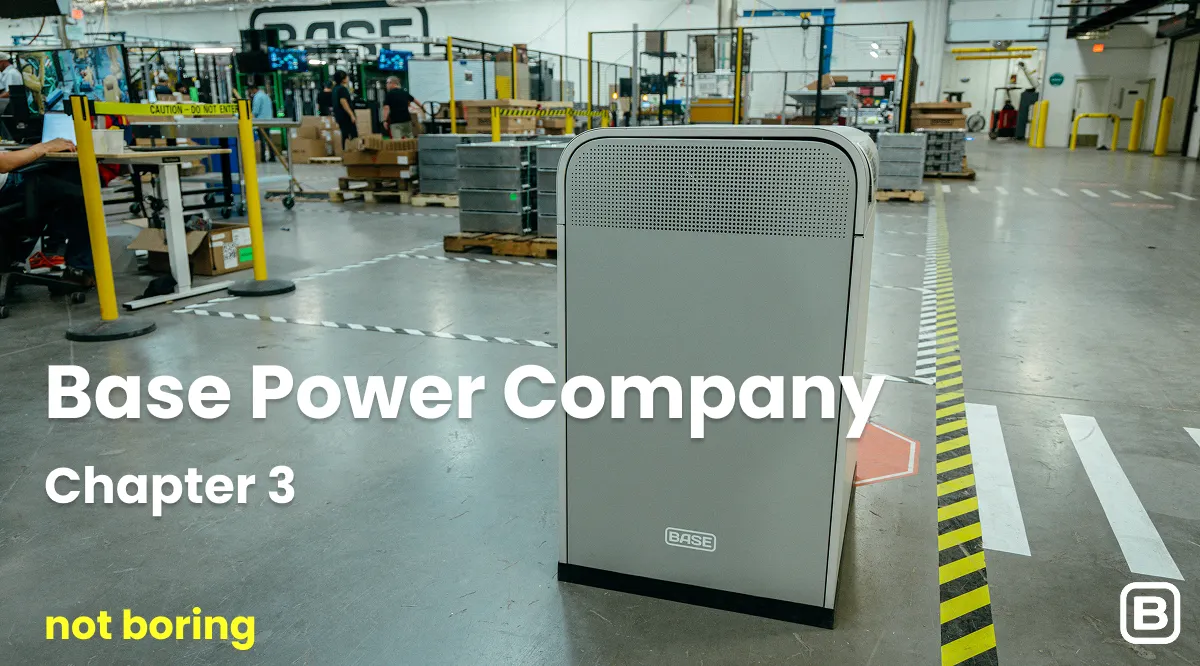
The Chicagoland launch
Base launched in Chicagoland on June 24, on the heels of severe storms that left more than 400,000 without power. It signed up more than 1,000 members and did 26 installs almost immediately.
The Tribune day
Then on July 27, storms knocked out power to more than 530,000 ComEd customers. The next morning the Chicago Tribune ran a favorable feature on Base's backyard battery backup system for ComEd customers. That day, 1,437 leads came in, five times the previous best day, and 172 of them signed up, nearly double the previous daily record of 90. That was almost a quarter of all the new Chicagoland members from the whole of June.
Who reads local news
Base's target audience watches the local news at 5 pm and reads local papers, which is why getting Zach Dell on a reputable local TV station is part of the plan.
Why do storms knock out power for so many?
Most outages start on local distribution lines, where overhead wires meet falling branches and high wind. The US Department of Energy has said about 90 percent of outages begin on the distribution system rather than on the high-voltage transmission lines. One damaged feeder can leave thousands of homes dark at once, and crews must restore lines in sequence. Storms that hit a dense metro area can therefore cut power to hundreds of thousands of customers in a single afternoon.
How does a home battery keep the lights on?
When the grid fails, a switch isolates the house from the utility's wires, and the battery's inverter converts stored direct current into household alternating current. The isolation is a safety requirement, because a home that fed power back into a dead line could endanger utility workers. This behavior is called islanding, and it is controlled by rules on how inverters must respond to a grid outage. Batteries can then run chosen circuits until the grid returns or the charge runs out.
Why does news coverage drive sign-ups?
Editorial coverage in a trusted paper carries a credibility that paid ads rarely match, a channel marketers call earned media. Nielsen's Global Trust in Advertising surveys have found that recommendations from people a consumer knows are the most trusted form of advertising, and that editorial content ranks above most paid formats. Coverage that lands the morning after an outage meets readers while the problem is fresh. Local newspapers also reach older homeowners, who own much of the housing stock.
More from Packy McCormick