Korva is a scroll of the internet’s best ideas.
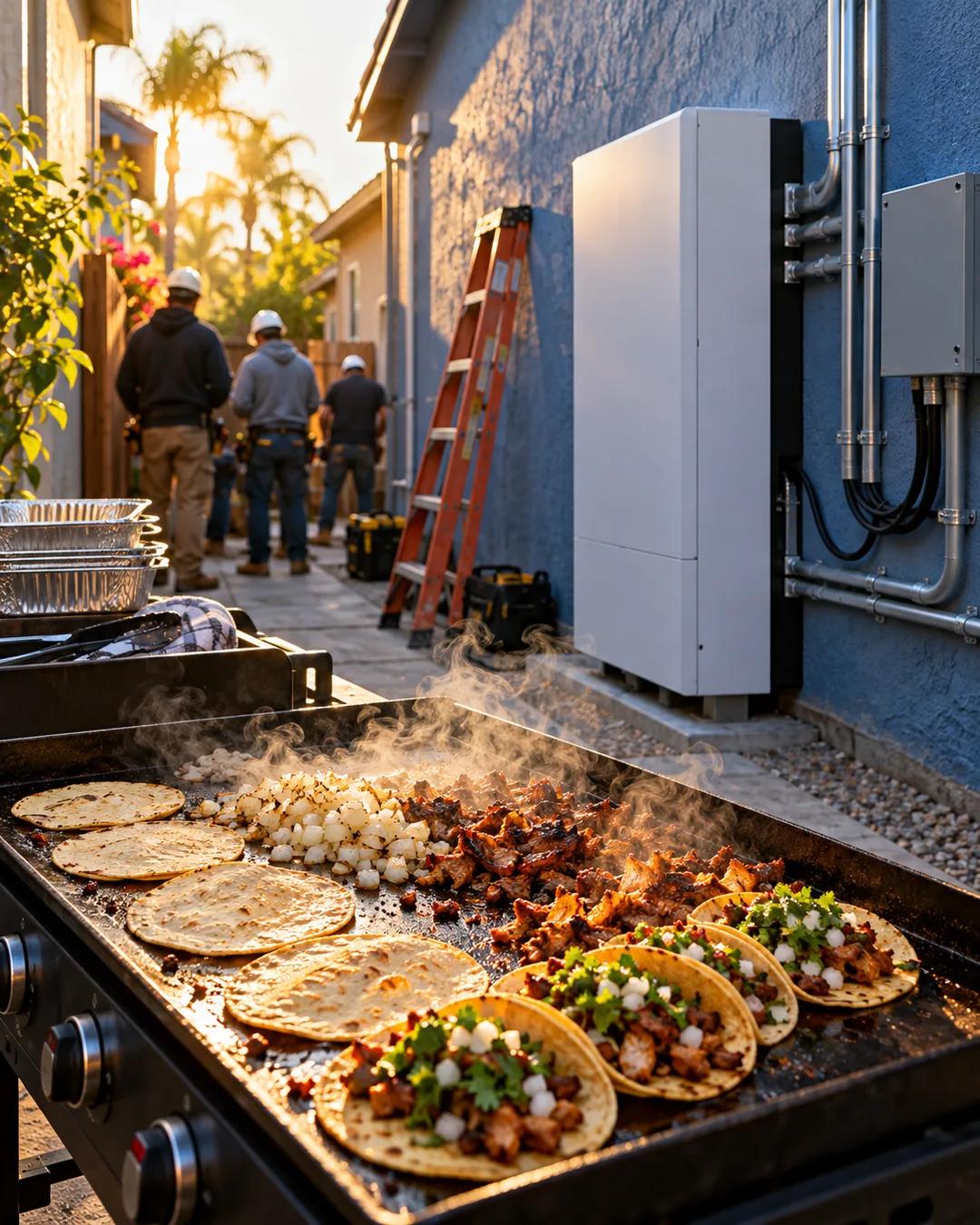
Tacos at the first install
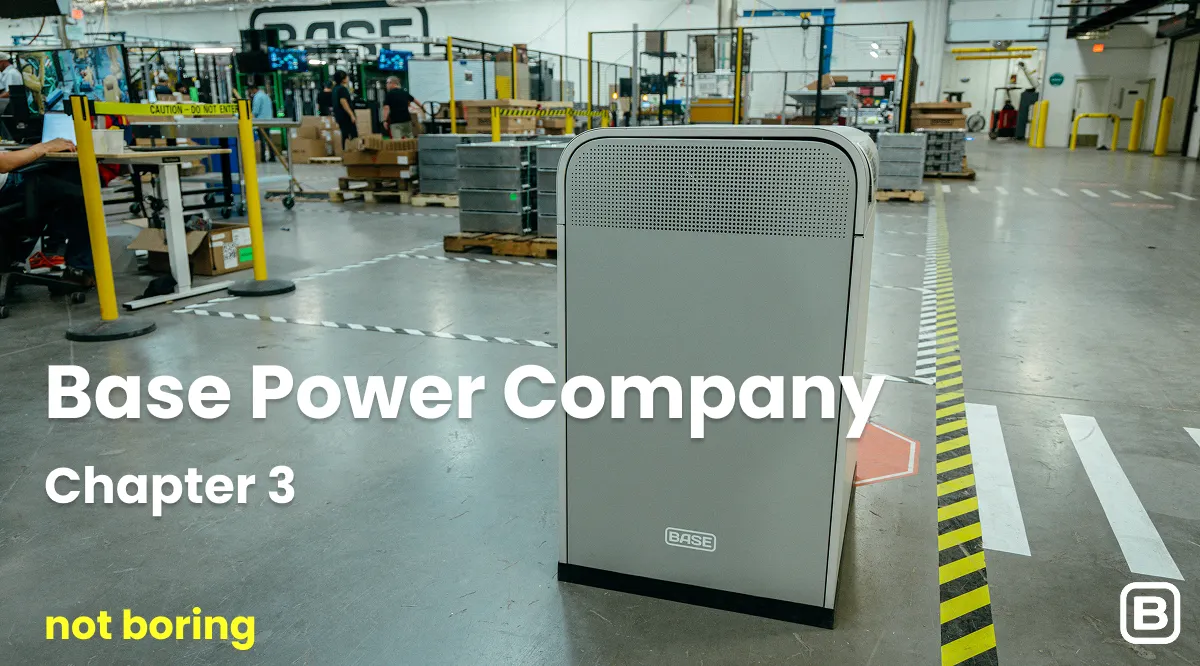
Dana Paz, the Anduril alum who is Base's Head of Deployments, had been at the first Gen 1 install too. That one was her and Cole Jones, Base's Head of Growth, with a Craigslist electrician. It took over two days to hack together and was pure chaos.
This time the engineers were on-site, along with the hardware and firmware teams, the electricians, and the deployments crew. The unit had been finished in the factory, run through functional tests off the line, and thrown in the back of a person's car to be driven to the house.
Earlier pilots had needed reworking so many times that crews went back to the same house six times. This month, only fifteen months after Base decided to build the battery itself, it will install more Base Core systems than Gen 1 systems.
Why do early pilots keep needing rework?
A lab can't reproduce every condition a product meets in a real home: odd wall layouts, tight spaces, and crews working with imperfect information. Each pilot install exposes parts that are hard to reach, steps in the wrong order, and connectors that misfit. Engineers feed those lessons back into the design before the line is locked in. Quality engineers describe the rule of ten, which says a defect costs roughly ten times more to fix at each later stage.
Why test products at the end of the line?
End-of-line functional testing powers up each finished unit and runs it through a standard routine before it ships. A defect found at the factory is cheap to repair, while one found in a customer's garage needs a truck and a crew. Tests also build a record for each serial number, which helps trace a failure back to a batch of parts. Automakers have used end-of-line testing for decades to check brakes, electronics, and engines before shipment.
How does design for installation cut costs?
Installation labor is a large part of what home energy equipment costs the customer, so designers try to remove steps, parts, and tools from the job. This discipline traces to design for assembly methods developed by Geoffrey Boothroyd and Peter Dewhurst, who pushed engineers to cut part counts and make parts fit only one way. The National Renewable Energy Laboratory has reported that soft costs such as labor, permitting, and customer acquisition make up a large share of residential solar costs. Fewer steps on site means fewer hours billed.
More from Packy McCormick