Korva is a scroll of the internet’s best ideas.
Only a sliver of the deep

A team at the nonprofit Ocean Discovery League went through all the dive videos and dive tracks from 80 years of ocean exploration to count how much had been seen. The total was a sliver of a fraction of a percent.
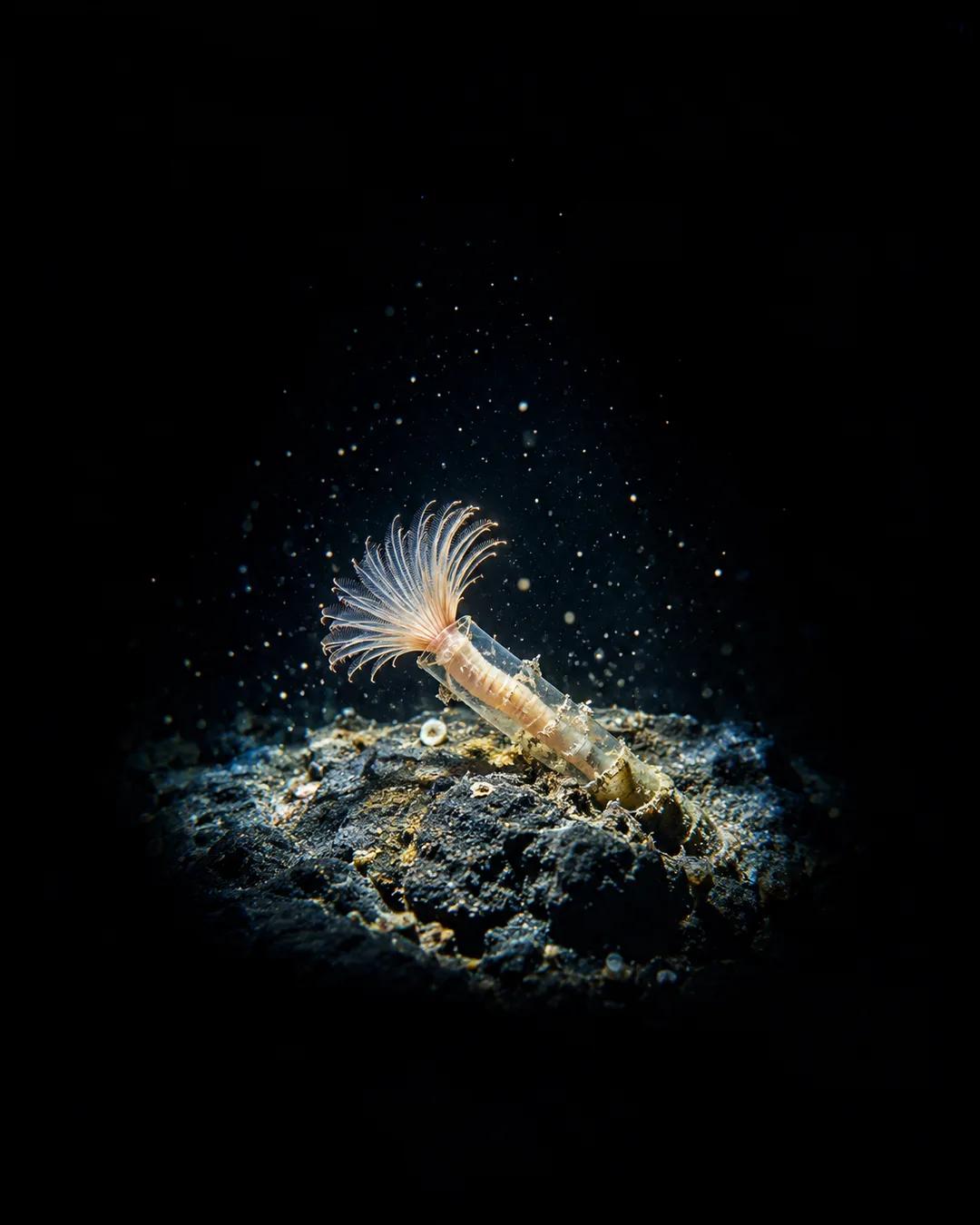
Even at places studied for 35 or 40 years, scientists still find new species. More relatives of the Riftia tube worm are likely waiting at other vents, and some animals will turn out to be making a living in ways nobody was sure were possible. Some are parasites that climb onto other animals.
The Wild Wild West is microbes, which come in billions of kinds.
Why is the deep so hard to survey?
Radio waves barely travel through seawater, so a deep vehicle cannot use GPS or wireless links. Vehicles have to be tethered by cable or talk through slow acoustic signals. Light also travels only a short distance in the water, so a lamp shows a small patch of sea floor. Ship sonar can map large areas but only at coarse detail.
Why do new species keep turning up?
Most of the deep sea has never been sampled, and sampling at any one site is limited. Many animals also look alike but are genetically distinct. A 2011 estimate by Camilo Mora and colleagues in PLoS Biology put marine species at about 2.2 million, with around 91 percent not yet described. Many of those are expected to live in deep water.
How do scientists study microbes they can't grow?
Most microbes have never been grown in a laboratory dish. Researchers extract DNA directly from a water or sediment sample and sequence the genes in it. This approach is called metagenomics. It has revealed whole branches of life that were unknown before.
More from Ologies with Alie Ward