Korva is a scroll of the internet’s best ideas.
Study microbes as a community

A lab in a shipping container
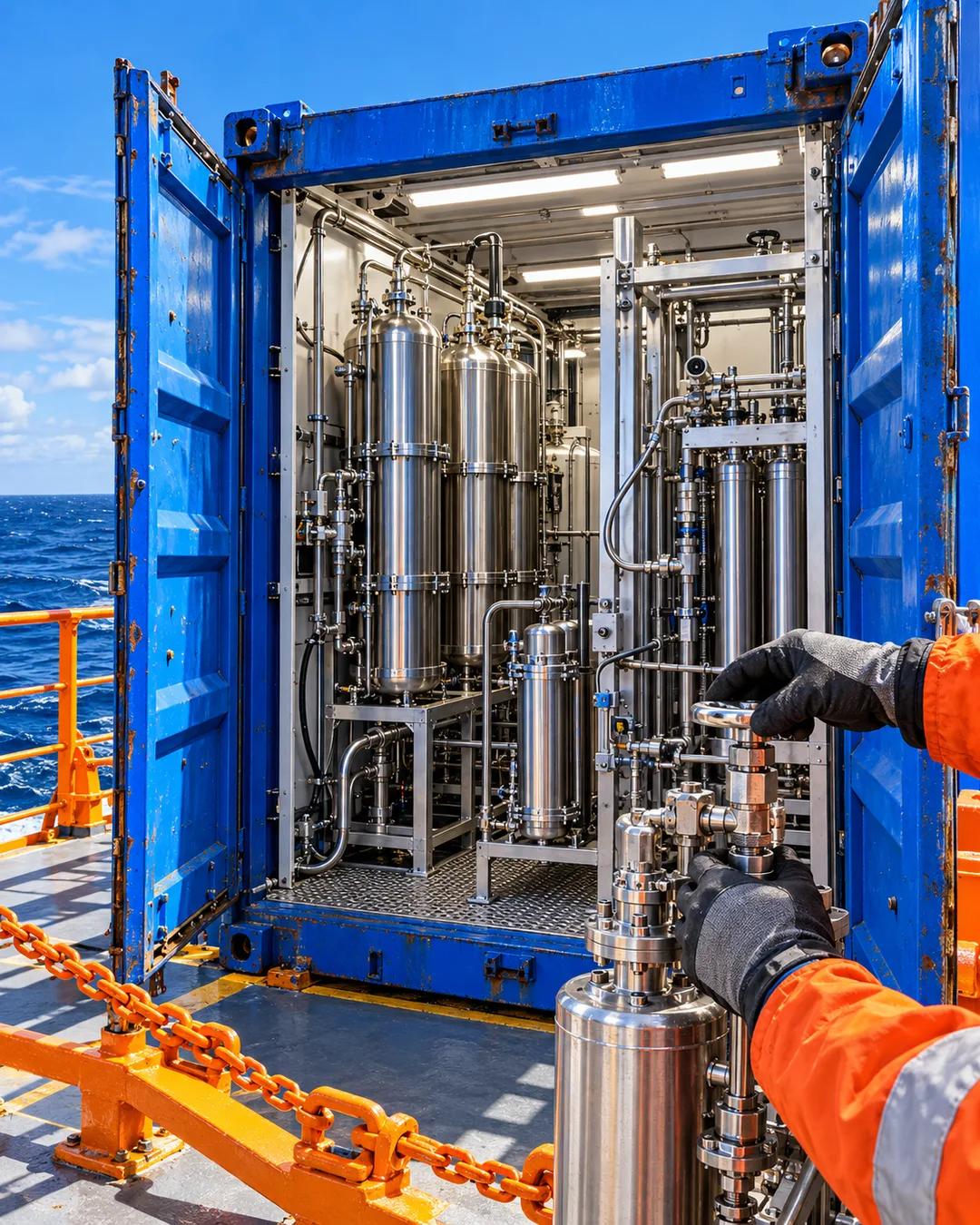
Samples come up from the sea floor in push cores, plastic tubes shoved into the sediment and capped on top, the way a thumb over a straw holds a little lemonade. A shipping container, the kind seen on a railroad car, serves as a mobile high-pressure laboratory. It gets bolted to the research vessel's deck and filled with high-pressure aquaria, and the rocks and sediment are re-pressurized as soon as they arrive.
Feeding the community
Then come food and fuel: methane, or hydrogen sulfide, a rotten egg gas more poisonous than cyanide that plenty of microbes love. The system lets researchers track who is doing what, even in a mixed community.
Why the community matters
Keeping the community together answers questions that isolated microbes cannot: when methane and hydrogen go in, who makes the most cells, and who eats those cells? Separating a microbe lets medical researchers study its fundamental characteristics. Learning a bird's natural history from a birdcage doesn't work.
Why does bringing microbes up kill them?
Many deep-sea microbes are adapted to high pressure and grow best under it. When they are brought to the surface, the drop in pressure disrupts their cell membranes and the shape of their enzymes. Some of these pressure-loving microbes, called piezophiles, cannot grow at surface pressure at all. A sample kept at depth pressure from the start avoids the damage.
How do labs recreate deep sea pressure?
Each ten meters of seawater adds about one atmosphere of pressure. To copy a site 2,500 meters down, a lab has to hold its water at roughly 250 atmospheres. Thick steel or titanium vessels pumped full of water can do this. The walls are far heavier than those of an ordinary aquarium.
Why do microbes act differently in a mixed community?
Many microbes depend on partners that trade chemicals with them. At methane seeps, methane-eating archaea work with sulfate-reducing bacteria that use the compounds they pass along. Pull one partner out and the other may stop growing. For that reason, most microbes have never been grown alone in a dish.
More from Ologies with Alie Ward