Korva is a scroll of the internet’s best ideas.
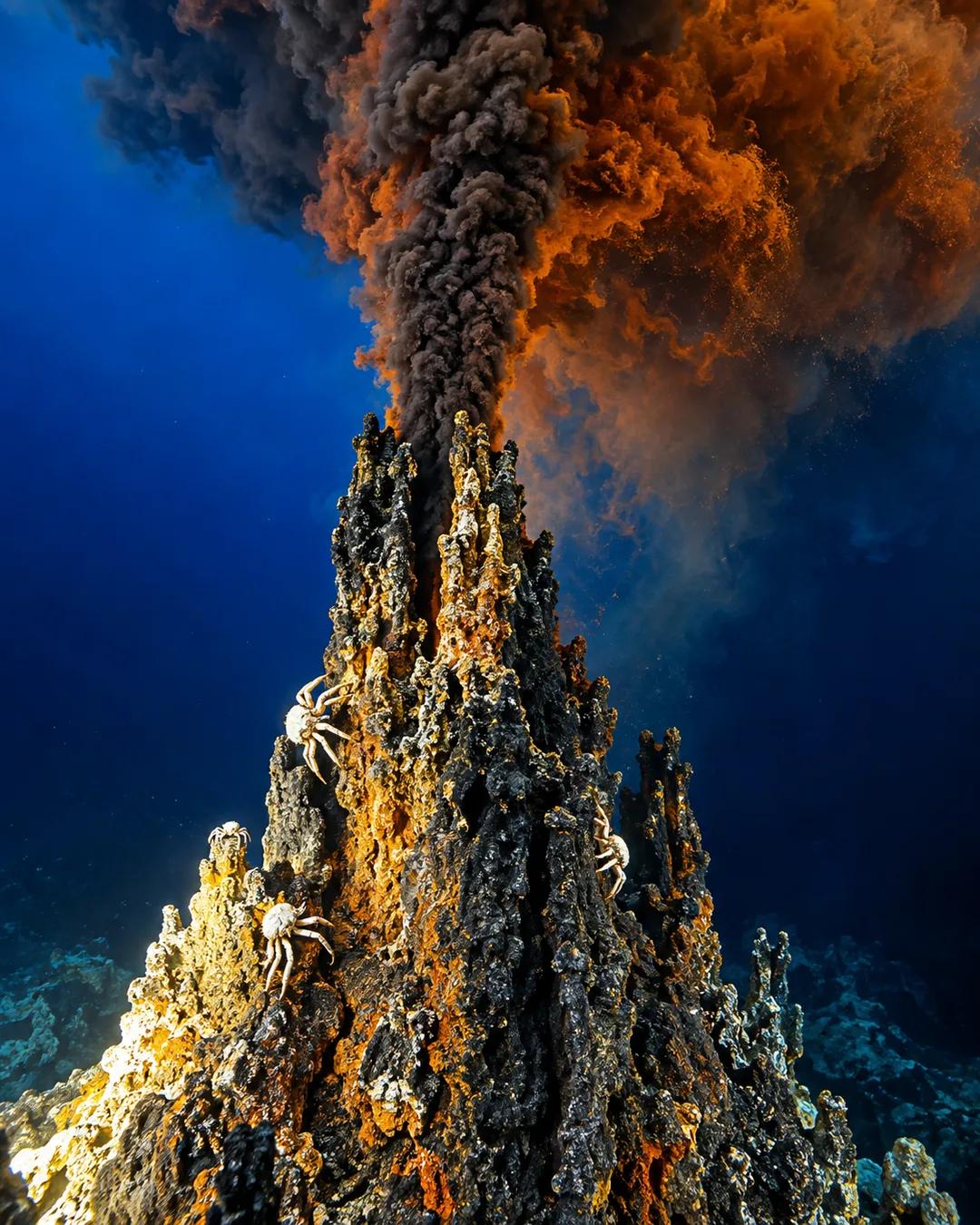
The ocean's multivitamin

Little algae need iron to grow, and vents pump a lot of it into the ocean. Fishes feed on those algae, and the fishes end up playing a big role in human health and nutrition. The connection between people and deep sea vents is short, and vents are like the ocean's multivitamin.
Anyone who has owned an aquarium knows how it works: if one thing goes wrong in some corner of the tank, the whole thing goes to hell. What happens everywhere in the biosphere matters the same way.
Why is iron scarce in surface seawater?
In oxygen-rich seawater, iron tends to rust out of solution and sink. Most of what reaches the surface arrives as windblown dust. Large areas like the Southern Ocean have plenty of other nutrients but too little iron for algae to bloom. Oceanographer John Martin proposed in the late 1980s that adding iron could trigger blooms in these regions.
How does vent iron reach surface algae?
Iron from vents binds to organic molecules that keep it dissolved. Plumes of it can travel thousands of kilometers through the deep ocean. A 2010 study led by Alessandro Tagliabue in Nature Geoscience estimated that vents add a significant share of the deep ocean's dissolved iron. Currents that bring deep water to the surface, such as in the Southern Ocean, then carry it to the algae.
Why do algae need iron?
Iron is part of proteins that move electrons during photosynthesis, such as cytochromes and ferredoxin. Algae also use iron-containing enzymes to take up nitrogen. Without enough iron, the light-capturing machinery works poorly and growth slows. This is why iron can limit algae in regions full of other nutrients.
More from Ologies with Alie Ward