Korva is a scroll of the internet’s best ideas.
Ovens need oil far less

The side-by-side test
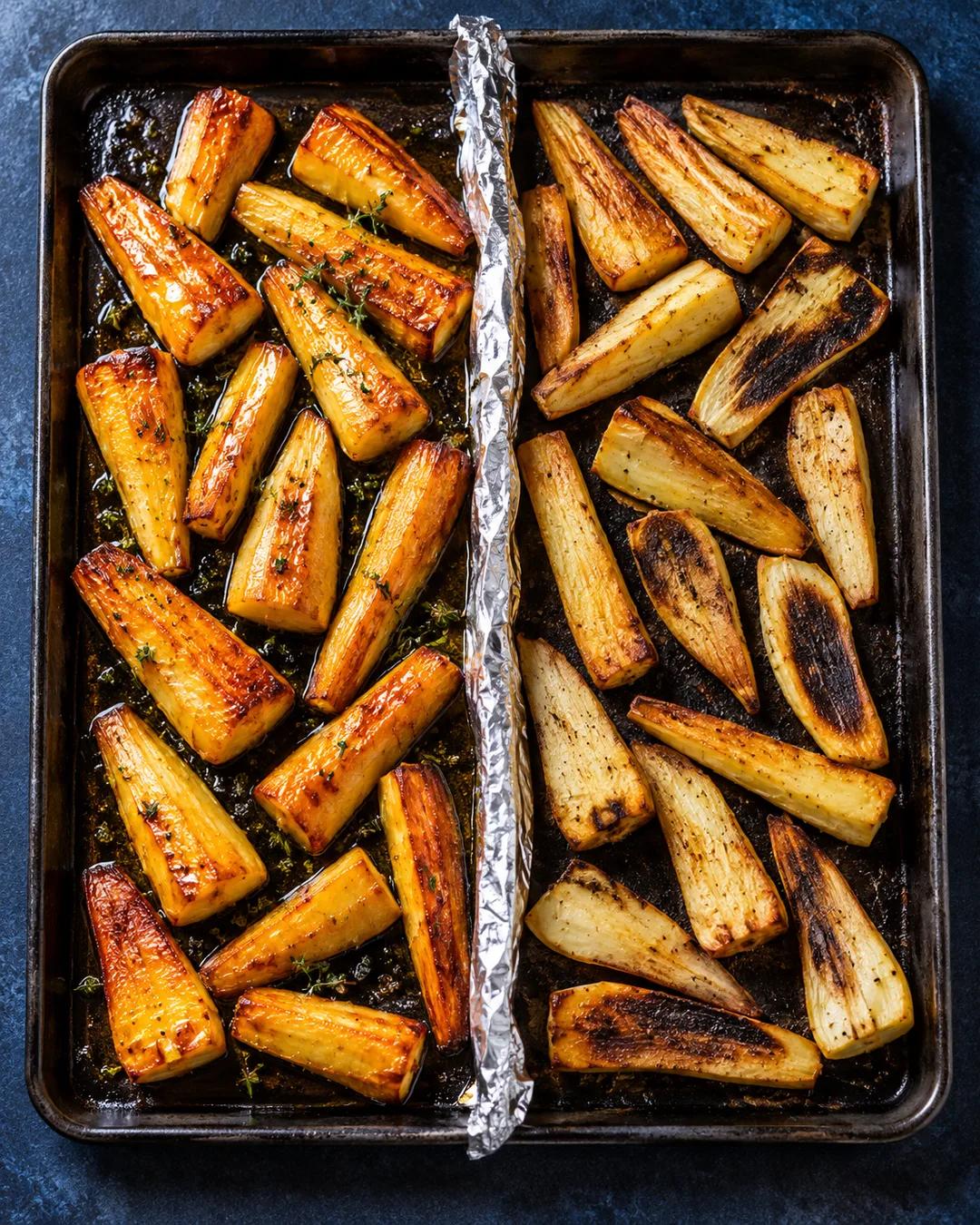
In a side-by-side test, oil went on one half of each tray, with a foil barrier between the halves. Vegetables on both sides picked up about the same color on top. Underneath, a parsnip coated in oil turned beautifully golden where it touched the metal, while the unoiled parsnip had the same uneven mix of burned and pale spots that dry-pan cooking gives, and it was drier and less appetizing.
Beef and chicken
The oiled beef roast looked exactly like the unoiled one, since its open structure let plenty of rendered fat settle on the surface. The chicken thighs did show a difference, and the oiled skin looked a little nicer. The likely reason is that the skin acted as a barrier that kept rendered fat from rising to the surface.
Why the oven differs
Why oil matters so much less in an oven is unclear, but dry heat all around the food seems to do some of the job the oil does in a pan. The same logic shows in a dry pan: flatbread browned in patches and tasted like bread, while the oiled one browned evenly and tasted like a donut.
Why does oven heat brown food without oil?
An oven surrounds food with hot air and radiant heat from its walls, so heat reaches the whole surface instead of only the underside. Dry air also pulls moisture from the surface of the food. Once the surface is dry, its temperature can rise past the boiling point of water and reach the range where browning reactions run. In a pan, the underside gets heat only where it touches the metal, which is why oil matters more there.
Why does chicken skin keep fat from rising?
Chicken skin is a continuous sheet of tissue, with fat stored in layers beneath it. As the fat melts, the skin holds much of it in, so little reaches the top surface. Meat with an open structure lets melted fat travel through gaps and spread across the top. Rubbing oil on skin therefore supplies fat to a surface that the bird's own fat cannot reach.
Why does oiled flatbread taste like a donut?
Frying in oil browns the dough evenly and leaves a thin layer of fat on and just under the crust. Fat carries flavor compounds that dissolve in it, and it makes the crust feel richer and more tender. Donuts are also fried in oil, which gives them the same rounded flavor and a texture shaped by that cooking method. Dry-cooked bread browns more unevenly and keeps the plain taste of baked flour.