Korva is a scroll of the internet’s best ideas.
Putin chose oil over inventors

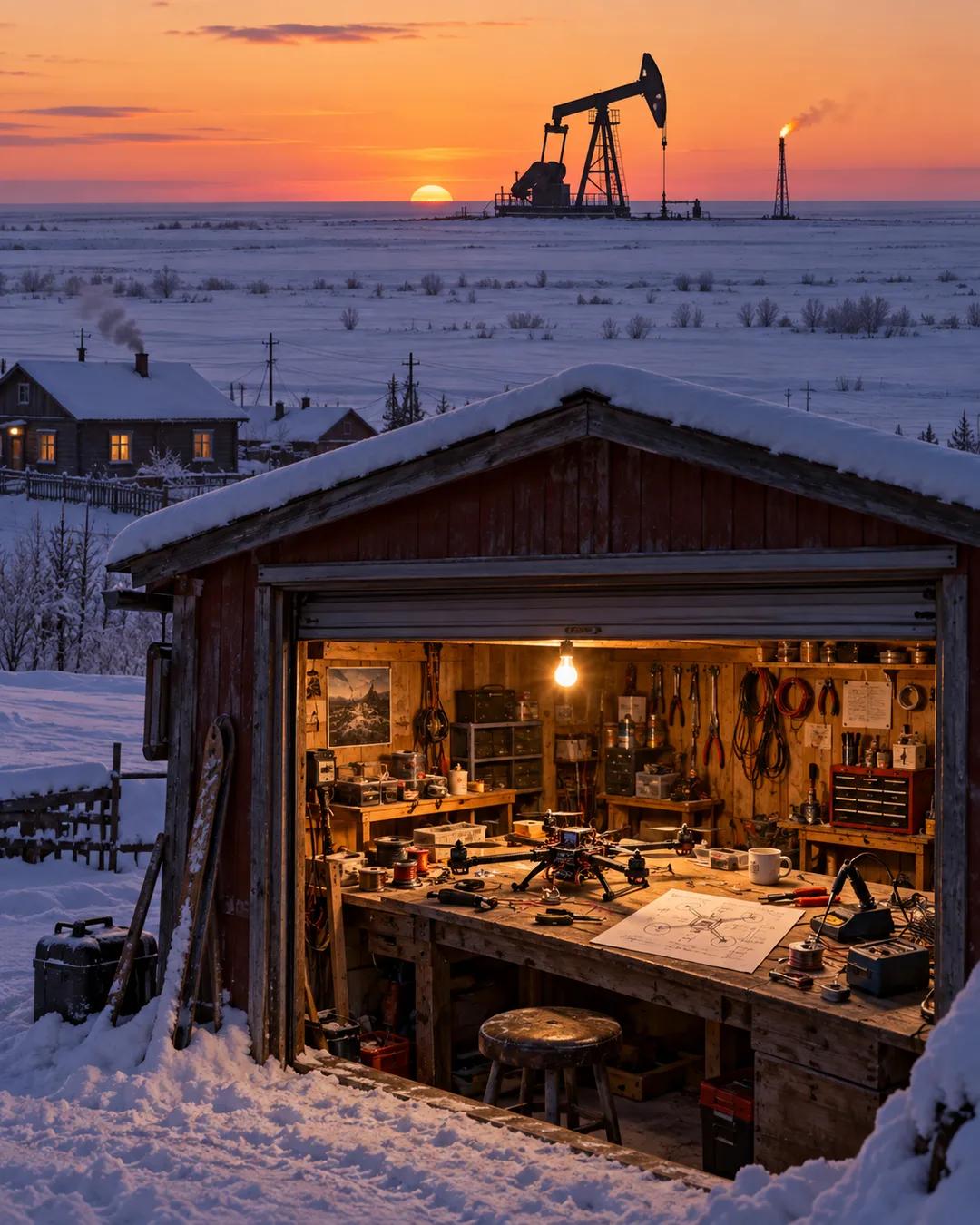
The model he settled on puts order and control of people first. It leaves no room for people inventing new things in garages across Russia's eleven time zones. When William Burns was ambassador there almost twenty years ago, the country had a very well-educated population, strong in maths, sciences, and emerging technologies, who could compete very effectively.
Making those minds a priority would have meant allowing freedom of thought and imagination, which Putin saw as opposed to how Russia should be run. Russia could still become a great power beyond what is in the ground, possibly decades from now, but that depends on the choices leaders make and the kind of society they build.
The war in Ukraine is on track to be seen as a major strategic failure for Russia, one that set back its economic prospects for decades and decades.
Why is oil wealth easier for rulers to control?
Oil and gas revenue flows to the state through a few pipelines, ports, and companies, so a ruler who controls them controls the money. Political scientist Michael Ross argued in a 2001 paper in the journal World Politics that oil wealth tends to hinder democracy. Governments that live on resource income need less from taxpayers, and they hear less from citizens who might otherwise demand a say. A software company or a manufacturer, by contrast, depends on thousands of independent decisions that no single office can direct.
Why is Russia known for mathematics?
The Soviet Union built a deep tradition in mathematics and physics, including special schools for gifted children. One of the best known, the Kolmogorov School in Moscow, opened in 1963 and recruited talented students from across the country. Soviet mathematicians produced foundational work in probability theory, topology, and computing. Many of their students later took jobs abroad after the Soviet Union dissolved in 1991.
More from Not Dead Yet