Korva is a scroll of the internet’s best ideas.
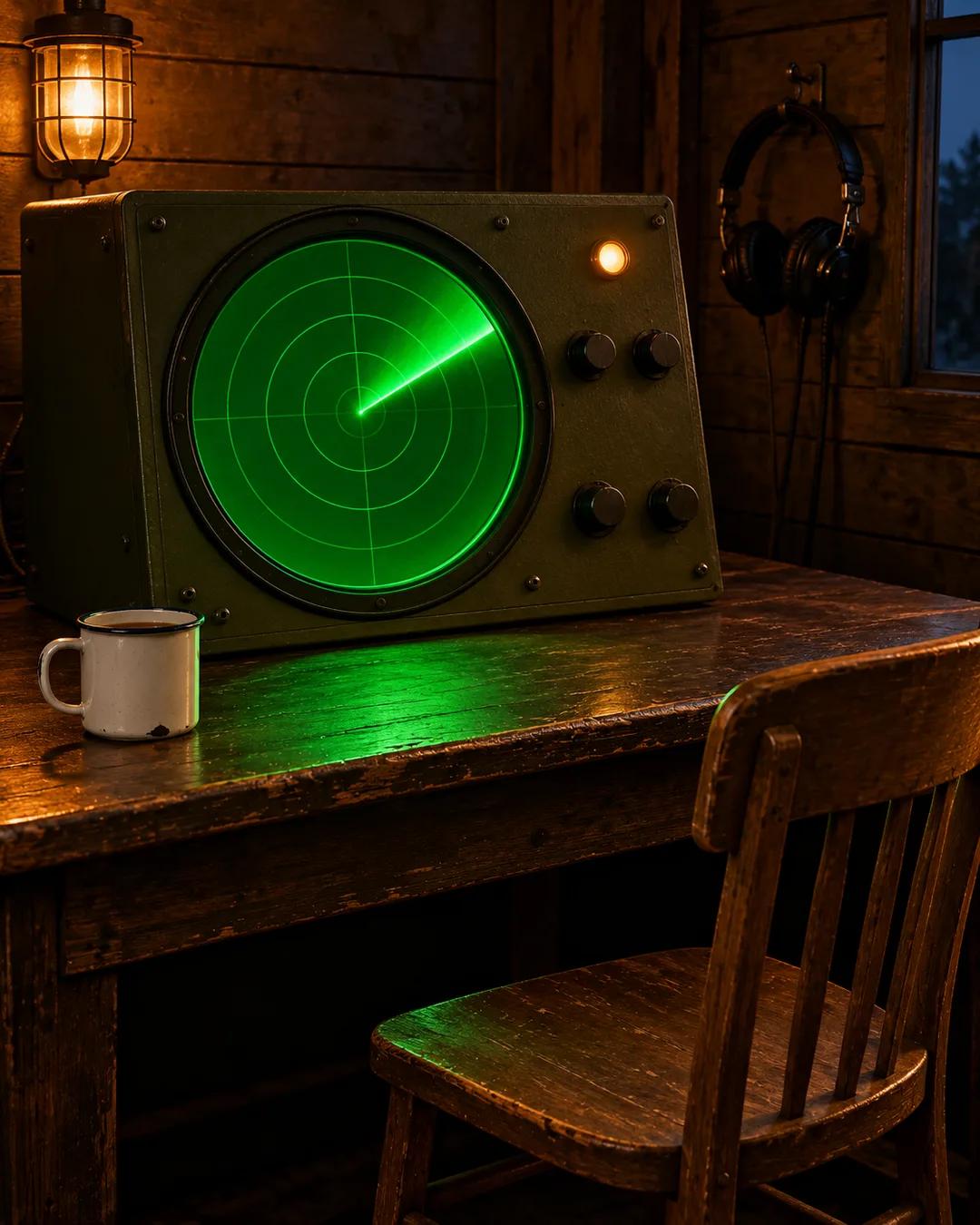
Radar operators who drifted off

Watching empty screens
Most of the time the screen showed nothing. The worry was that operators would drift off and miss a rare, important event, and the studies also tracked false positives, where an operator pushed the button after thinking they saw a blip.
The vigilance decrement
Researchers named the effect a vigilance decrement. With boring, dull work, healthy brains show a measurable drop over time in the ability to detect very infrequent events.
The ADHD link
The same measure turns up in ADHD research. Difficulty sustaining attention over time is one problem, and greater variability in response than in people without the diagnosis is a signature. That variability might shrink if the motivation for the task were better, since attention goes more easily to what feels intrinsically rewarding. Some research also points to dysfunction in the basal ganglia in ADHD, which ties attention to motivation.
Who first studied radar watchers' attention?
Norman Mackworth studied radar watchers at the Applied Psychology Unit at Cambridge in the 1940s. He built a Clock Test in which a pointer ticked around a blank dial and occasionally made a double jump that the observer had to report. Detection fell off sharply during the first half hour of a two-hour watch.
Why did radar work shape the idea of false alarms?
Radar operators had to decide whether a faint blip was an aircraft or noise, and wrong calls in either direction had costs. Wilson Tanner and John Swets formalized this problem as signal detection theory in 1954. The theory separates how well a person can tell signal from noise from how willing they are to say yes, and it is still used in medicine and psychology.
How is response variability linked to ADHD?
A 2013 review by Michael Kofler and colleagues in Clinical Psychology Review looked at studies of reaction times in children and adults with ADHD. It found that variability from trial to trial was one of the most consistent differences from people without the diagnosis. The difference showed up as occasional very slow responses mixed in with normal ones.
More from Huberman Lab