Korva is a scroll of the internet’s best ideas.
Reach the 200 who matter

The press filter
Traditional PR means filtering a message through somebody else's prism. That goes fine for work that is uncontroversial and well understood, since little gets distorted. For anything unconventional, far outside the mainstream, or unpopular, the filter is the problem.
The chain of retelling
Picture the chain: the founder relays the message to a PR person, who puts it in their own words or tries to remember it, who relays it to a reporter, who pitches an editor, who weighs in before it goes out. Whoever finally reads it has to interpret it. By then the intensity of the original message is watered down.
Going where they look
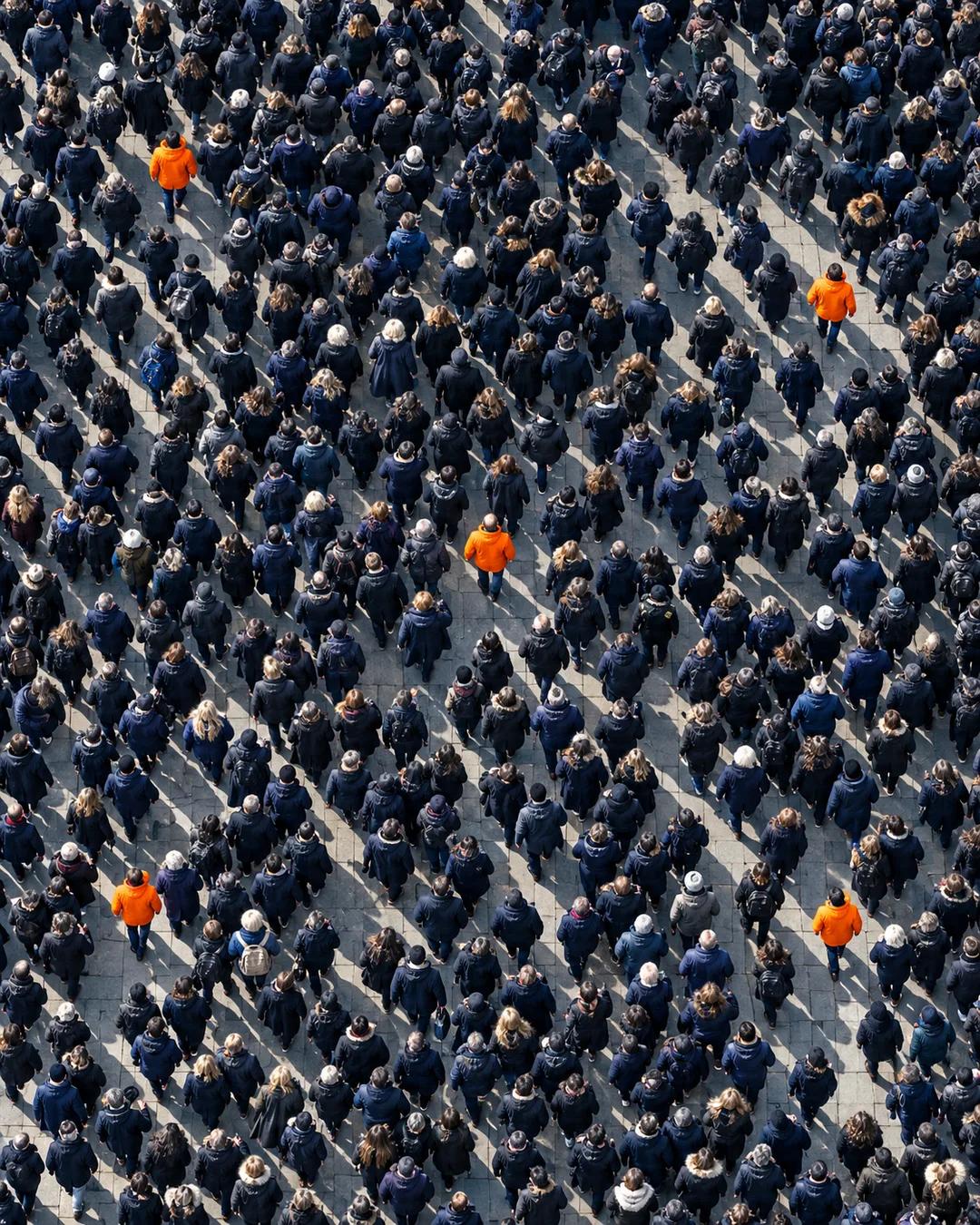
A story in a big outlet might reach 500,000 readers in the hope that 200 who matter are among them. An AI company that only needs to recruit five top machine learning engineers, and knows exactly who they are, gains nothing from Good Morning America. Those engineers get their information from a few Substacks, a few people on X, and small podcasts. The better approach is to work backwards from where they already look and go there.
Why does a message weaken when relayed?
In his 1932 experiments, Frederic Bartlett had participants pass an unfamiliar story along a chain, with each person retelling what the previous one had written. The stories grew shorter, lost unfamiliar details, and drifted toward the familiar. The method is called serial reproduction, and researchers have used it since to study how rumors change.
How do opinion leaders shape what others think?
In a 1940 study of voters in Erie County, Ohio, Paul Lazarsfeld and his colleagues expected radio and newspapers to sway voters directly. They found instead that many voters were influenced by people around them who followed the media closely and passed along their views. The researchers called this the two-step flow of communication, and they published the results in 1944 in The People's Choice.
Why do acquaintances matter in finding work?
In a 1973 paper, the sociologist Mark Granovetter reported that acquaintances were more likely than close friends to supply information about new jobs, because acquaintances move in circles that do not overlap with one's own. His later study of professional workers in Newton, Massachusetts, found that many had found their jobs through contacts they saw only occasionally.
More from David Senra